Passive Cooling Shells for Extraterrestrial Habitats
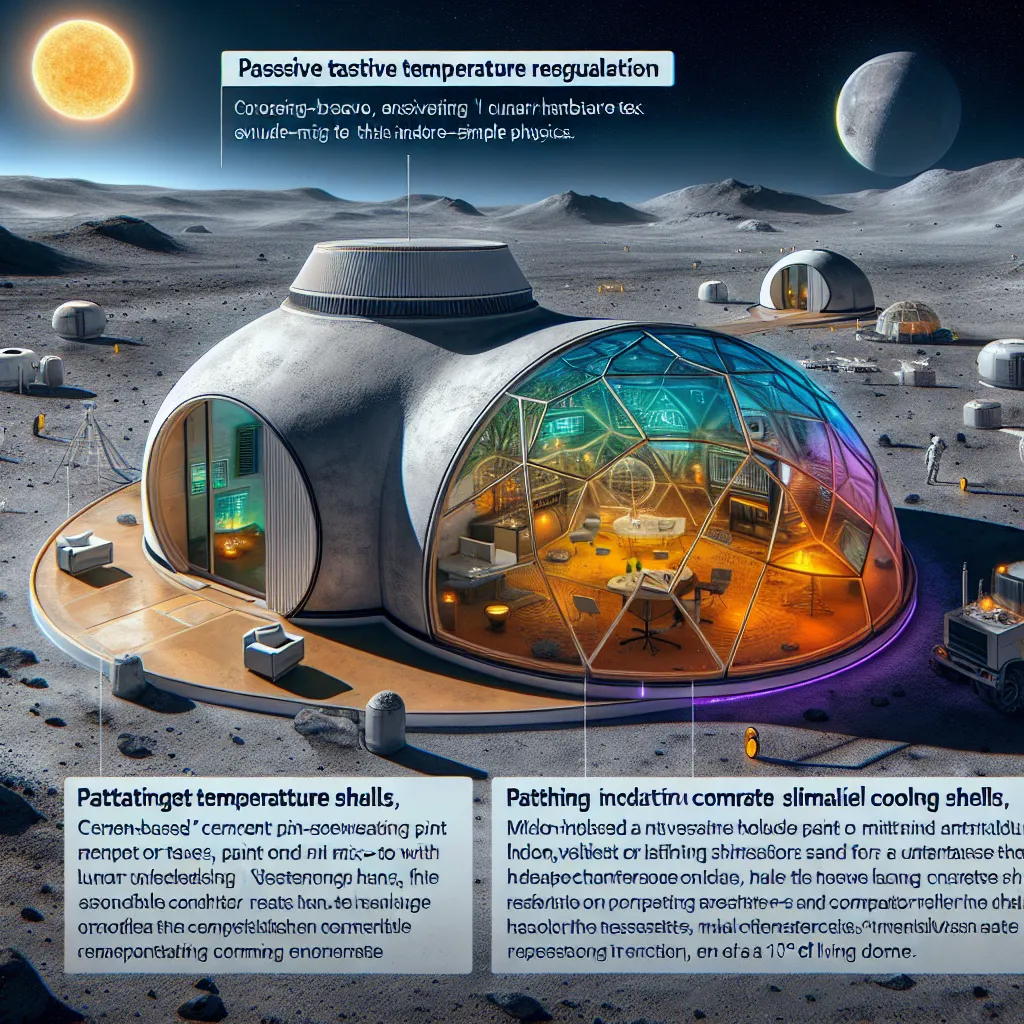
Future Martian or lunar habitats must regulate temperature without electricity—and until recently, there was no passive way to cool in thin atmospheres. This startup would take the cement-based sweating paint formula and evolve it into extraterrestrial cooling shells, mixing it with regolith simulant to line the interiors or exteriors of habitat domes. These shells reflect radiation while also using embedded phase-change fluids to cool interior zones. Technically possible now that we have low-pressure evaporative formulations and lunar concrete R&D. NASA, SpaceX, or Blue Origin could be anchor clients. It’s absurd, but climate tech that works passively in 120°F deserts today may be what keeps humans alive on Mars.
Description
No additional description provided.
The Pitch
As humanity ambitively plans missions to Mars and the Moon, establishing sustainable habitats is vital for long-term survival. One of the most significant challenges in these extraterrestrial environments is regulating temperature without relying on traditional energy sources. Mars and the Moon possess thin atmospheres and extreme temperature fluctuations, making it difficult to maintain safe and stable conditions for human life. Without an effective passive cooling solution, these habitats face risks of overheating and excessive energy consumption.
**Problem**
Current advancements in space technology have not yet adequately addressed the issue of temperature regulation in non-Earth environments. Using electrical components for climate control would demand resources that are scarce and costly to transport. Therefore, innovative solutions are necessary to ensure the safety and comfort of astronauts while minimizing energy expenditure.
**Solution**
This project focuses on developing passive cooling systems by evolving existing cement-based sweating paint technologies into extraterrestrial cooling shells. These cooling shells will integrate a mixture of regolith simulant, which is abundant on both Mars and the Moon, to create an effective media for thermal regulation. The shells will function by reflecting harmful radiation and employing embedded phase-change fluids designed for low-pressure environments to create cooler interior zones. It is a solution inspired by passive climate technologies used in arid terrestrial environments, now reimagined for space applications.
**Product Details**
1. **Material Composition**: The cooling shells are created using a cement-based formula enhanced with evaporative components and phase-change fluids, mixed with locally sourced regolith simulant to ensure compatibility with extraterrestrial landscapes.
2. **Design and Application**: The product can be applied to both the exteriors and interiors of habitat domes, reflecting sunlight and efficiently managing internal heat without the need for electrical systems.
3. **Functionality**: It harnesses low-pressure evaporative cooling and radiation reflection to maintain consistent temperatures within the habitat, even in extreme conditions.
**Tools for MVP Launch**
1. **Material Testing Equipment**: To simulate Marteian and lunar conditions during the research and development phase.
2. **Partnerships**: Collaborate with research entities specializing in lunar concrete and phase-change materials.
3. **Prototyping Facilities**: Access laboratories and fabrication spaces to create and test pilot products.
**Go-to-Market Strategy (GTM)**
1. **Strategic Partnerships**: Engage with NASA, SpaceX, and Blue Origin as potential anchor clients for early adoption.
2. **Industry Collaboration**: Work with institutions focused on extraterrestrial habitation and climate adaptation technologies.
3. **Awareness Campaigns**: Present at space technology conferences and publish in scientific journals to highlight reliability, innovation, and necessity.
4. **Pilot Programs**: Deploy initial testing phases in analogous Earth-based environments (e.g., extreme deserts) to validate the concept and demonstrate its durability.
**Business Model**
1. **B2B Sales**: Initial focus on partnerships with aerospace organizations and government space programs for funding and implementation.
2. **Licensing**: Offer licensing options to companies developing their space programs or climate adaptation technologies.
3. **Customization Services**: Provide tailored solutions adapted to specific mission requirements or atmospheric conditions.
4. **Long-term Contracts**: Develop long-term maintenance and upgrade contracts once habitats are operational.
By leveraging existing innovative technologies and redesigning them for the next frontier, this project aspires to provide a sustainable solution that is integral to the future of human space exploration.