Parallel Safety Net: A Decentralized Community Support System
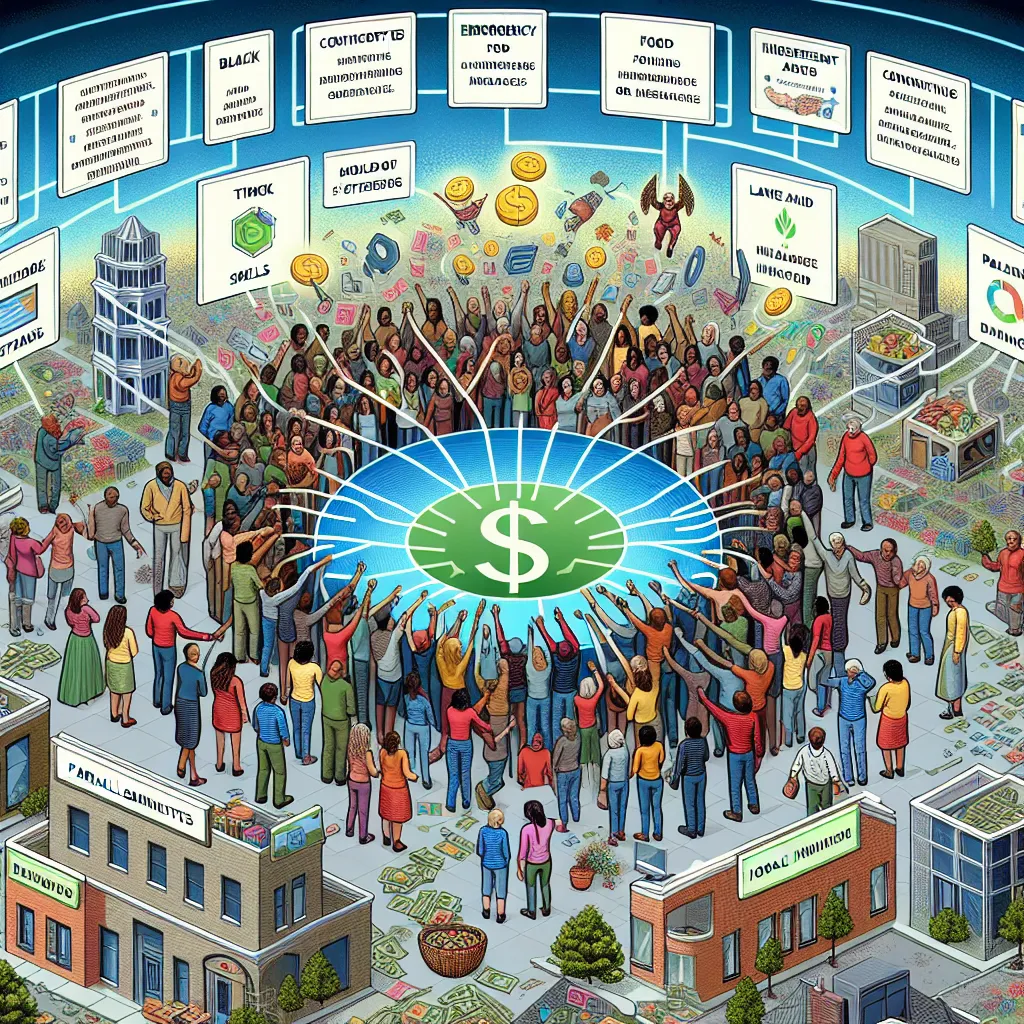
As government programs face sweeping cuts—from Medicaid eligibility restrictions to the defunding of public broadcasting—millions of Americans are left vulnerable, especially those already on the margins: gig workers, undocumented immigrants, and rural communities. The public safety net is becoming patchier by the year, and faith in institutions is eroding. A radical, moonshot opportunity is to build a “Parallel Safety Net”—a decentralized, opt-in infrastructure that offers essential benefits outside traditional government systems. Think of it as a membership-powered mutual aid network fused with smart contracts, community voting, and automated disbursement. Members pay a small monthly fee or contribute time, data, or skills; in return, they gain access to pooled funds for emergency healthcare, food stipends, micro-insurance, and local news or disaster alerts. When someone loses Medicaid due to paperwork issues, this network steps in with immediate cash or care credits. When PBS goes dark, community-funded creators fill the gap. It begins with overlooked groups but could grow into a trusted alternative—an independent civil operating system for the post-bureaucratic era. While it may seem fringe today, it taps into a growing desire for resilient, transparent, people-powered systems—and could one day rival government in both reach and trust.
Description
No additional description provided.
The Pitch
In recent years, significant reductions in government programs have left millions of Americans, particularly those on the periphery of society, increasingly vulnerable. This vulnerability is affecting gig workers, undocumented immigrants, and rural communities the most. Despite these challenges, there is an emerging opportunity to construct a “Parallel Safety Net,” a decentralized and collective infrastructure that provides essential benefits outside traditional government mechanisms.
Understanding the Problem: The reduction of government support programs, such as Medicaid eligibility constraints and diminished funding for public broadcasting, has highlighted the fragility of the public safety net. The consequences of these reductions have been dire for many, causing a severe erosion of trust in public institutions. As faith in these systems declines, the need for an alternative form of support that is both resilient and transparent becomes more apparent.
Proposed Solution: The creation of a “Parallel Safety Net” aims to fill these gaps by offering an innovative and inclusive approach to community support. This system would be membership-driven, leveraging mutual aid networks integrated with modern technologies such as smart contracts and community voting mechanisms. The primary objective is to provide members with access to essential resources, such as emergency healthcare funds, food stipends, micro-insurance, and local news or disaster alerts, by pooling together contributions and resources from the network.
Product Details: - **Membership Structure:** Participants can join the network by paying a nominal monthly fee or offering time, skills, or data. In exchange, they gain access to the network's resources. - **Resource Allocation:** Pooled funds are utilized to provide immediate financial support or care credits when members lose access to government services like Medicaid. - **Content Creation:** In response to defunded public services, community-created content can be supported to deliver local news and educational resources. - **Technological Foundation:** The system is built on decentralized technologies, featuring smart contracts for secure transactions and community voting for decision-making, ensuring transparency and accountability.
Tools for Launching as an MVP: - **Blockchain Platforms:** Utilize blockchain to establish a secure and transparent contract system. - **Community Building Software:** Platforms like Discord or Slack can provide spaces for members to communicate and organize. - **Payment Gateways:** Employ services such as Stripe or PayPal for easy membership payments. - **Content Management Systems:** Use platforms like WordPress or Medium for publishing community news and updates.
Go-To-Market Strategy: - **Initial Target Audience:** Focus on communities most at risk, including gig workers, undocumented immigrants, and rural populations, to build an initial user base. - **Partnership Development:** Collaborate with local organizations, nonprofits, and influencers to raise awareness and credibility. - **Pilot Programs:** Launch a small-scale pilot in a select community to test and refine the system. - **Educational Campaigns:** Create content that explains the benefits and workings of the network to encourage greater understanding and adoption.
Business Model: - **Revenue Streams:** Generate income through membership fees and potentially through data partnerships, ensuring user privacy and consent. - **Cost Structures:** Allocate funds primarily towards maintaining the technology infrastructure, marketing, and community management. - **Social Impact Bonds:** Explore opportunities for social impact investing to further fund and scale the initiative.
Conclusion: The Parallel Safety Net represents a revolutionary approach to providing community support outside traditional government systems. While the concept may seem unconventional today, it is driven by an expanding desire for sustainable, transparent, and community-powered solutions. If developed and implemented thoughtfully, this decentralized network has the potential to transform how individuals collectively secure essential resources and could eventually offer a formidable alternative to existing public systems.