Outfit Perception Analyzer: Decoding Personal Signals
Most people don’t know what their outfit is saying — only how it feels. This product is a perception engine: upload a photo, and it tells you what different audiences infer from your look (peer group, recruiter, older manager, first date). Not “fashion advice,” but signal decoding. It’s powered by large-scale social feedback loops, not stylists. Why now: people increasingly understand branding, but not personal signaling. Example: the app explains why the quarter-zip reads “serious but approachable” while the Tech Fleece reads “comfortable but unserious” in specific contexts.
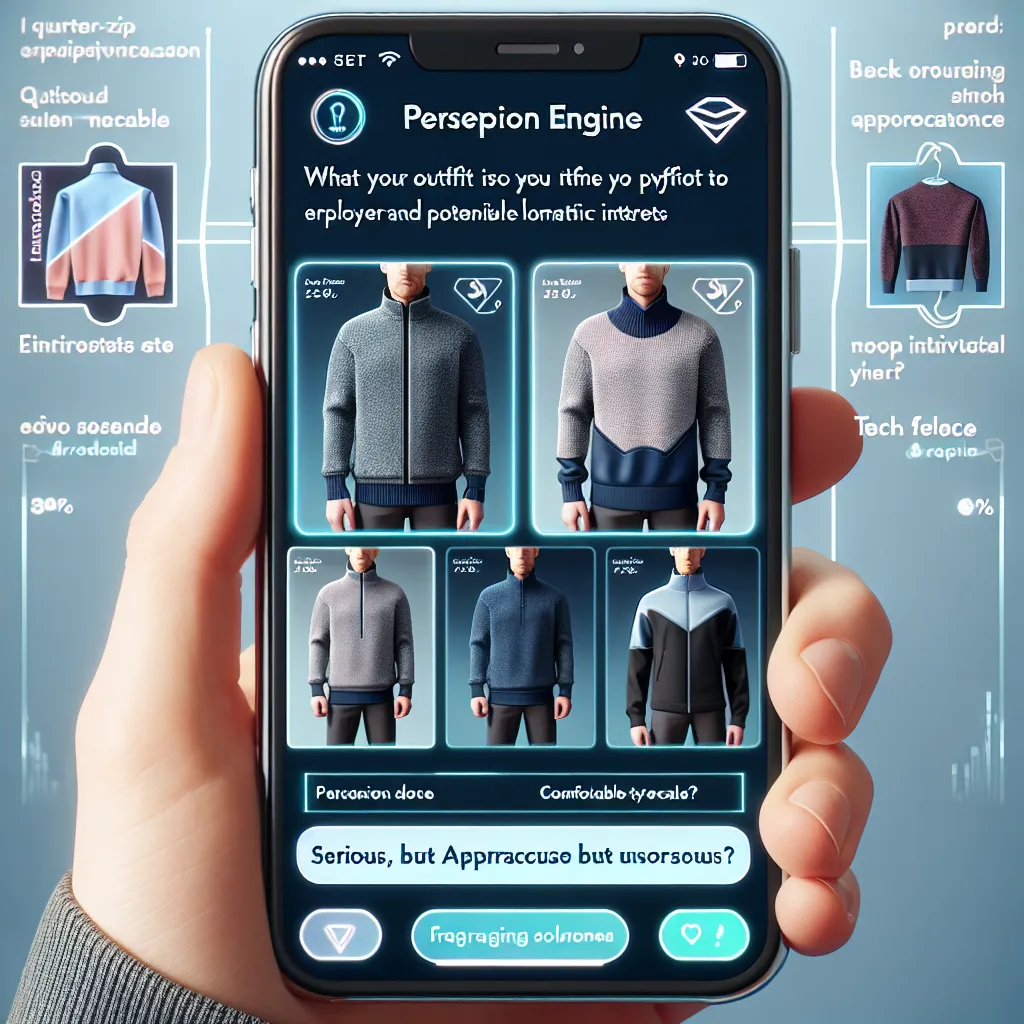
Description
No additional description provided.
The Pitch
In today's visual-centric world, clothing transcends mere utility. It acts as a medium through which individuals express themselves and communicate with those around them. Despite an increasing awareness of the importance of personal branding, many people struggle to decode the signals their outfits send to different audiences. Herein lies an opportunity for a groundbreaking technology—a perception engine that not only identifies these signals but also interprets them through the lens of various social contexts.
Backstory: As society becomes more visually driven, individuals are inundated with a plethora of fashion choices, yet lack the nuanced understanding of what these choices communicate. While personal branding has become commonplace in professional and social spheres, personal signaling—the specific messages conveyed through one's attire—remains largely misunderstood. In a world that emphasizes appearances as part of first impressions, people face uncertainty in knowing exactly what their clothing says about them to others across different scenarios such as job interviews, social events, or dates.
Problem: The gap in understanding personal signaling presents challenges in making appropriate style choices for varied contexts without inadvertently conveying the wrong message. For instance, while someone might feel confident in a certain outfit, they may not grasp the subtle social cues it emits to peers, recruiters, or dates. This disconnect not only affects personal interaction but also impacts professional opportunities and social connections.
Solution: Introducing a perception engine that leverages large-scale social feedback to decode the diverse signals emitted by personal attire. Unlike traditional fashion advice platforms driven by stylist opinions, this tool utilizes comprehensive data feedback loops to interpret how different communities perceive an individual's outfit choices. By simply uploading a photo, users can gain insights into the messages their attire communicates to distinct audiences such as peer groups, potential employers, or personal acquaintances.
Product Details: The product is a user-friendly application that allows users to upload photos of their outfits and receive tailored feedback on how different cohorts might interpret their style. It operates based on machine learning algorithms trained on extensive datasets of social interactions and user feedback, providing evidence-backed insights into attire signaling. The application breaks down perceptions across various demographic parameters, giving users an informed perspective on how they are likely to be perceived in any given social context.
Tools for MVP Launch: To develop a Minimum Viable Product (MVP), utilize tools like TensorFlow or PyTorch for machine learning model development, Canva or Adobe XD for user interface design, and React Native for cross-platform mobile app development. Hosting can be done using AWS or Firebase, and early-stage data collection can be facilitated through partnerships with fashion communities or social platforms.
Go-To-Market Strategy: Target early adopters among fashion enthusiasts and professionals in sectors like public relations, human resources, and social media management who frequently engage with personal branding and image. Use social media platforms and influencer partnerships to generate buzz. Launch a closed beta to gather valuable feedback and iterate rapidly based on real-world user experiences. Generate content such as webinars and articles detailing insights on personal signaling to drive engagement and education.
Business Model: Adopt a freemium model, providing basic services for free while offering premium features such as in-depth analysis, historical signal tracking, and custom recommendations for subscribed users. Revenue can also be generated through partnerships with fashion brands and retailers interested in utilizing the platform's data analytics for targeted marketing and personalization initiatives.
Conclusion: As people strive to navigate complex social landscapes, understanding the implications of their personal style choices becomes increasingly important. This innovative perception engine has the potential to revolutionize the way individuals understand and harness their personal brand, providing them with the tools to make confident attire choices across any scenario.