Outcome Verification for AI Pricing
As more AI software starts charging for results instead of seats, buyers and vendors are going to disagree about whether the result actually happened. A sales agent may claim it generated $500,000 in pipeline, while the customer credits its sales team, brand, or another channel. This company would act as a neutral third party that connects to the customer’s underlying systems, defines the measurement rules before the work starts, and independently verifies the outcome for billing, renewals, and procurement. The timing is right because outcome-based AI pricing is growing much faster than the infrastructure needed to measure those outcomes. For example, an AI collections vendor could charge 8% of recovered revenue, with the auditor independently confirming which payments were actually caused by the agent before the fee is released.
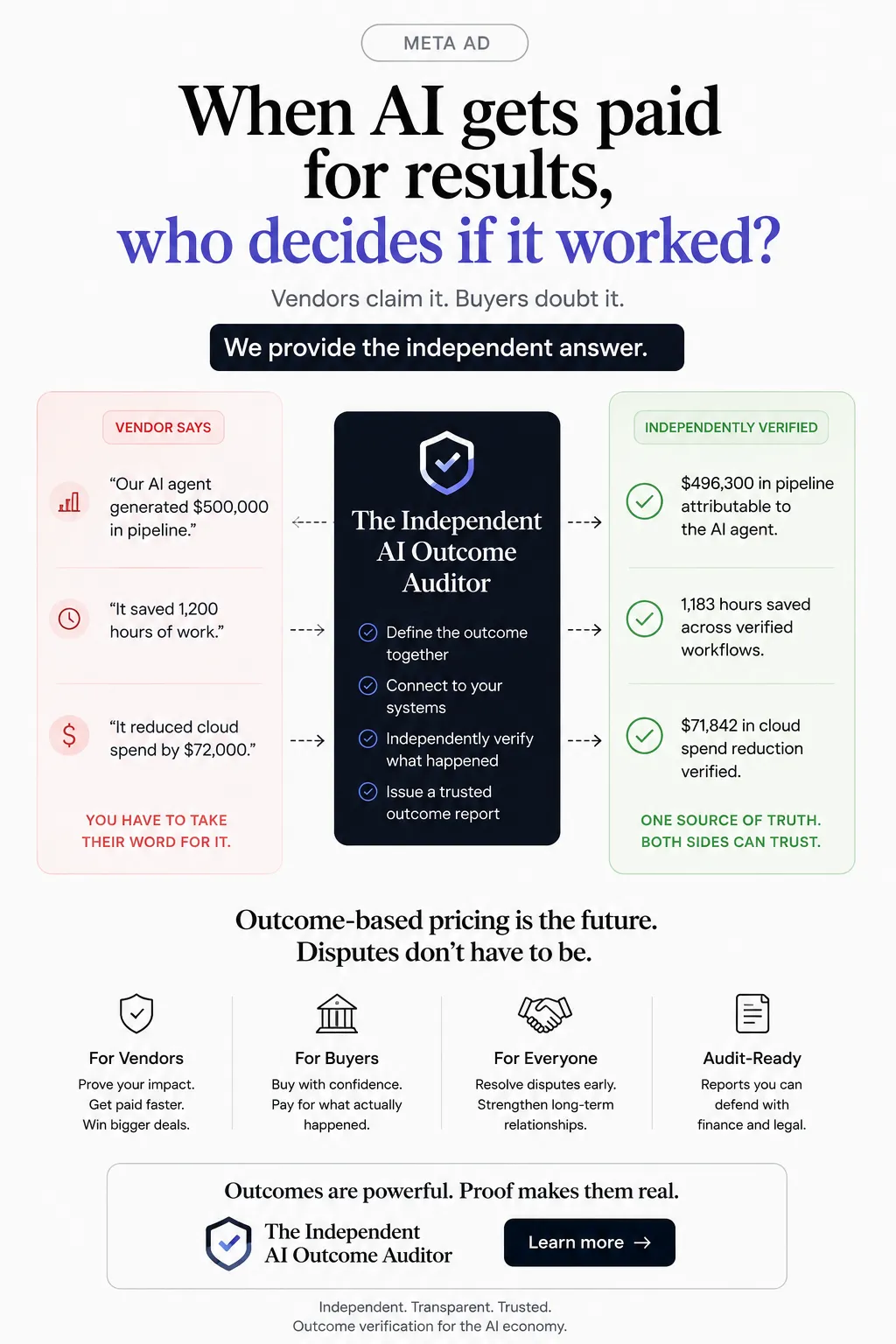
Description
No additional description provided.
The Pitch
Outcome-based pricing turns trust into infrastructure. The more software vendors ask to be paid only when something valuable happens, the more valuable it becomes to have an agreed-upon source of truth about causality. In seat-based software, the invoice is easy even when the value is vague. In outcome-based software, the value may be real, but the invoice becomes arguable. That inversion creates room for a new kind of business: not another analytics dashboard, but the referee that makes the commercial model usable.
The deeper insight is that AI vendors and customers will often both be acting rationally and still end up in conflict. Vendors will see their systems touching hundreds of workflows and reasonably claim influence; customers will see messy organizations where credit is always shared. The dispute is not just about data access, but about counterfactuals: what would have happened without the AI? A company that can turn that philosophical argument into an operational standard becomes important in the same way credit bureaus, auditors, and payment networks became important: they reduce the cost of believing strangers.
This could also change what kinds of AI products get built. Today, many vendors avoid pure performance pricing because they fear customers will under-attribute wins or change behavior after the fact. Buyers, meanwhile, distrust aggressive claims because vendors grade their own homework. A neutral measurement layer makes more ambitious contracts possible. If the meter is trusted, software can move closer to insurance, labor substitution, or revenue share without each deal requiring bespoke negotiation and suspicion.
The strongest version of this business would accumulate power through precedent. Once it has measured recoveries, qualified leads, resolved tickets, prevented churn, or reduced denials across many contracts, it would not merely verify outcomes; it would shape the accepted definitions of outcomes. The first customer may hire it to settle one invoice. The hundredth may use it because procurement, finance, and legal already recognize its methodology. In markets where money moves only after proof, the entity that defines proof becomes quietly central.
What makes the opportunity especially interesting is that it sits between two uncomfortable facts: AI will increasingly claim responsibility for economically meaningful work, and most companies are bad at knowing why anything happened. A trusted attribution layer does not need to make AI smarter. It makes AI easier to buy.