OrchestraLayer: Coordinating Multi-Agent Enterprise Systems
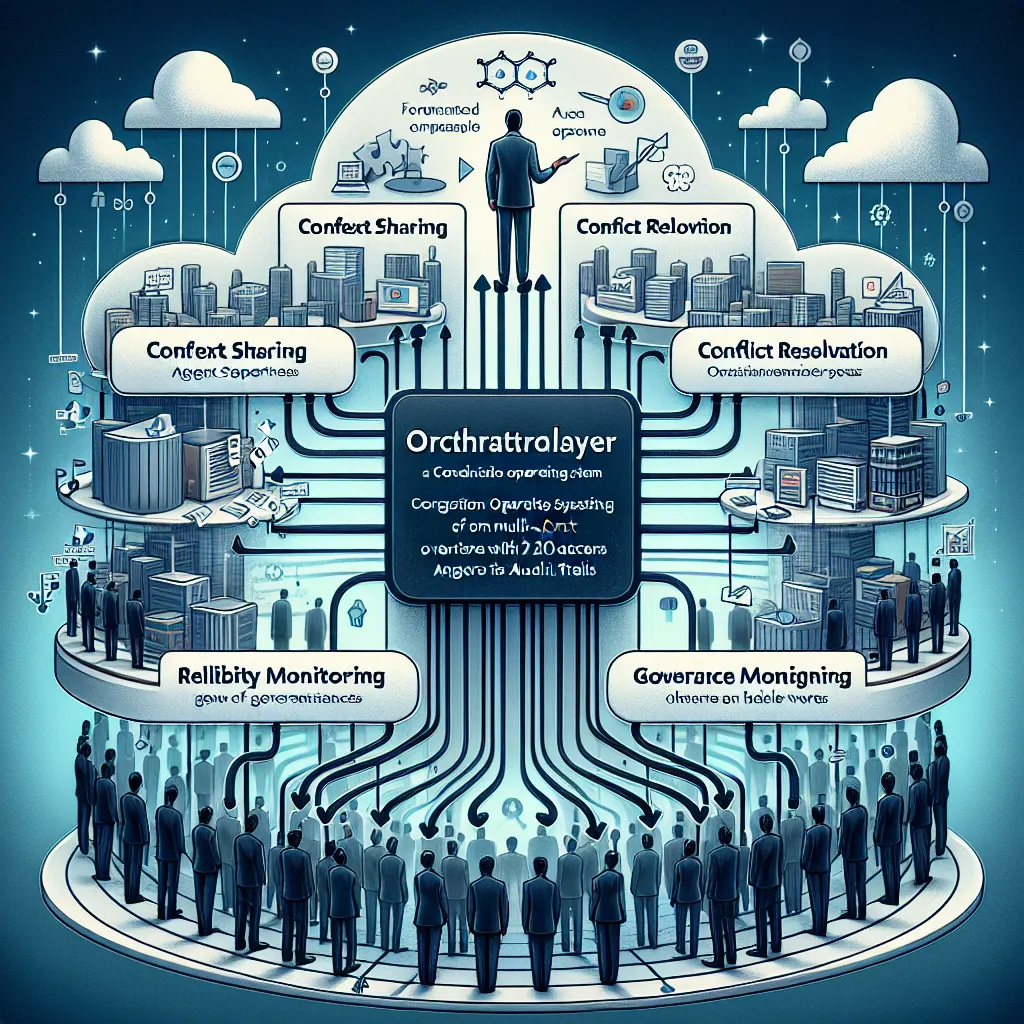
Companies are adopting dozens of agents—each blind to the others. OrchestraLayer is the coordination OS for multi-agent enterprises: it manages context sharing, adjudicates conflicting actions, routes tasks between agents, monitors reliability, and provides governance + audit trails. It creates new roles (agent supervisors, workflow designers) while making digital workers scalable. A Fortune 500 could run an end-to-end FP&A cycle with 20 agents acting in sync.
Description
No additional description provided.
The Pitch
In today's dynamic business environment, companies are increasingly adopting AI-driven solutions to streamline their operations, enhance productivity, and foster innovation. As organizations integrate various AI agents to tackle specific tasks, they often face a significant challenge: these agents operate in silos, oblivious to one another's activities. This lack of coordination can lead to inefficiencies, conflicting actions, and missed opportunities. OrchestraLayer emerges as a revolutionary coordination operating system designed to synchronize and optimize the operations of multi-agent enterprises.
Backstory
With the proliferation of AI technologies, enterprises are keen to leverage intelligent agents to automate processes across different departments, ranging from finance to supply chain management. However, as enterprises scale the number of deployed agents, they encounter a critical problem: the agents' inability to communicate and collaborate efficiently. This isolation results in duplicated efforts, conflicting decisions, and a lack of unified oversight. A Fortune 500 company attempting to run an end-to-end financial planning and analysis cycle, for instance, may employ up to 20 agents, each with a specific role but without a mechanism to work in unison.
Problem
The primary challenge is the lack of an overarching system to manage and coordinate multiple AI agents. Enterprises struggle with:
1. Inconsistent and conflicting actions taken by independent agents. 2. Difficulty in sharing context and information between agents. 3. Inefficient task routing and management. 4. Lack of monitoring tools to ensure reliability and performance of agents. 5. Absence of governance and audit mechanisms to ensure compliance and traceability.
Solution: OrchestraLayer
OrchestraLayer addresses these challenges by providing a robust coordination operating system for enterprises deploying multiple agents. It ensures seamless interaction and coordination among agents, leading to enhanced efficiency and effectiveness.
Key Features of OrchestraLayer:
- Context Management: Shares relevant information across agents to enable informed actions. - Conflict Resolution: Adjudicates and resolves conflicting actions initiated by agents. - Task Routing: Efficiently assigns and routes tasks to appropriate agents based on capabilities and availability. - Monitoring and Reliability: Tracks agent performance and reliability, ensuring consistent service delivery. - Governance and Audit: Offers comprehensive trails for compliance and accountability. - New Roles Definition: Introduces roles such as agent supervisors and workflow designers to facilitate smooth operations.
Product Details
OrchestraLayer serves as a centralized platform that can integrate with existing enterprise systems and an organization’s ecosystem of AI agents. It provides an intuitive dashboard for managers and supervisors to have a real-time overview of agent activities and operational workflows.
Tools for Easy Launch
To facilitate the launch of OrchestraLayer as a minimum viable product (MVP), the following tools can be utilized:
1. Integration APIs: Seamlessly connect with existing enterprise systems and agent interfaces. 2. Low-code Workflow Builder: Enable workflow designers to create and modify processes with minimal technical expertise. 3. Real-time Analytics: Offer data insights to monitor agent performance and optimize operations. 4. Cloud Deployment: Leverage cloud platforms for scalable and flexible deployment across multiple geographies.
Go-to-Market Strategy (GTM)
OrchestraLayer's GTM strategy focuses on:
1. Targeting Large Enterprises: Initially focusing on large enterprises with complex multi-agent environments, such as Fortune 500 companies. 2. Strategic Partnerships: Collaborating with AI solution providers to embed OrchestraLayer within their offerings. 3. Industry-Specific Solutions: Developing tailored solutions for specific industries, such as finance, healthcare, and manufacturing. 4. Pilot Programs: Offering pilot programs to showcase the benefits of OrchestraLayer, allowing potential clients to experience its value firsthand. 5. Educational Content: Creating webinars, case studies, and resources to educate potential customers about the importance of coordinated multi-agent systems.
Business Model
OrchestraLayer will adopt a subscription-based business model, offering tiered pricing based on the number of agents managed and the level of service required. Additional revenue streams can be generated through consultancy services for workflow design and optimization, as well as premium support packages for enterprises seeking bespoke solutions.
Conclusion
OrchestraLayer is poised to revolutionize multi-agent enterprise environments by providing the essential coordination layer necessary for seamless and efficient operations. By addressing the current challenges of agent isolation and inefficiency, OrchestraLayer enables enterprises to fully realize the benefits of their AI investments, ultimately enhancing productivity and driving business success.