Optimization Software for Modular Nuclear Energy Allocation
As nuclear power becomes cheaper and more distributed, electricity will no longer be the only product a reactor sells. The same reactor could power AI data centers, manufacture hydrogen, provide industrial heat, charge batteries, or sell electricity back to the grid depending on which creates the highest return. This startup becomes the operating system that continuously allocates every megawatt to its most valuable destination, maximizing revenue in real time. The opportunity exists because small modular reactors make flexible, localized nuclear generation possible while entirely new markets compete for the same clean energy. A reactor might power an AI cluster during the day, switch to industrial heat for a nearby factory in the evening, and produce hydrogen overnight when electricity prices collapse.
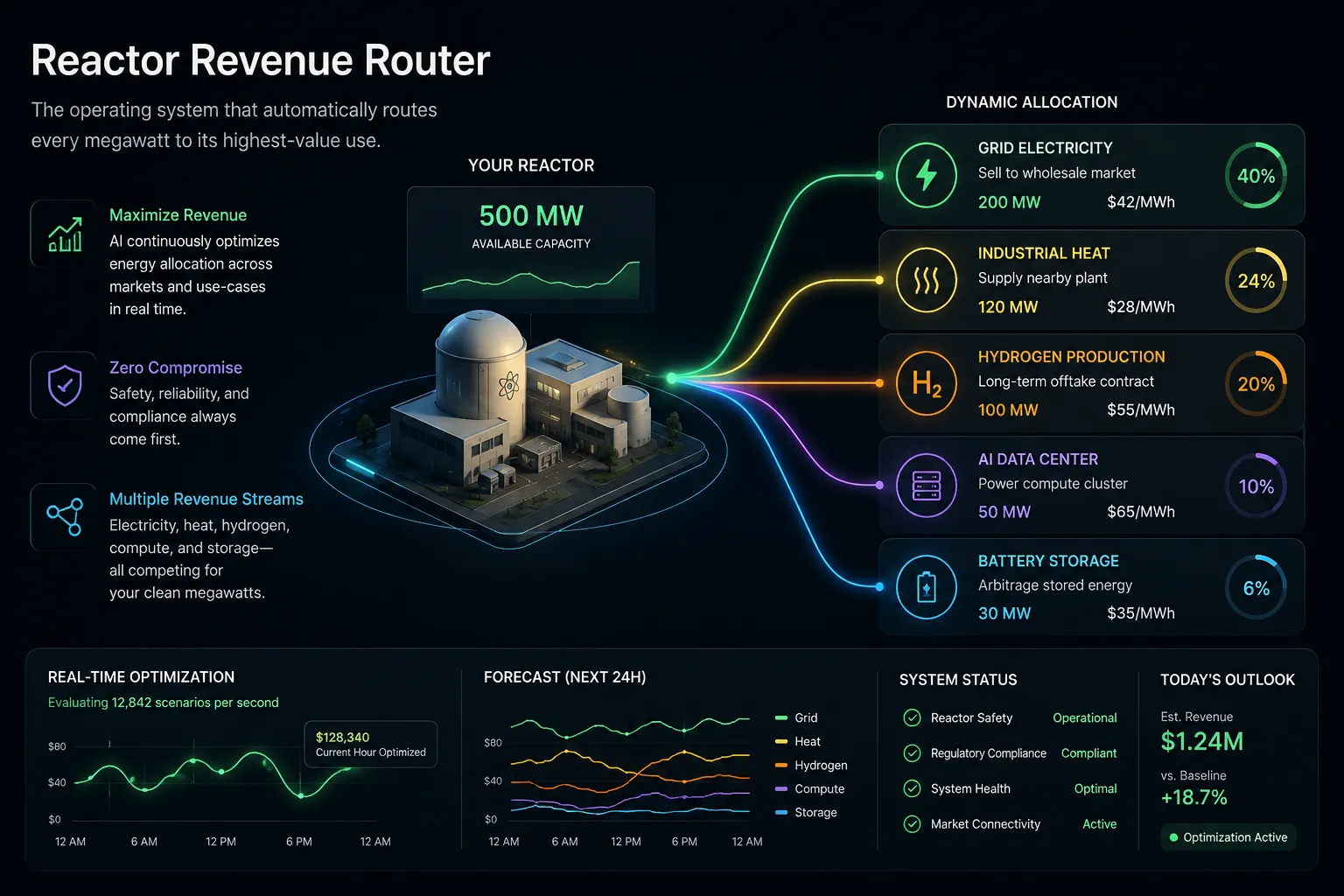
Description
No additional description provided.
The Pitch
A nuclear reactor has historically been treated like a utility asset: expensive, steady, and optimized for uptime rather than optionality. But if reactors become smaller, more numerous, and closer to demand, the economic question changes from “how much power can this plant produce?” to “what is the best use of this heat and electricity at this moment?” That shift is profound because it turns nuclear from a fixed-output infrastructure business into a portfolio of time-sensitive commodities.
The compelling part is that the most valuable buyer of a megawatt may no longer be the grid. AI compute, hydrogen, desalination, district heating, synthetic fuels, and heavy industry do not all value energy in the same way, at the same time, or with the same tolerance for interruption. A system that can translate those differences into dispatch decisions would sit at the economic center of the plant. It would not merely manage energy flows; it would determine which market the reactor is actually in minute by minute.
This matters because nuclear’s greatest weakness in competitive power markets has also been its hidden advantage: it wants to run continuously. When electricity prices fall or renewables flood the grid, that constancy can look like inflexibility. But paired with flexible downstream uses, constant output becomes a kind of manufacturing base layer. The reactor stops being exposed to a single volatile power price and starts arbitraging between multiple physical markets that value reliability differently.
The business also benefits from a rare asymmetry: a small improvement in allocation can be worth a great deal because the asset underneath is so capital-intensive. If a reactor represents billions of dollars of productive capacity, even modest percentage gains in utilization or realized price can justify expensive software, controls, and market integration. The closer the system gets to the actual dispatch layer, the more it resembles financial infrastructure for atoms rather than ordinary plant management software.
The most interesting possibility is that this becomes the abstraction layer between nuclear operators and the new industrial economy forming around abundant clean power. Reactor owners may not want to become experts in AI hosting, ammonia synthesis, thermal storage, and wholesale electricity trading all at once. They will need a way to expose their output to whichever demand is most valuable without rebuilding their commercial organization around every new use case. In that world, the company that understands the reactor as a multi-product asset becomes quietly indispensable.