Open Data Platform for Healthcare
An Open Data platform for healthcare that centralizes consumer-permissioned data from providers, wearables, and health apps to transform care coordination, insurance, and claims management. It would streamline insurance processes with automated claims submissions, enhance personalized treatments and underwriting using real-time health metrics, and improve transparency with cost estimation tools. Patients could manage their health records, data permissions, and claims through a unified portal, while insurers and providers benefit from better fraud detection and data-driven insights. Revenue streams include data access fees, subscriptions, and partnerships with wearables and health apps. Unlike siloed systems, this platform integrates real-time health data across stakeholders, enabling personalized care, efficient claims, and proactive fraud detection, ultimately making healthcare more transparent, affordable, and patient-centric.
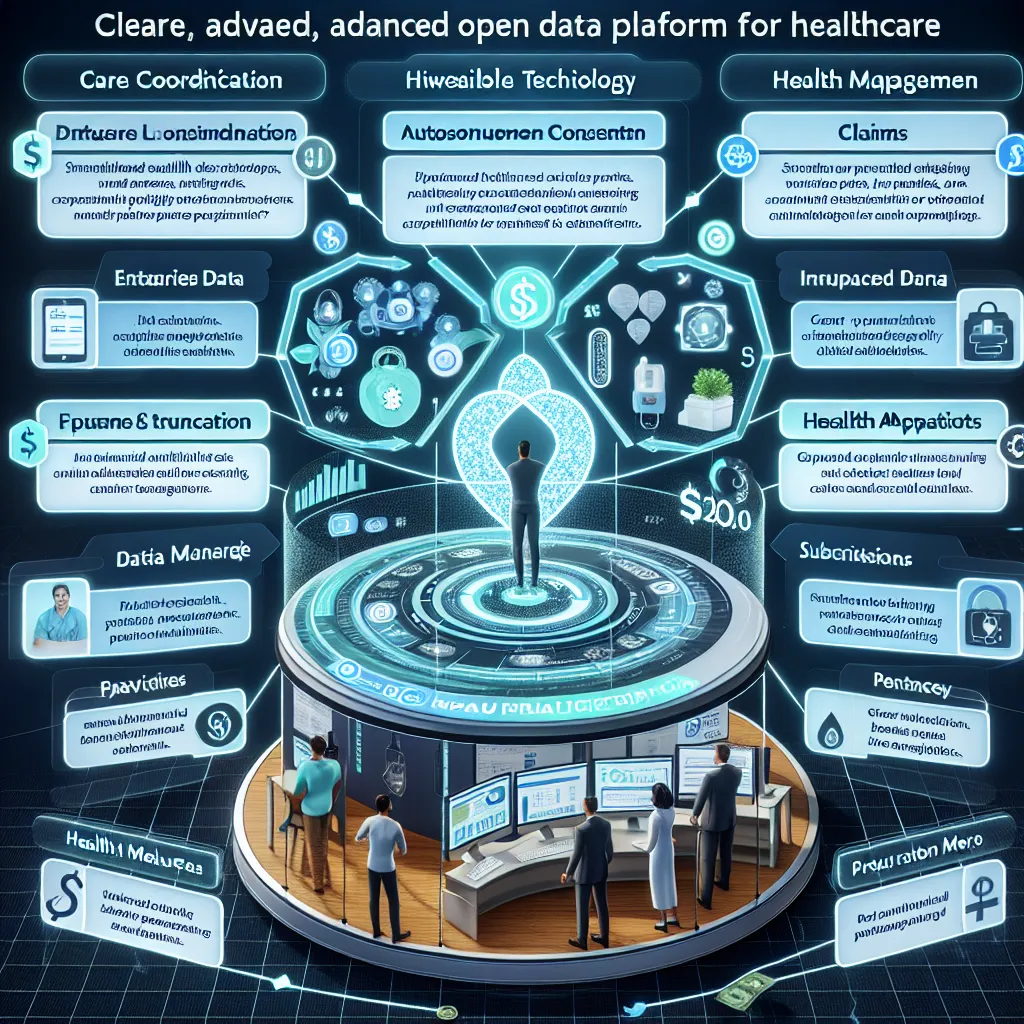
Description
No additional description provided.
The Pitch
In a world where healthcare data is fragmented across various providers, wearables, and health applications, a new platform emerges to revolutionize how this data is handled, shared, and utilized, focusing on putting patients at the center while simultaneously empowering providers and insurers.
The concept is a unified Open Data platform tailored for the healthcare industry. It consolidates consumer-permissioned data from a myriad of sources including healthcare providers, wearable devices, and health apps into a single, accessible repository. This consolidation enables unprecedented coordination in care and efficiency in managing insurance processes and claims.
For patients, this platform serves as a one-stop portal where they can seamlessly manage their health records, control who can access their data, and handle insurance claims. This increases their engagement in their healthcare processes and enhances their autonomy over personal health information.
Healthcare providers benefit from a more robust database of patient information, which includes real-time health metrics from connected devices. This feature supports more personalized treatment plans and precision in medical services, which can lead to better patient outcomes.
Insurers can leverage the platform to simplify claims management and underwriting. Automated claims submissions and real-time data access streamline operations and reduce overhead costs. The platform’s enhanced data analysis capabilities aid in detecting discrepancies and potential fraud, leading to more accurate risk assessment and cost-effective pricing.
The revenue model for this venture relies on multifaceted streams. It includes data access fees charged to insurers and healthcare providers who benefit from the integrated, enriched data. Additionally, subscription models are available for users requiring premium features such as advanced analytics and more in-depth health insights. Strategic partnerships with companies producing wearables and health applications not only broaden the data ecosystem but also open channels for collaborative revenue and technology-sharing agreements.
The introduction of cost estimation tools on the platform furthers its appeal by improving transparency in healthcare pricing, aiding consumers in making informed decisions about their healthcare expenditures.
This platform stands out by breaking down the silos that currently exist in healthcare data sharing. It not only ensures that every stakeholder in the health journey - from patient to provider to insurer - operates with the most accurate and up-to-date information but also transforms how care is delivered, insured, and managed.
In conclusion, the introduction of this Open Data platform in the healthcare sector represents a significant leap towards more transparent, efficient, and patient-centered care. It promises a future where healthcare decisions, treatments, and financial transactions are made with greater ease, speed, and accuracy, benefiting all stakeholders involved.