On-Site Solar Refinement Revolutionizes Ore Export
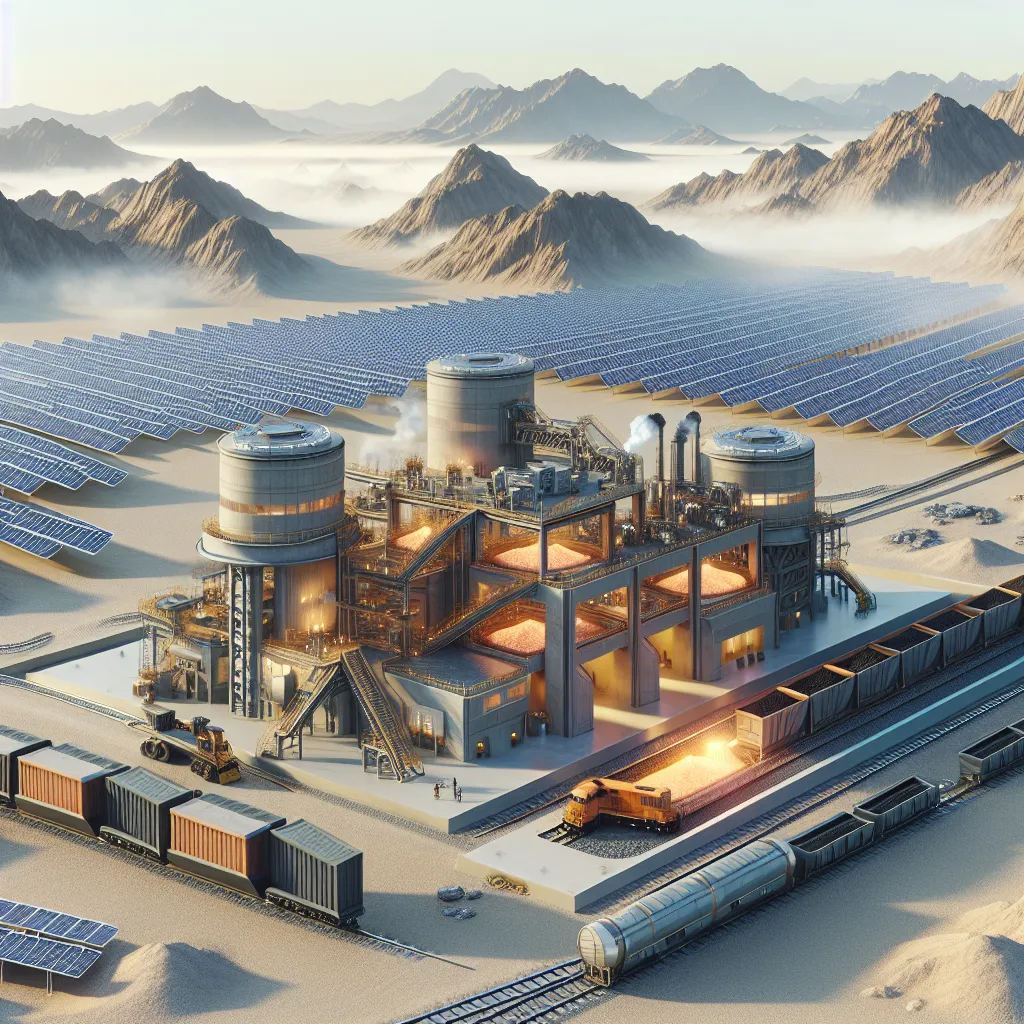
Mining still exports raw ore long distances because energy was historically scarce at extraction sites. On-site mineral refinement hubs use cheap local solar power to process materials before transport, exporting higher-value refined products instead of rock. This shift becomes viable as energy costs collapse in remote regions. Lithium or copper could be refined at the mine, reducing shipping costs, emissions, and geopolitical dependencies.
Description
No additional description provided.
The Pitch
Mining has traditionally involved the extraction and transportation of raw ore over long distances to processing facilities. This approach has persisted largely due to the historical inadequacy of energy resources at extraction sites. However, with the advent of affordable and sustainable energy solutions, a transformative opportunity has arisen: on-site mineral refinement. This concept leverages local renewable energy, particularly solar power, to process raw materials directly at the mining location, thus creating a more efficient, cost-effective, and environmentally friendly supply chain.
Backstory:
The global mining industry has long relied on a model where raw resources are shipped across vast distances for refinement. This model is tied to significant shipping costs, higher emissions, and the vagaries of international geopolitical landscapes. But with technological advancements and the global effort toward sustainability, it has become apparent that a more localized processing approach is not only feasible but also strategically advantageous. The tipping point is the dramatic reduction in renewable energy costs, particularly in remote areas where mines are often located.
Problem:
The traditional method of raw ore transportation poses several issues:
1. High Shipping Costs: Transportation of heavy, low-value raw ore is costly and inefficient. 2. Environmental Impact: The logistics involved in shipping raw materials contribute significantly to carbon emissions. 3. Geopolitical Risks: Dependence on international refining facilities increases exposure to geopolitical tensions that can disrupt supply chains. 4. Underutilization of Local Resources: Potential for harnessing local renewable energy sources remains largely untapped.
Solution:
The establishment of on-site mineral refinement hubs addresses these issues. By utilizing affordable local solar power, these hubs can:
1. Reduce the volume of material transported by sending out higher-value refined products instead of raw ore. 2. Significantly lower shipping costs and environmental impact by decreasing reliance on fossil fuels for transportation. 3. Minimize geopolitical dependencies by decentralizing the refinement process. 4. Optimize the utility of local renewable energy resources, making remote mining operations more sustainable and self-sufficient.
Product Details:
The on-site mineral refinement process would typically include:
- Installation of solar power facilities to generate the necessary energy for processing operations. - Development of compact, mobile refining technologies capable of high-efficiency processing in remote locations. - A modular design that allows for scalability and adaptation to different types of ores, such as lithium and copper.
Tools for Launching an MVP:
1. Solar Energy Solutions: Establish partnerships with solar technology providers to design and deploy tailored energy systems. 2. Mobile Refining Equipment: Collaborate with engineering firms to create portable, efficient mineral processing units. 3. IoT and Automation: Implement IoT devices to monitor and optimize the refinement processes remotely. 4. Pilot Programs: Initiate small-scale pilot projects to test and refine the technology in real-world conditions.
Go-to-Market Strategy:
1. Strategic Partnerships: Collaborate with key players in the mining industry to showcase the benefits of on-site refinement. 2. Environmental Impact Certification: Emphasize the reduction in carbon emissions and other environmental benefits to attract sustainability-focused investors. 3. Government and Policy Alignment: Work with governments to align with national and regional sustainability goals, potentially securing subsidies or incentives. 4. Data-Driven Marketing: Highlight case studies and empirical data from pilot projects to demonstrate effectiveness and ROI.
Business Model:
1. Energy-as-a-Service: Provide energy and refinement services to mining companies on a subscription or service fee basis. 2. Licensing: License the patented technology for broader application across different mines and regions. 3. Joint Ventures: Enter joint ventures with mining companies, sharing profits and risks associated with the refinement hubs. 4. Sale of Refined Materials: Engage directly in the sale of refined materials to manufacturers, creating an additional revenue stream.
Conclusion:
Transitioning to on-site mineral refinement represents a significant innovation in the mining industry. It not only addresses long-standing inefficiencies and environmental concerns but also aligns with the global trend towards decentralized, sustainable industrial practices. By leveraging local renewable energy, this model holds the potential to revolutionize mineral processing, delivering both economic and environmental benefits on a global scale.