Offline-First App Framework for Intermittent Connectivity
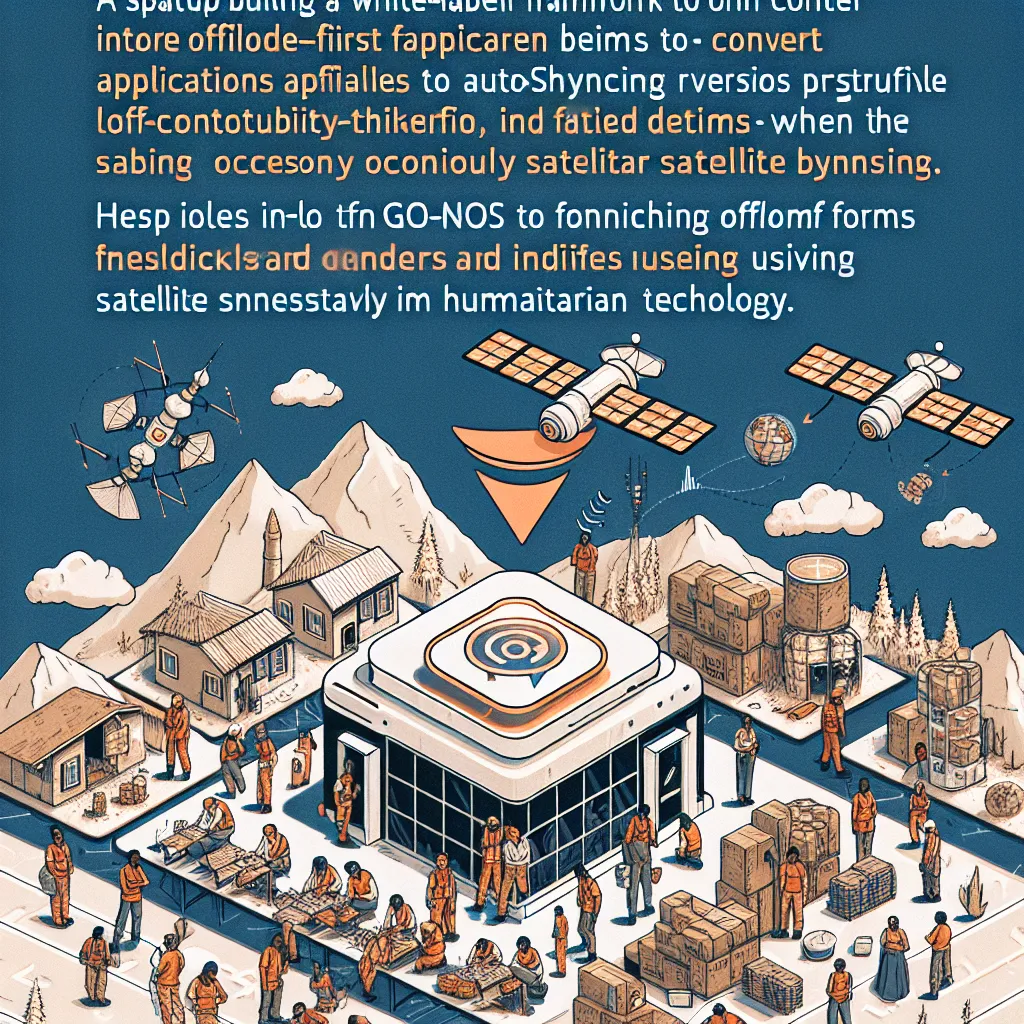
Many apps break in low-connectivity areas, even though occasional satellite syncing is enough. A startup could build a white-label framework or tools for NGOs and field teams to turn their apps into offline-first, auto-syncing versions that rely on intermittent LEO bandwidth. Think forms, checklists, or inventory that work offline and sync when a Starlink or Lynk pass is available. The rise of edge computing and humanitarian tech makes this more viable than ever. For example, a disaster response team using a simple logistics app could keep working through outages and sync data seamlessly via satellite bursts.
Description
No additional description provided.
The Pitch
In an era where digital connectivity is expected to be constant, the reality in many remote and underserved areas is quite different. The reliance on stable internet connections can be a significant barrier for organizations such as NGOs and field teams operating in these regions. Whether it's disaster response, humanitarian efforts, or rural healthcare, many apps that are relied upon break down due to low or intermittent connectivity. Such disruptions can hinder critical operations and lead to inefficiencies. This highlights the need for an innovative solution that allows applications to function optimally in offline or low-connectivity scenarios.
Problem:
For field teams working in low-connectivity or network dead zones, relying on standard apps becomes a significant challenge. These applications often require a stable connection to function properly, resulting in bottlenecks and operational downtime during connectivity interruptions. Such limitations are critically evident for teams dealing with logistics, data collection, or coordination efforts that directly impact their missions. The lack of suitable offline-capable solutions leads to inefficiencies, potential data loss, and delayed decision-making processes.
Solution:
This challenge can be addressed by developing a white-label framework that enables organizations to convert their existing applications into offline-first, auto-syncing versions. Utilizing intermittent Low Earth Orbit (LEO) satellite bandwidth such as Starlink or Lynk, data can be synced whenever connectivity becomes available. This approach ensures that field teams can continue their operations without interruption, regardless of their connectivity situation. By leveraging edge computing technologies, data can be processed locally and transmitted in bursts when a satellite connection is detected.
Product Offering:
The proposed product is an adaptable toolkit that organizations can use to transform their current applications to become offline-first compatible. The core functionalities include:
1. Offline Data Entry: Allow users to perform tasks such as filling forms, completing checklists, and managing inventories without needing an active internet connection.
2. Auto-sync Capability: Automatically synchronize collected data whenever a satellite connection is available, ensuring that back-end systems remain up-to-date with minimal user intervention.
3. White-label Customization: Organizations can tailor the framework according to their brand identity, maintaining consistency across their software portfolio.
4. Security Features: Implement robust data encryption to ensure sensitive information remains secure during off-grid operations and while syncing over satellite connections.
Tools for Implementation:
To streamline the creation of an MVP, tools such as React Native for cross-platform app development, SQLite for local storage solutions, and Amazon Web Services or Google Cloud for satellite data synchronization and processing can be employed. These technologies provide the scalability and flexibility required to build a robust offline-first app framework.
Go-to-Market Strategy:
1. Initial Target Audience: Focus on NGOs and disaster response teams as they experience these challenges most acutely.
2. Partnerships: Collaborate with LEO satellite internet providers to optimize the solution's synchronization capabilities.
3. Awareness Campaigns: Attend industry conferences, webinars, and workshops focused on humanitarian technology to showcase the product’s capabilities.
4. Pilot Programs: Offer pilot initiatives to key organizations to demonstrate the effectiveness and advantages of the framework.
5. Feedback Loop: Establish a feedback mechanism with early adopters to refine functionalities and address potential issues.
Business Model:
Adopt a subscription-based model offering various tiers depending on the size of the organization and their specific needs. Offer a base package with essential features and optional add-ons for advanced functionalities. Additionally, setup fees for custom white-label implementations can serve as a revenue stream.
Conclusion:
The development of a white-label framework designed to enable offline-first functionality in existing apps provides a vital tool for organizations operating in low-connectivity environments. By reducing dependency on constant internet access and synchronizing data through satellite connections, the solution enhances operational efficiency and data integrity. This innovation has the potential to significantly impact the way field teams work, enabling them to focus on their core missions without being constrained by connectivity issues.