Non-Invasive Brain Imaging with mmWave
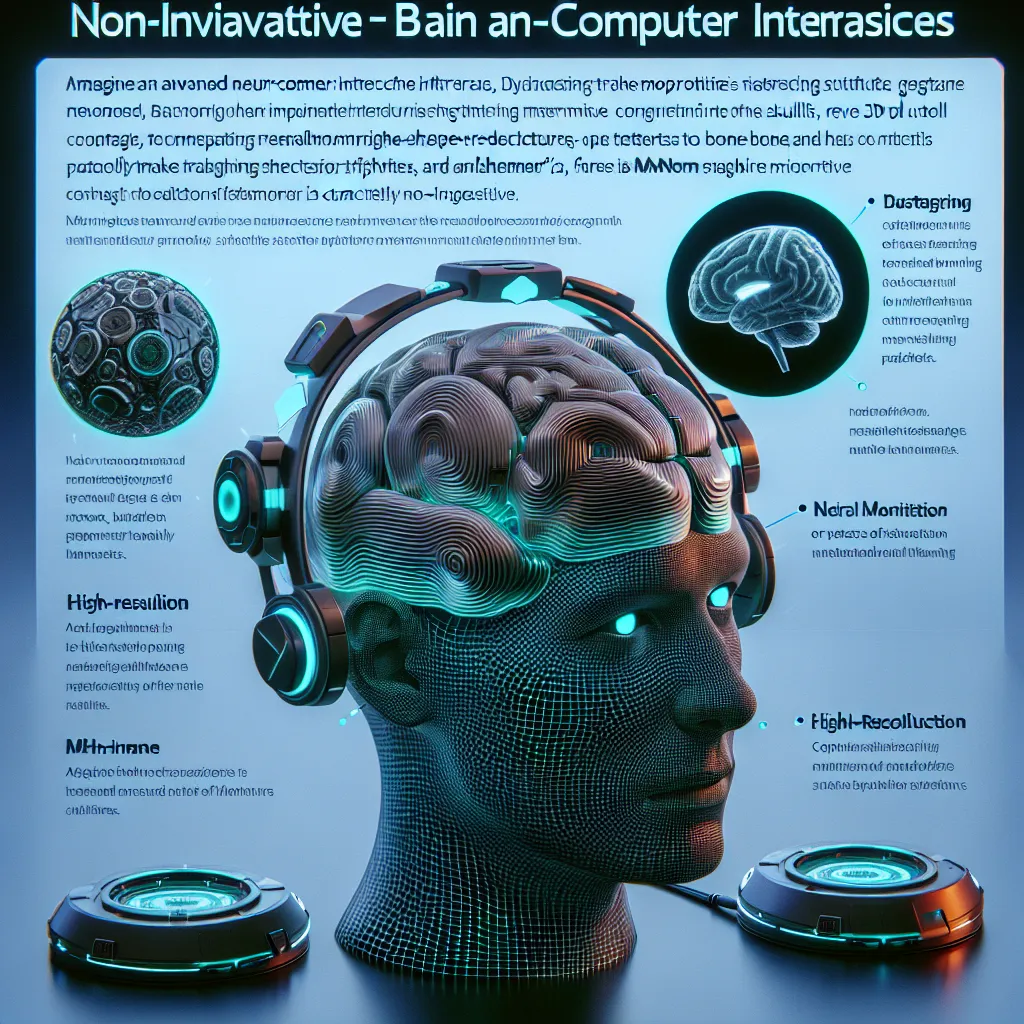
Neurotech has exploded, but non-invasive brain-computer interfaces (BCIs) are still limited in precision because current sensors can’t image the brain through the skull with enough detail. MRI is too slow, EEG lacks resolution. With mmNorm’s ability to reconstruct hidden shapes behind complex materials, a BCI startup could use mmWave to reconstruct neural activity and brain morphology in real-time—without implants. This allows high-res, dynamic feedback from the brain’s surface through the skull, unlocking cognitive monitoring, neural interface training, or diagnostics at home. This is only now possible because mmNorm’s shape-reconstruction method interprets reflection patterns into smooth 3D geometry, even through bone-like materials. Imagine a wearable headset that tracks real-time attention shifts or early Alzheimer’s patterns by “watching” neural signals take shape—completely non-invasively.
Description
No additional description provided.
The Pitch
Neurotechnology has seen remarkable advancements, but one significant barrier remains—current non-invasive brain-computer interfaces (BCIs) struggle to achieve high precision. This limitation is primarily due to the inadequacy of current sensors in imaging the brain through the skull with sufficient detail. Technologies like MRI are too slow for real-time applications, while EEG lacks the necessary resolution. However, a promising solution lies in the innovative application of millimeter-wave technology, specifically through a method known as mmNorm.
Background
The motivation for this development stems from the recent breakthroughs in neurotechnology that still face critical challenges. As more studies confirm the potential of BCIs to revolutionize various fields such as neuroscience, healthcare, and even consumer electronics, the demand for more precise and non-invasive methods to glean information from the brain has never been higher. Existing solutions either compromise on speed or precision, stalling the potential for true real-time neural interaction.
Identifying the Problem
Traditional BCI systems are limited due to their inability to capture high-resolution images of brain activity through the skull. This limitation restricts their ability to provide accurate feedback, which is essential for applications like cognitive monitoring, neural interface training, and early diagnostics of neurological conditions. The inability to effectively capture and interpret brain activity can lead to slower advancements in both medical applications and consumer-market products.
Proposing the Solution
To address this issue, a moonshot BCI startup could leverage mmNorm, a cutting-edge method utilizing millimeter-wave technology to reconstruct neural activity and brain morphology in real-time. Unlike existing technologies, mmNorm can interpret reflection patterns into smooth 3D geometry even when imaging through materials that mimic the density and complexity of bone. This transformative approach allows for capturing high-resolution, dynamic feedback from the brain’s surface without any invasive procedures.
Product Details
The envisioned product is a wearable headset that can non-invasively track neural activity by watching neural signals take shape in real time. This advanced headset could potentially revolutionize cognitive monitoring by detecting shifts in attention or identifying early patterns of neurological disorders, such as Alzheimer's disease, all from the comfort of one's home.
Tools for Launching an MVP
To bring this concept to life as a Minimum Viable Product (MVP), several key tools and resources would be necessary: 1. An agile development environment to iteratively design and test the mmWave sensor technology. 2. Access to machine learning algorithms capable of interpreting complex reflection patterns into coherent 3D images. 3. Partnerships with research institutions for clinical testing to validate efficacy and safety.
Go-to-Market Strategy
The go-to-market (GTM) strategy should initially target niche segments such as research institutions and medical facilities to establish credibility and gather essential user feedback. Following this, the focus can shift toward more extensive consumer adoption by promoting the benefits of at-home cognitive monitoring and diagnostics. Engaging in collaborations with tech influencers and participating in technology and health expos can further boost visibility.
Business Model
A subscription-based model could be effective, where users pay a monthly fee for continued access to the software platform that processes and interprets the neural data. Potentially, a tiered subscription service could be offered, providing more in-depth analytics and additional features at higher price points. Additionally, a one-time purchase fee for the headset itself could ensure initial hardware cost recovery.
In conclusion, leveraging mmNorm's groundbreaking technology for non-invasive brain imaging presents an extraordinary opportunity to overcome current limitations in BCIs. By enabling real-time, high-resolution interaction with neural activity, this innovation holds the potential to revolutionize the way humans interface with technology and understand cognitive processes.