NIL Litigation Funding Marketplace for Athletes
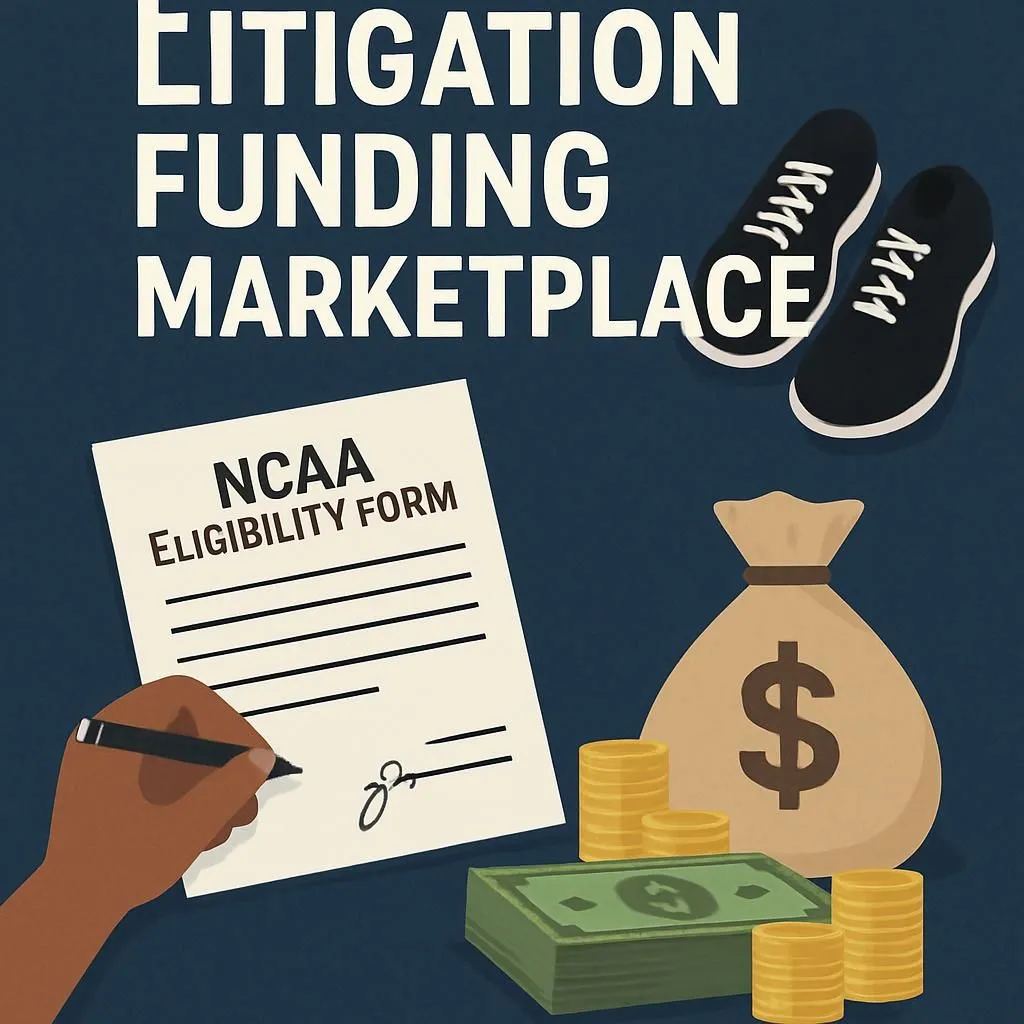
The new NCAA eligibility limits are likely to trigger years of lawsuits from athletes seeking additional seasons of eligibility and NIL earning opportunities. Many athletes have potentially valuable claims but lack the resources to fund legal action. A NIL Litigation Funding Marketplace would connect investors willing to fund legal expenses with athletes pursuing eligibility challenges. In exchange, investors would receive a percentage of future NIL earnings generated by the additional season if the athlete prevails. This applies the proven litigation-finance model to a rapidly growing sports market. The opportunity exists because the financial stakes of eligibility decisions have increased dramatically due to NIL. For example, an athlete projected to earn $1 million during a disputed extra season could secure funding for legal fees, while investors gain exposure to a potentially high-return outcome tied to the success of the case.
Description
No additional description provided.
The Pitch
College eligibility has quietly become an asset with a market value. Before NIL, an extra season was mostly an athletic or educational question; now it can resemble a recoverable economic opportunity. That shift changes the nature of the dispute. A denied season is no longer just a bureaucratic ruling—it can be a six- or seven-figure interruption of earning power, especially for athletes whose commercial value peaks before they ever reach a professional league.
The most interesting feature is the mismatch between who has the claim and who can afford to press it. Many athletes with the strongest economic incentives are not necessarily the ones with the cash, family resources, or institutional backing to sue. Meanwhile, the potential upside of a successful challenge is measurable in a way many legal claims are not: roster status, playing time, media exposure, sponsorship demand, and marketable performance all create a rough but legible underwriting surface. The result is an unusual market where legal uncertainty, athletic scarcity, and future income can be priced against one another.
It also works because NCAA eligibility disputes are not isolated accidents; they are structurally recurring. Rule changes, transfers, redshirts, injuries, international participation, junior college histories, pandemic exceptions, and conference realignment all create edge cases. A marketplace built around those edge cases could accumulate knowledge faster than any single athlete, lawyer, or booster collective. Over time, the business would not just fund cases—it would develop a proprietary view of which eligibility arguments are likely to win and which athletes have enough commercial upside to justify the risk.
The deeper insight is that NIL has made college sports more financialized, but its dispute-resolution systems still behave as if the stakes are amateur. Wherever a newly monetized asset is governed by old rules, capital eventually finds the friction. This business would sit directly at that fault line: not as a sports agency, not as a law firm, and not as a booster operation, but as a mechanism for converting trapped legal claims into tradable risk.
If it existed, its power would come from being one of the first businesses to treat eligibility not as permission to play, but as access to a temporary earning window. In sports, timing is often the whole value. A lost season cannot be replaced later; it can only be fought for now.