NIL Income Advances for College Athletes
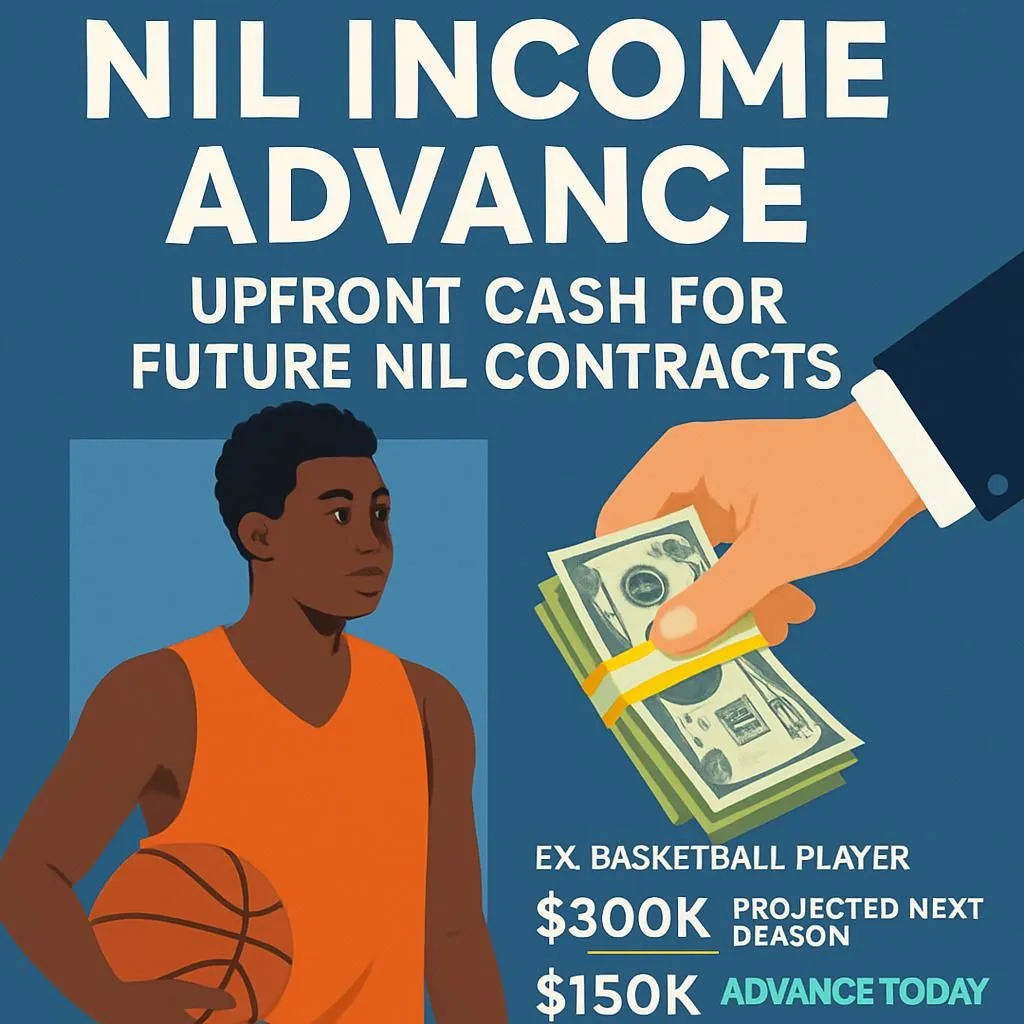
Many college athletes now have predictable future NIL income streams but lack access to traditional financing products. At the same time, uncertainty around eligibility creates a need for immediate liquidity before future earnings are realized. A NIL Income Advance company would provide upfront capital to athletes based on projected future NIL contracts, repaid as those earnings are received. Unlike traditional loans, repayment could be structured as a percentage of NIL revenue. The opportunity exists because NIL has created an entirely new asset class that financial institutions have not yet fully underwritten. For example, a basketball player with signed commitments totaling $300,000 next season could receive a $150,000 advance today to cover expenses, investments, or training costs while the company collects repayment from future NIL earnings.
Description
No additional description provided.
The Pitch
NIL income is not just endorsement money; it is the first widely visible market price for an athlete’s personal economic value before professionalization. That price is still messy, uneven, and hard to underwrite, but it is increasingly documented through contracts, collectives, agents, platforms, and brand relationships. The company that learns to read those signals well could become the financial layer around a new category of earners whose income looks nothing like a paycheck but is often more predictable than outsiders assume.
The interesting asymmetry is that banks are structurally bad at serving people whose income is large, episodic, reputation-based, and time-sensitive. A traditional lender sees a thin credit file, uncertain eligibility, and no long employment history. A specialized NIL financier sees signed deals, renewal likelihood, school-market dynamics, roster position, transfer probability, social reach, and the difference between a one-time local car dealership campaign and a recurring collective commitment. The edge is not merely providing capital; it is building a better model of athlete earning power than institutions designed around W-2 income can build.
The timing pressure matters because college athletes live inside unusually short economic windows. A player may have meaningful market value for 18 months, or six months, or only until an injury, transfer, coaching change, or draft decision resets the market. In that context, liquidity is not a convenience product. It changes choices. An athlete who can access future earnings today may avoid taking bad sponsorship terms, support family without distraction, pay for specialized training, or simply make decisions from a position of less desperation. The value of the product rises precisely because the customer’s earning window is compressed.
The business could also become more durable because repayment can attach to revenue flows rather than personal guarantees. That aligns better with how NIL money actually arrives and avoids pretending these athletes are conventional borrowers. If structured responsibly, the company is not betting on abstract potential; it is purchasing a claim on contracted or highly probable cash flows, with underwriting shaped by the specific mechanics of college sports. Over time, the real asset may be the dataset: which NIL promises become real cash, which athlete profiles retain value, and which markets overpay. In a chaotic new economy, the company that can separate genuine future income from hype would own a very useful piece of financial infrastructure.