New Educational Institutions, Companies, or Nonprofits
Description
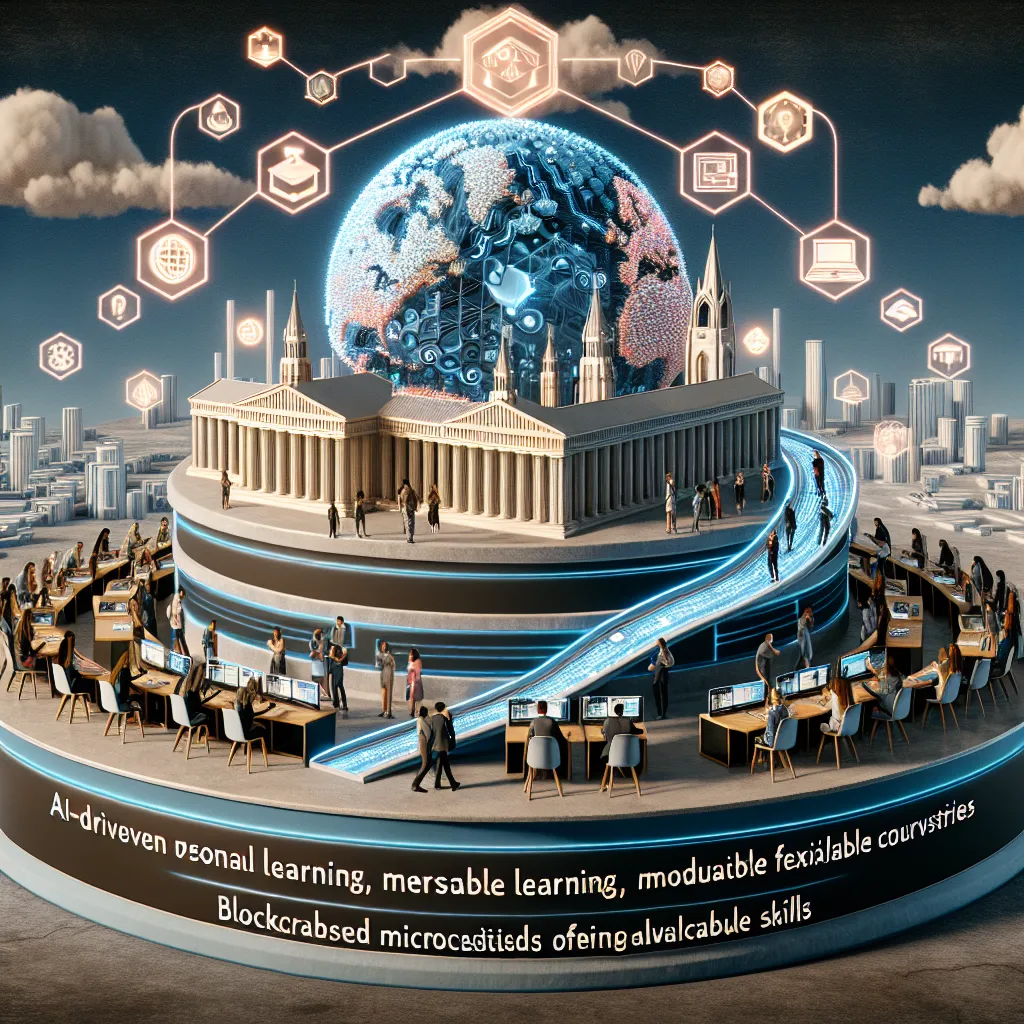
A new wave of educational institutions that will emerge to address the shortcomings of traditional universities, offering global, affordable, and flexible learning. These institutions will use AI-driven personalized learning, modular courses, and blockchain-based micro-credentials to provide students with the skills most in demand by employers. By partnering with industries to create relevant curricula and utilizing a pay-as-you-go model, they will make education accessible to a broader audience. These institutions will focus on global reach, reducing costs, and providing diverse educational pathways, creating a distinctive alternative to traditional higher education.
The Pitch
A new wave of educational institutions that cater to the unmet needs of global learners who cannot access traditional universities due to cost, location, or other constraints. These institutions will leverage technology, partnerships, and alternative credentialing to create a scalable, affordable, and highly effective education system.
How It Will Work:
Platform and Delivery:
Online/Hybrid Model: The core of the institution will be an online platform that offers courses, certificates, and degree programs. To enhance learning, it will offer hybrid options with local partnerships for in-person components (e.g., labs, group projects).
Adaptive Learning: The platform will use AI-driven tools to create personalized learning paths.
For example, if a student excels in certain subjects, the system can accelerate their progression or offer more advanced content. Conversely, it can provide additional resources for areas where the student struggles.
Curriculum and Content:
Modular Courses: Instead of a traditional four-year degree structure, the curriculum will be modular. Students can enroll in specific courses or sequences to gain skills directly applicable to their career goals. Each module can be completed independently, contributing to a larger credential if desired.
Industry-Aligned Programs: Programs will be designed in collaboration with leading industries. For instance, tech companies could help shape the curriculum for coding or AI courses, ensuring students are job-ready upon completion.
Credentialing and Certification:
Micro-Credentials: Rather than offering only full degrees, the institution will provide micro-credentials or badges that verify specific skills. For example, a student completing a course in data analysis would earn a micro-credential in that skill, which could be stacked toward a larger certification or degree.
Blockchain-Based Certification: To ensure transparency and security, certifications will be issued on a blockchain. This allows employers to easily verify the authenticity of a student’s credentials.
Cost Structure:
Pay-as-You-Go: Unlike traditional universities with high upfront costs, this model will be more affordable. Students will pay for individual courses or modules rather than an entire degree upfront, reducing financial barriers.
Scholarships and Income Share Agreements (ISAs): To further reduce the financial burden, the institution will offer scholarships and ISAs, where students agree to pay a percentage of their income after securing employment.
Student Support and Community:
One-on-One Mentorship: The platform will pair students with mentors who can guide them through their academic journey. This can be faculty members, industry professionals, or AI-driven support systems.
Global Network: Students will have access to a global community of peers, alumni, and industry experts. Virtual meetups, study groups, and forums will foster collaboration and networking, providing the social aspects of traditional universities.
Differentiators:
Global Accessibility: While many online platforms cater to specific regions, this institution will focus on reaching students in underserved areas worldwide. Partnerships with local organizations will ensure accessibility and relevance.
Alternative Credentialing: Unlike most traditional universities, this institution will prioritize skills-based credentials over traditional degrees, making education more relevant to today’s job market.
Affordability: By cutting down on administrative overhead and using technology to scale, the institution can offer a high-quality education at a fraction of the cost of traditional universities.
Customization: With personalized learning paths and modular courses, students will have the flexibility to tailor their education to their needs, a significant departure from the rigid structure of most universities.
Industry Integration: Direct collaboration with companies to design curricula will ensure that students acquire the skills that are in demand, unlike traditional universities that often lag behind industry trends.
Steps to Get There: Market Research:
Conduct detailed research to identify regions and demographics underserved by traditional universities.
Engage with industry leaders to understand the skills most in demand and how current educational models are failing to deliver them.
Pilot Program:
Launch a pilot program focusing on a specific industry, such as technology or healthcare, to test the model. This could involve partnerships with a few key employers and a small cohort of students.
Use the pilot to gather data on student outcomes, employer satisfaction, and cost efficiency.
Platform Development:
Build the core online platform with an emphasis on user experience, adaptive learning technologies, and blockchain-based credentialing.
Develop partnerships with local institutions for hybrid components and industry partners for curriculum development.
Scaling:
After refining the model through the pilot, begin scaling to other industries and regions. Focus on securing partnerships with governments and NGOs to reach underserved populations.
Expand the course catalog and begin offering full-degree equivalents alongside micro-credentials.
Marketing and Recruitment:
Launch a global marketing campaign highlighting the institution’s affordability, flexibility, and industry relevance. Emphasize the benefits of alternative credentialing to both students and employers.
Work with local partners to recruit students in target regions, offering scholarships and ISAs to attract a diverse student body.
Continuous Improvement:
Regularly update the curriculum based on industry feedback and student outcomes. Continue to innovate in areas like AI-driven personalized learning and blockchain credentialing. Build a strong alumni network and leverage their success stories to attract new students and partners.