Neuromorphic Skin Enhances Agricultural Robot Efficiency
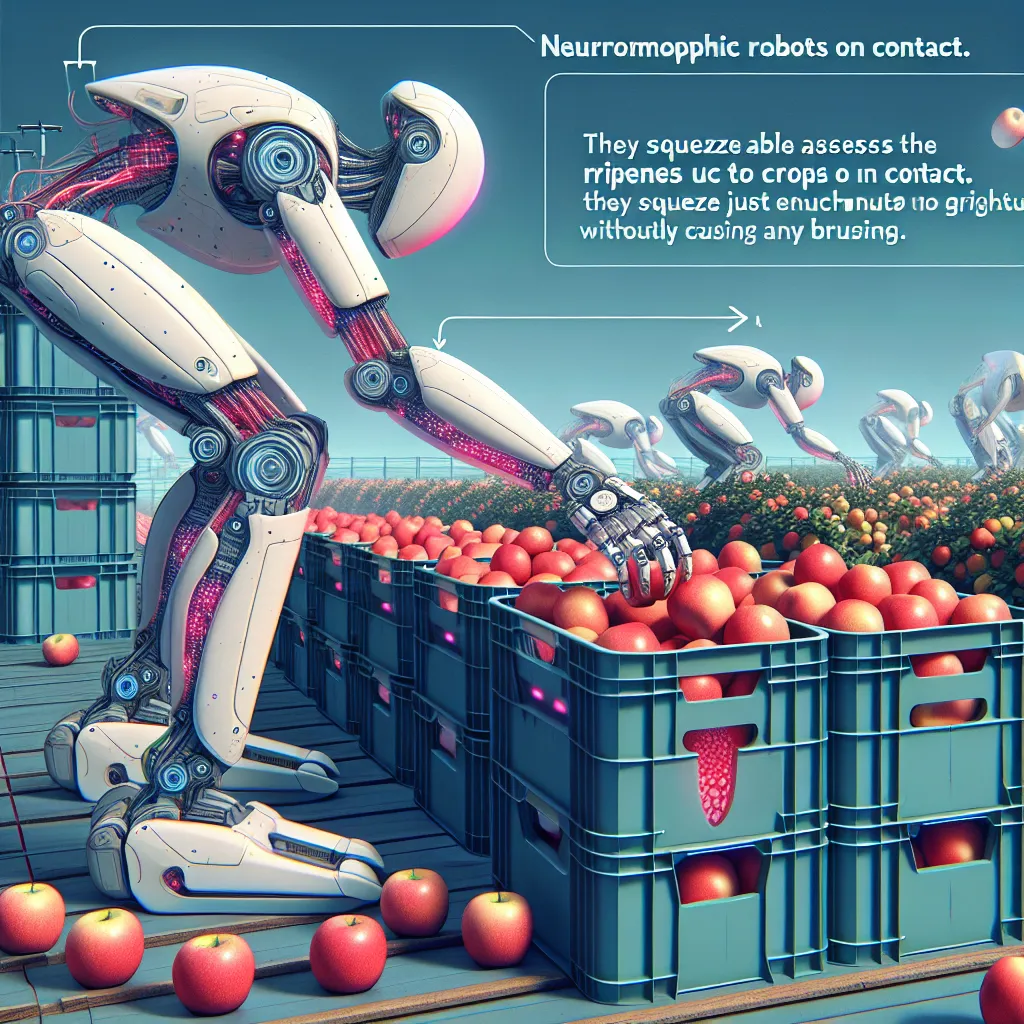
Agricultural robots can see produce, but they can’t feel it — which is why bruising and waste remain high. Humans know ripeness through micro-pressure and texture, not vision alone. Neuromorphic skin finally gives robots that same sense. This startup would build tactile-skinned grippers that assess ripeness and fragility on contact, adjusting grip strength instantly. Why now: labor shortages and food waste make automation urgent, but vision-only robots hit a ceiling. Example: a robotic apple picker that squeezes just enough to test ripeness — and never bruises the fruit.
Description
No additional description provided.
The Pitch
In recent years, the agricultural sector has faced significant challenges, with labor shortages and food waste at the forefront. Despite advancements in robotic technology, many automated solutions lack the ability to match human dexterity and sensitivity, leading to increased produce bruising and waste. The emerging field of neuromorphic skin technology offers an innovative solution: tactile-skinned robotic grippers capable of assessing ripeness and fragility in real-time.
Backstory: Traditional robotic systems in agriculture rely heavily on visual sensors to identify and pick produce. However, these vision-only systems have inherent limitations. They are unable to accurately assess the qualitative aspects of fruits and vegetables, such as ripeness, that humans usually determine through touch. As a result, many vision-reliant robots either damage produce by applying excessive force or fail to pick fruits and vegetables at the optimal stage of ripeness, leading to increased waste and reduced efficiency.
Problem: The critical issue is that existing agricultural robots lack the tactile sensitivity required to mimic human touch. This deficiency leads to several problems, including high rates of produce bruising, suboptimal harvesting due to misjudged ripeness, and overall inefficiency in agricultural operations. Coupled with an ongoing labor shortage in the agricultural sector, these challenges necessitate a reliable, efficient, and sensitive automated solution.
Solution: Develop tactile-skinned robotic grippers that integrate neuromorphic skin technology to provide robots with the sense of touch. This enhanced capability enables robots to accurately assess the ripeness and fragility of produce when in contact, adjusting their grip strength instantaneously to avoid bruising while ensuring optimal harvesting conditions.
Product Details: 1. Tactile-Skinned Robotic Grippers: These grippers will be equipped with sensors that emulate the human sense of touch, allowing them to detect micro-pressure differences and texture variations in produce. 2. Neuromorphic Skin: The core technology is a synthetic skin capable of replicating human tactile feedback, thus enabling precise manipulation of delicate agricultural products. 3. Adaptive Grip Technology: Utilizing real-time data from the sensors, the grippers can adapt their pressure, ensuring the safe handling of produce without causing damage. 4. Integration and Compatibility: The robotic grippers will be designed to integrate seamlessly with existing agricultural machinery and robotic systems.
Tools for MVP Launch: 1. Rapid Prototyping: Use 3D printing to quickly iterate gripper designs for testing and refinement. 2. Sensor and AI Development Kits: Employ off-the-shelf sensor arrays and machine learning frameworks to expedite the development of the neuromorphic skin functionalities. 3. Simulation Software: Utilize agricultural simulation tools to test and refine the robotic grippers in virtual environments before physical deployment.
Go-To-Market (GTM) Strategy: 1. Partnerships: Collaborate with leading agricultural equipment manufacturers to facilitate integration and distribution. 2. Pilot Programs: Conduct pilot programs with fruit farms and agricultural cooperatives to validate the technology and demonstrate its value. 3. Education and Training: Develop training modules to help farm operators seamlessly incorporate the robotic grippers into their workflows. 4. Marketing Campaigns: Launch targeted marketing campaigns highlighting the benefits of reduced waste, increased efficiency, and labor cost savings.
Business Model: 1. Product Sales: Sell the tactile-skinned robotic grippers directly to farms, agricultural companies, and equipment manufacturers. 2. Licensing: License the technology to agricultural robotics manufacturers for widespread adoption. 3. Subscription Model: Offer a maintenance and software update subscription service to ensure longevity and optimal performance of the grippers.
Conclusion: As labor shortages and food waste continue to pose significant challenges to the agricultural industry, the development of tactile-skinned robotic grippers presents a timely and effective solution. By enabling robots to feel and respond like human hands, this innovation promises to enhance efficiency, reduce waste, and transform automated harvesting operations worldwide.