Neural Dream Designer: Unlocking Creative Dreamscapes
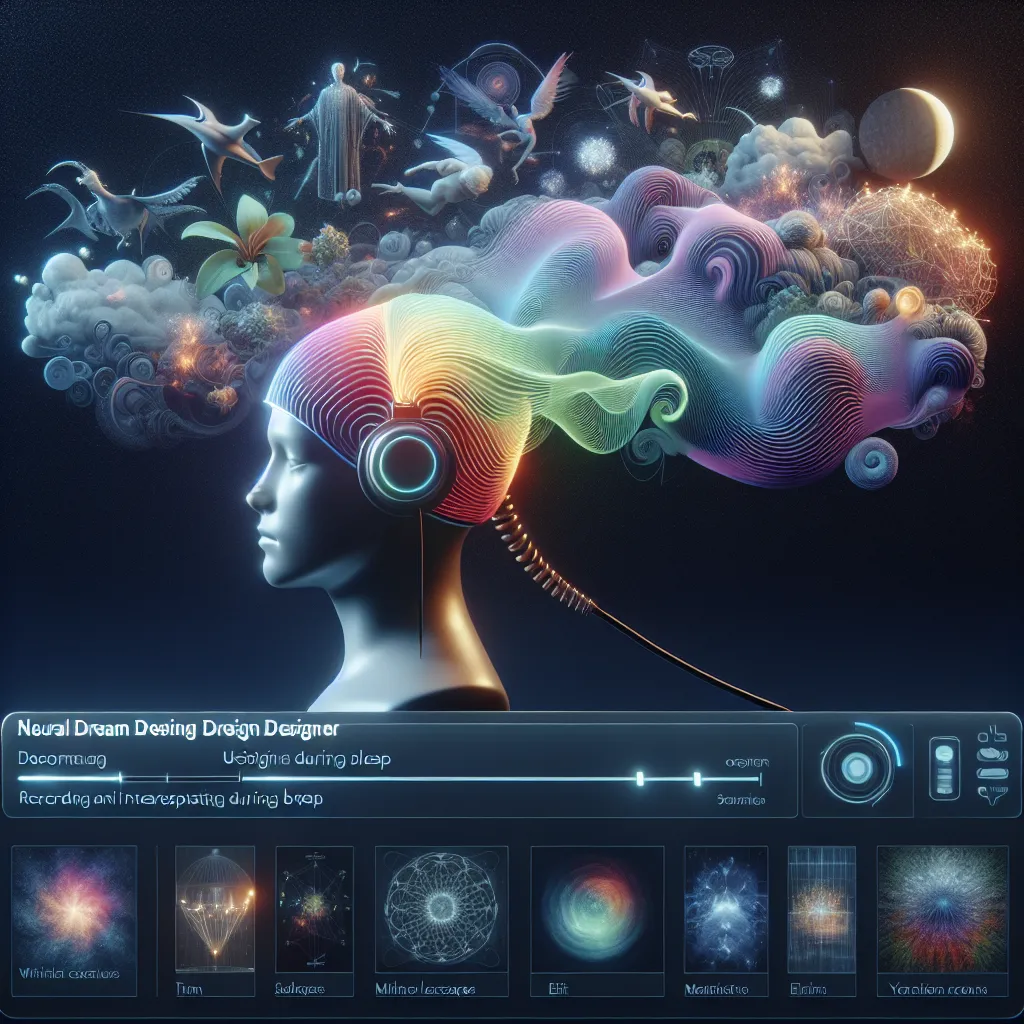
Dreams are the brain’s most powerful creative tool, but we forget most of them and have no way to control or revisit them. Creative breakthroughs are locked away in the subconscious. A neural dream designer would record and interpret brain activity during sleep to reconstruct visual and narrative dreamscapes. Using a BCI combined with generative AI models, users could wake up to view, edit, or remix their dreams into stories, designs, or even films. Advances in neural decoding during REM sleep and AI generative models make this newly feasible. Imagine waking up and downloading a full animated storyboard of your dream, or tweaking a recurring dream into a novel plot. Over time, users could even influence and design their dreams deliberately — the ultimate creative tool, merging imagination and technology.
Description
No additional description provided.
The Pitch
Human creativity has always drawn heavily from the vast and mysterious realm of dreams. For centuries, artists, writers, and inventors have sought inspiration while asleep, often waking with only fragments of the vivid worlds their minds explored overnight. While dreams possess boundless creative potential, they remain largely inaccessible. We remember only snippets, unable to revisit, control, or utilize these hidden narratives fully. Recent advancements in neuroscience and artificial intelligence suggest that we might soon bridge this gap, making the subconscious a more tangible source of creativity.
**Problem:**
The primary challenge lies in the fleeting nature of dreams. Most people forget their dreams upon waking, losing potential insights and breakthroughs that could otherwise inspire and fuel creativity. Moreover, the uncontrollable aspect of dreams means there's no way to guide or shape them intentionally. As a result, this rich reservoir of creative material remains untapped and uncontrollable.
**Solution:**
Introduce a Neural Dream Designer — a groundbreaking tool that records, interprets, and reconstructs brain activity during sleep to create visual and narrative representations of dreams. By integrating a brain-computer interface (BCI) with generative AI models, users can access, edit, and transform their dreams upon waking. This technology offers a new creative outlet, empowering individuals to harness their subconscious imagination actively.
**Product Details:**
1. **Brain-Computer Interface**: A non-invasive headset that monitors neural activity during REM sleep, the stage where most vivid dreaming occurs.
2. **Generative AI Models**: Advanced AI systems capable of translating neural patterns into coherent visual and narrative outputs, creating dream representations that users can interact with.
3. **Dream Editing Software**: A user-friendly interface allowing individuals to view, edit, or remix dream narratives into various creative formats, such as stories, designs, or animations.
4. **Dream Influence Module**: Over time, using machine learning algorithms, users could influence the content of their dreams, directing themes or altering recurring patterns to explore new creative avenues deliberately.
**Tools for an MVP Launch:**
1. **Open-Source Machine Learning Libraries**: Utilize frameworks like TensorFlow or PyTorch for developing and training generative AI models.
2. **BCI Development Kits**: Incorporate existing BCI solutions, such as those provided by OpenBCI, to facilitate real-time brain activity monitoring.
3. **Prototype Software Development**: Use agile software development methodologies to create the initial user interface and experience for dream interaction. Tools like Unity or Unreal Engine can be used for rendering visualizations.
4. **Partnership with Neuroscience Experts**: Collaborate with academic institutions or neuroscience research centers to refine neural decoding techniques.
**Go-To-Market Strategy:**
1. **Early Adopters and Beta Testing**: Target creative professionals such as artists, writers, and filmmakers who are likely to appreciate and leverage dream-based creativity. Offer beta test invitations to gather feedback and refine the product.
2. **Partnerships and Collaborations**: Collaborate with creative organizations or platforms to showcase potential applications and capture the interest of larger creative communities.
3. **Content Creation Challenges**: Host competitions or challenges inviting users to create unique content from their dreams, highlighting the tool's creative potential and generating buzz.
4. **Educational Workshops and Seminars**: Conduct events focusing on the intersection of neuroscience, technology, and creativity, positioning the Neural Dream Designer as a leader in this emerging field.
**Business Model:**
1. **Subscription-Based Model**: Offer tiered subscription plans giving users access to different levels of dream recording, editing features, and storage.
2. **Freemium Model**: Provide basic dream visualization for free, with premium features available for paying subscribers.
3. **Content Marketplace**: Enable users to sell their dream-based creations—stories, designs, films—through an integrated marketplace, taking a commission on sales.
4. **B2B Partnerships**: Develop specialized solutions for creative industries or institutions interested in leveraging dreams for innovation and original content creation.
The Neural Dream Designer represents the ultimate convergence of imagination and technology, offering unprecedented access to the unconscious. By transforming the way we perceive and interact with our dreams, this innovation has the potential to revolutionize creativity on a global scale.