Neighborhood Battery Network for Peak Demand Management
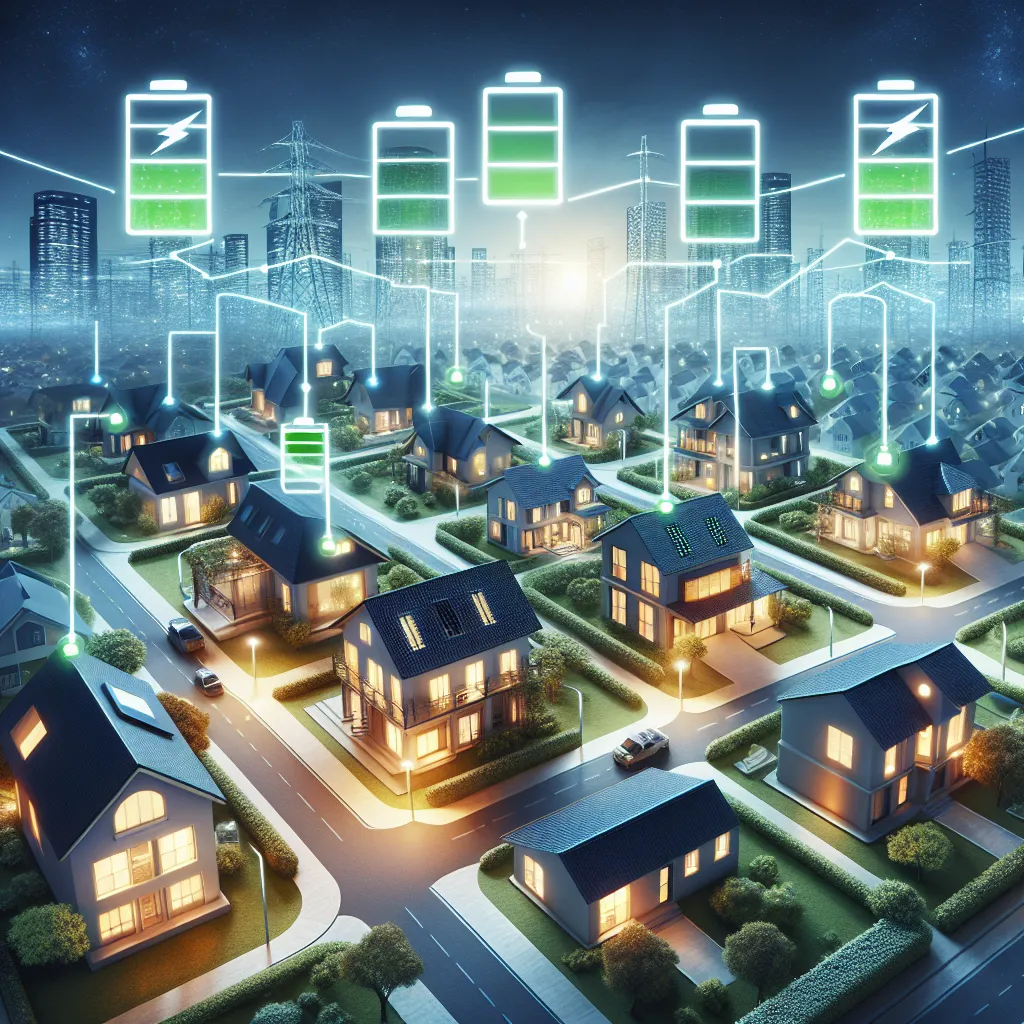
Millions of home and business batteries will sit idle most of the time, used only for backup. A neighborhood-level battery pooling network could coordinate these assets and allow storage capacity to be shared or sold locally during demand spikes. This becomes viable as battery adoption and lifespan reach scale. A block of homes could collectively smooth peak demand instead of pulling expensive power from the grid.
Description
No additional description provided.
The Pitch
The rise of renewable energy sources and increasing awareness of energy efficiency have led to a significant uptick in battery installations across both residential and commercial properties. These batteries serve primarily as backup power sources, often sitting idle during non-emergency periods. With a growing emphasis on sustainability and efficient energy utilization, there exists a promising opportunity to maximize the utility of these assets and promote a more resilient and interconnected energy ecosystem.
Problem
Despite the widespread adoption of these batteries, they are predominantly underutilized, providing backup power only during infrequent outages. Furthermore, on a macro level, energy demand spikes continue to strain electrical grids, leading to costly energy pull from centralized sources. This results in increased energy costs, especially during peak demand periods, and occasionally contributes to grid instability.
Solution
A neighborhood-level battery pooling network offers a compelling solution. By creating a system where local communities can interconnect individual battery storage units, they can transform idle assets into active participants in energy management. This system would enable shared energy storage and distribution, allowing neighborhoods to collectively manage peaks in energy demand more cost-effectively than drawing from the central grid.
Product Details
1. **Network Infrastructure**: Develop a secure, cloud-based platform to manage and optimize the distribution of stored energy. This platform would monitor battery levels and energy demand and facilitate transactions between network participants.
2. **Smart Monitoring System**: Integrate IoT-enabled sensors and smart meters within individual battery units. This real-time monitoring will ensure precise energy distribution and usage tracking.
3. **User-friendly Mobile Application**: Create a mobile app for users to manage their participation in the network. Features would include energy usage reports, the ability to decide when and how much energy to share or sell, and notifications for peak demand periods.
4. **Incentive System**: Implement an incentive program allowing participants to earn credits or financial compensation for contributing their stored energy during demand peaks.
Tools for Launching an MVP
- **Cloud Services**: Utilize platforms like AWS or Azure for the backend infrastructure to ensure scalability and reliability. - **IoT Platforms**: Employ IoT development kits such as Arduino or Raspberry Pi for integrating smart sensors into battery systems. - **Mobile Development Frameworks**: Use React Native for efficient cross-platform mobile app development. - **Data Analytics Tools**: Incorporate tools like Tableau or Power BI for real-time energy monitoring and analytics.
Go-to-Market Strategy
1. **Pilot Program**: Initiate a pilot program in a selected community where battery usage is abundant. Partner with local energy providers and battery manufacturers to ensure a smooth launch. 2. **Marketing Campaigns**: Leverage digital marketing and community workshops to educate potential users about the benefits of neighborhood battery pooling. 3. **Strategic Partnerships**: Build alliances with energy companies, tech providers, and local governments to boost credibility and foster growth. 4. **Customer Support and Training**: Provide comprehensive support and training for users to maximize engagement and ensure a seamless user experience.
Business Model
- **Subscription Model**: Charge a monthly subscription fee for access to the network, offering different tiers based on the level of participation and energy capacity shared. - **Transaction Fees**: Implement a small transaction fee for energy sold through the network. - **Data Services**: Offer anonymized data to energy companies for better grid management and predictive analytics.
By adopting this innovative strategy, communities can create a more efficient, sustainable, and economically advantageous energy ecosystem, turning passive battery storage into an active resource for grid stability and energy cost reduction.