Multimodal OS: Voice and Vision Computing Revolution
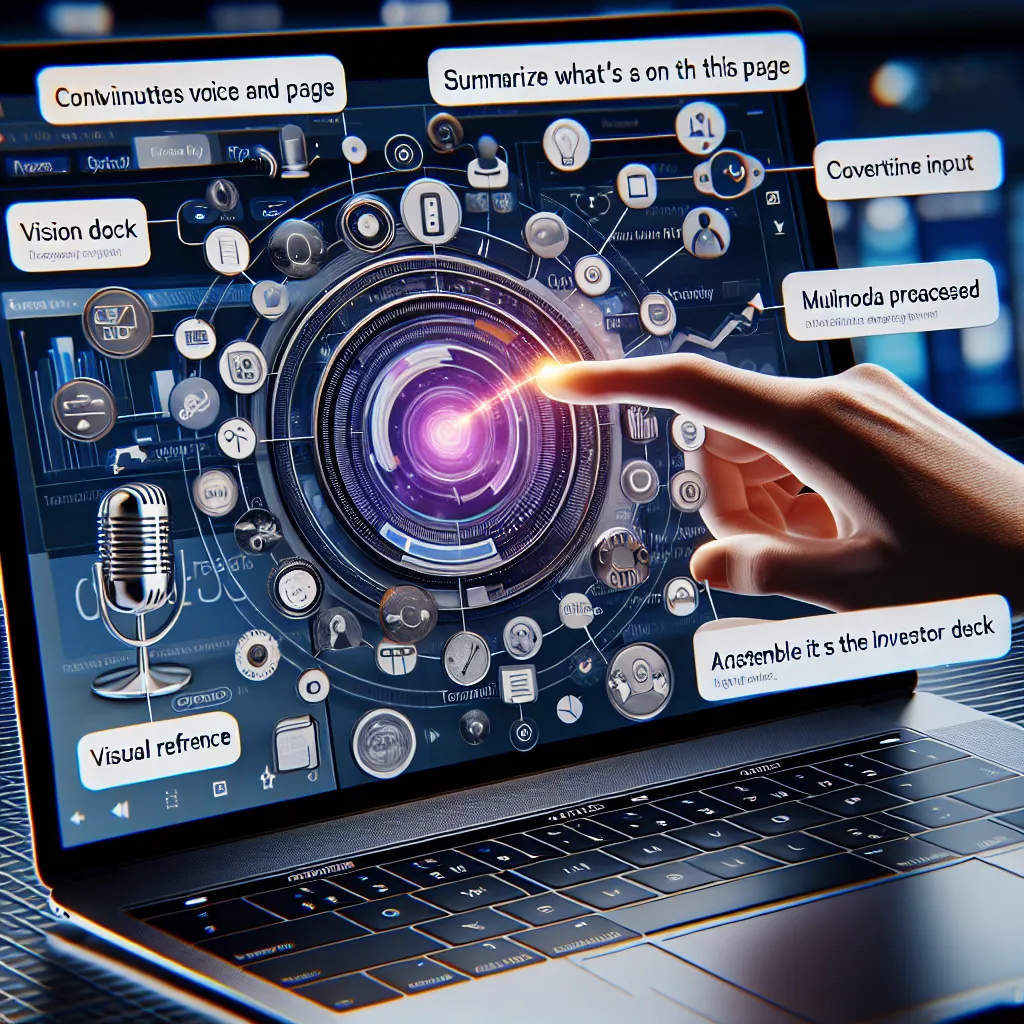
Keyboard/trackpad computing persists mostly out of inertia, not necessity. The opportunity is a multimodal OS built around continuous voice and vision input—point, speak, glance, gesture—and the system executes. Not “voice commands,” but conversational intent paired with visual grounding. With phones and laptops already shipping high-quality microphones and cameras, the hardware is here; software hasn’t arrived. Picture saying, “Summarize what’s on this page and add it to the investor deck,” while glancing at a webpage, and the OS assembles the slide in real time.
Description
No additional description provided.
The Pitch
For years, the evolution of computing has focused on refining the traditional keyboard and trackpad interactions. While these tools have served us well, the rapid advancements in hardware capabilities—specifically high-quality microphones and cameras—present an opportunity to reimagine how we interact with our devices. The potential to create a truly multimodal operating system (OS) is significant, leveraging voice and vision inputs to facilitate seamless, natural interactions with technology.
**The Problem**
The current reliance on voice commands and manual navigation limits the potential of user-device interaction. Despite having the hardware capabilities built into modern devices, we are stuck in a paradigm where human-machine communication is neither intuitive nor efficient. We are expected to adapt to the limitations of our devices, rather than our devices adapting to our natural modes of communication.
**The Solution**
Introduce a multimodal OS that leverages continuous voice, vision, gesture, and intent-based interactions. This OS would interpret conversational intent combined with visual cues, enabling more fluid and natural user experiences. Users could perform complex tasks such as summarizing information on a webpage and integrating it into documents simply by speaking and gesturing.
**Product Details**
1. **Voice and Vision Integration**: Utilize existing microphone and camera technology to enable the OS to understand both spoken intent and visual context.
2. **Conversational Interface**: Move beyond voice commands to enable dynamic, context-aware conversations with the OS where users can converse naturally to perform tasks.
3. **Gesture Recognition**: Implement gesture-based interaction for tasks like navigating through documents, selecting objects, or providing feedback.
4. **Real-time Execution**: The OS would process inputs and execute tasks in real time, reducing wait times and increasing efficiency.
**Tools for MVP**
1. **API Integration**: Leverage voice recognition and natural language processing APIs, such as those from Google Cloud or IBM Watson, for language understanding.
2. **Computer Vision Frameworks**: Use open-source computer vision libraries like OpenCV or commercial solutions to interpret visual inputs.
3. **Gesture Recognition Software**: Implement software like Leap Motion for hand and finger gesture detection.
4. **Machine Learning Models**: Train models to better understand and predict user intent based on historical data and contextual cues.
**Go-to-Market Strategy**
1. **Early Adopters Program**: Target tech enthusiasts and professionals eager to increase productivity with cutting-edge technology. Offer them early access in exchange for feedback.
2. **Partnerships**: Collaborate with hardware manufacturers to integrate the OS into their devices, highlighting the value of advanced interaction capabilities.
3. **Developer Community**: Build a strong developer community around the OS to facilitate the creation of applications that leverage its unique capabilities.
4. **Educational Campaigns**: Educate potential users on the benefits and use cases of a multimodal interface through webinars, demos, and user testimonials.
**Business Model**
1. **Subscription Service**: Offer the OS as a subscription service, providing continuous updates and improvements.
2. **Licensing Agreements**: License the OS technology to device manufacturers and enterprise clients.
3. **App Marketplace**: Create a marketplace for applications designed specifically for multimodal interaction, taking a percentage of sales.
4. **Custom Solutions**: Provide custom solutions and consulting for businesses looking to integrate this technology into their operations.
---
With the hardware already in place in most modern devices, the transition to a multimodal OS is not just feasible but inevitable. By focusing on natural, intuitive interactions, this initiative aims to revolutionize how users engage with technology, making computing as seamless and efficient as possible.