Monthly Art Print Subscription Service
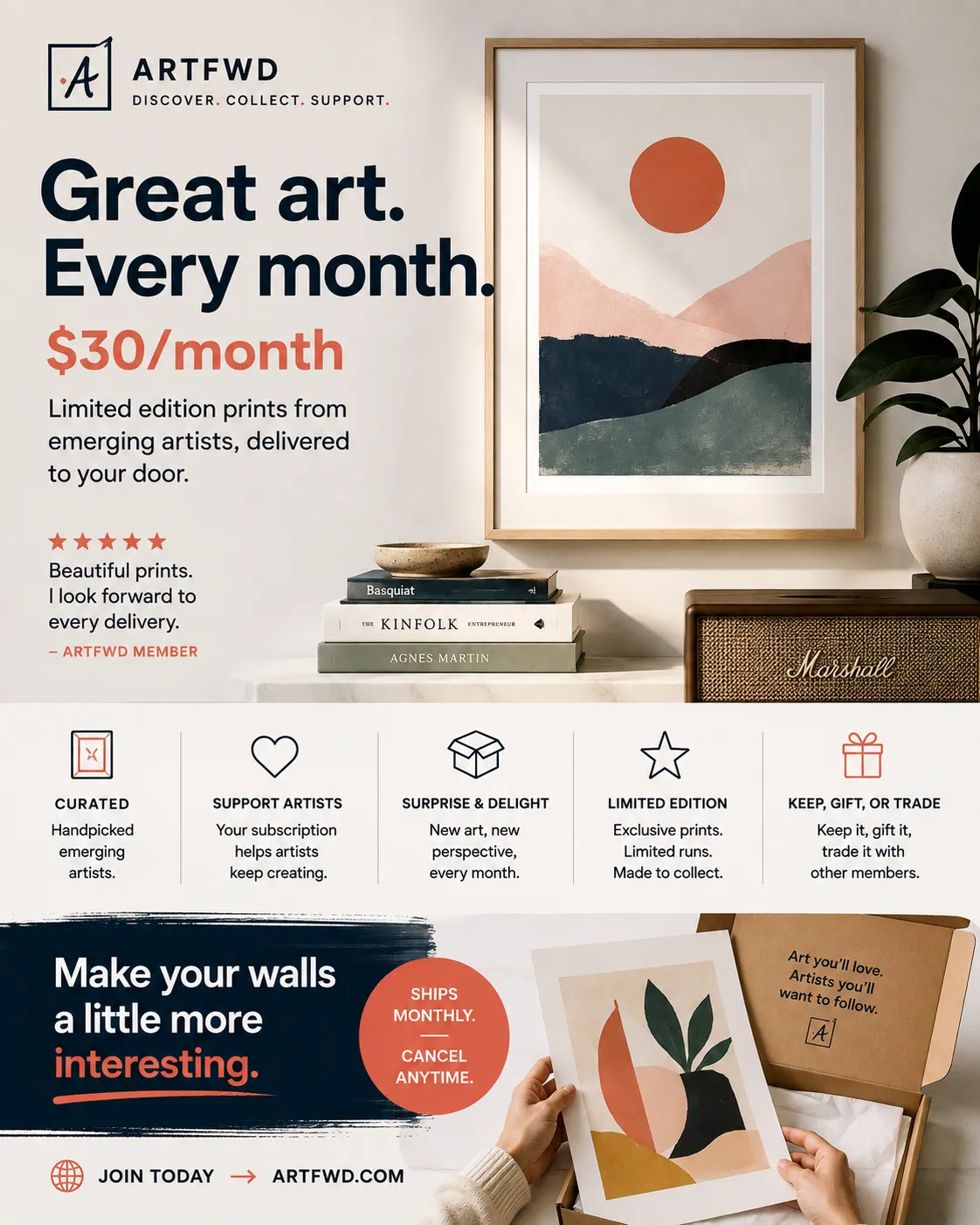
Most people's walls are decorated once and then remain exactly the same for the next decade. Build a $30-a-month art subscription that sends you a new limited-edition print from an emerging artist every month. Keep it, frame it, gift it, trade it with another subscriber, or send it back for credit. Every shipment includes the story of the artist and the work, so over time you're also discovering people before everyone else does. Spotify made discovering musicians effortless. Do the same thing for the artists who still need walls.
Description
No additional description provided.
The Pitch
The interesting part is not that people need more prints. It is that most homes have no living layer between disposable décor and the intimidating world of galleries. A monthly art service would occupy that missing middle: affordable enough to feel casual, but scarce and authored enough to feel meaningful. That combination is rare. Cheap wall art is usually anonymous; serious art is usually inaccessible. The business works if it makes taste feel participatory rather than performative.
Art also has a peculiar advantage over most subscription categories: it changes the emotional temperature of a room. A new print is not another object in a drawer or feed. It is publicly visible, repeatedly encountered, and quietly identity-forming. People talk about what is on their walls because walls are a form of autobiography. A service that steadily helps someone build that autobiography can become more durable than a box of consumables, because the product accumulates into a personal archive.
The artist side may be even more important. Emerging visual artists have fewer discovery rails than musicians, writers, or filmmakers. Social platforms reward spectacle and consistency, not necessarily work someone wants to live with for years. A subscription can turn discovery into patronage without asking either side to behave like collectors. For artists, a print edition creates income, audience, provenance, and proof of demand. For subscribers, the story behind the work gives them the one thing mass-market décor cannot: a reason to care.
The exchange, return, and credit mechanic matters because it lowers the psychological risk of taste. People often avoid buying art not because it is too expensive, but because choosing feels too final. If art can circulate, the decision becomes lighter and more social. That transforms the category from “decorate correctly” into “develop an eye.” The company would not merely sell images; it would sell permission to change your mind.
The deeper business is a taste network. Over time, it would know which artists, styles, rooms, cities, and cultural moments resonate before the traditional art market notices. That information could make the service better for subscribers and fairer for artists, while giving the company a rare position: a consumer brand built around discovering visual culture early, at home scale, before it becomes institutional taste.