Modular Learning Wallet: Future of Education Credentials
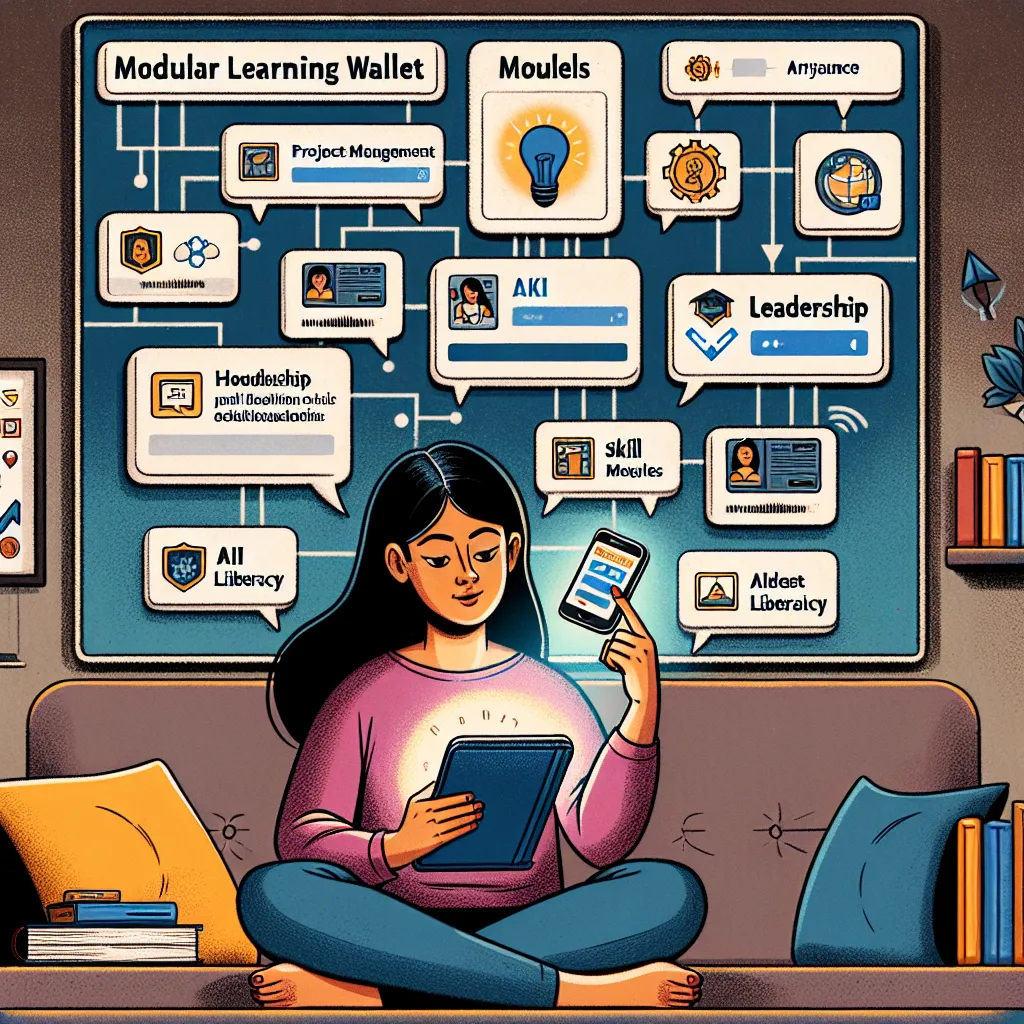
The traditional education system is breaking down under its own weight: it’s expensive, slow, and increasingly disconnected from real-world skills. Gen Zs and Millennials are turning away from the idea that a single, four-year degree can future-proof a career, especially as AI accelerates the need for rapid, ongoing upskilling. Yet today’s online learning options — while abundant — are chaotic and fragmented, making it hard to stitch together a coherent path. A Modular Learning Wallet would change that by letting individuals build their education like a playlist — stacking bite-sized, verifiable learning modules from different providers into a cohesive, portable skills passport. Instead of a diploma, users would have a dynamic wallet of credentials: a project management badge from Google, a leadership module from Harvard Online, a GenAI literacy certificate from OpenAI. Unlike current platforms that trap learners inside one ecosystem, this would be an open layer — aggregating, validating, and updating all learning achievements in one place, controlled by the user, not the institution. It taps into two huge trends: the shift toward skills-first hiring, where companies care less about degrees and more about what you can do, and the consumerization of education, where learners demand flexible, affordable, on-demand access. As the half-life of skills shrinks and career paths become more non-linear, a Modular Learning Wallet could replace the static degree with a living, evolving career asset — owned by the individual and updated for life, not just four years at a time.
Description
No additional description provided.
The Pitch
In a world where the demands of the workforce are evolving rapidly, the traditional education system is facing increasing scrutiny. With exorbitant costs, slow adaptation to industry needs, and a one-size-fits-all approach, it hasn't kept pace with the technological advancements reshaping the job market. The integration of artificial intelligence into various sectors necessitates a new learning paradigm — one that is agile, personalized, and practical.
The Challenge:
Today's learners, particularly Millennials and Gen Zs, are skeptical of the notion that a single, four-year degree can secure their careers indefinitely. The dynamic nature of current job markets underscores the importance of continuous skill development. While there’s no shortage of online courses, these options remain disorganized and inconsistent, making it difficult for learners to compile a streamlined, meaningful curriculum.
The Solution:
A Modular Learning Wallet offers an innovative solution. Imagine an educational framework akin to constructing a playlist: learners can curate a personalized educational journey by combining diverse, bite-sized modules from multiple providers. This wallet serves as a coherent skills passport, highlighting a collection of verifiable credentials. Instead of a diploma, individuals possess a dynamic collection of micro-credentials such as a project management badge from Google, a leadership module from Harvard Online, or a GenAI literacy certificate from OpenAI.
Product Details:
1. Open and Learner-controlled: The wallet functions as an open layer that aggregates, validates, and updates all learning achievements. Users, not institutions, maintain control.
2. Interoperable and Inclusive: Seamless integration with various educational providers ensures broad access to a range of courses and modules.
3. Skills-focused: Tailored for a workforce increasingly focused on competencies rather than formal degrees, the wallet is aligned with the growing trend of skills-first hiring.
4. Updatable and Portable: The wallet remains a living document, evolving with new skills and competencies as the learner advances in their career.
5. Secure Verification: Utilizing blockchain technology, the credentials stored in the wallet are secure and easily verifiable by potential employers.
Tools for MVP Launch:
1. Learning Management System (LMS) Integration: Collaborate with existing LMS platforms to facilitate module offerings.
2. Blockchain for Credential Security: Leverage blockchain technology to ensure the authenticity and security of wallet contents.
3. User-friendly Interface Development: Employ UX/UI design tools like Figma or Sketch to create an intuitive user experience.
4. API Ecosystem: Develop robust APIs to enable seamless integration with diverse educational providers.
Go-to-Market Strategy:
1. Strategic Partnerships: Forge alliances with prominent educational institutions and online course providers to populate the wallet with esteemed offerings.
2. Targeted Marketing: Focus on demographic segments most disillusioned with traditional education models, particularly Millennials and Gen Zs.
3. Community Building: Establish a vibrant online community where learners and educators can interact, share insights, and encourage life-long learning.
4. Employer Collaboration: Partner with forward-thinking companies interested in skills-first hiring, demonstrating the wallet’s utility in sourcing new talent.
Business Model:
1. Freemium Model: Offer basic functionality free of charge, with premium features available via subscription.
2. Transactional Revenue: Incorporate a commission on course enrollments facilitated through the platform.
3. Institutional Solutions: Provide tailored solutions for education providers looking to expand their reach and integrate into the modular framework.
Conclusion:
As the half-life of skills continues to decrease, and careers become increasingly non-linear, the Modular Learning Wallet is poised to revolutionize the way individuals approach education. By offering a flexible, skills-oriented, and learner-controlled alternative to traditional degrees, it represents not just an evolution of education, but a reimagining of its very foundation.