Modern Liberal Arts: Timeless Skills, Modern Twist
As AI eats work and automation scales productivity, what remains valuable are the timeless human skills: storytelling, ethics, critical thought. But “liberal arts” education has a branding problem—seen as elitist, abstract, or dull. Enter the Modern Liberal Arts Academy: a subscription-based “gym for the mind” that blends ancient wisdom with modern memes. Think Plato + pop culture, Aristotle + AI ethics, Baudrillard + Black Mirror. Live salons, group chat debates, and creative writing challenges build emotional literacy, cultural fluency, and meaning-seeking habits. Trends like cohort-based courses, “internet philosophy,” and the rise of Not Boring/Every/Psychology of Money prove demand. Imagine a Slack channel titled “What would Tolstoy tweet?” or a community writing prompt: “Write the plot of Infinite Jest as if it was a Netflix show.” People don’t just want content—they want to contemplate. This makes that cool.
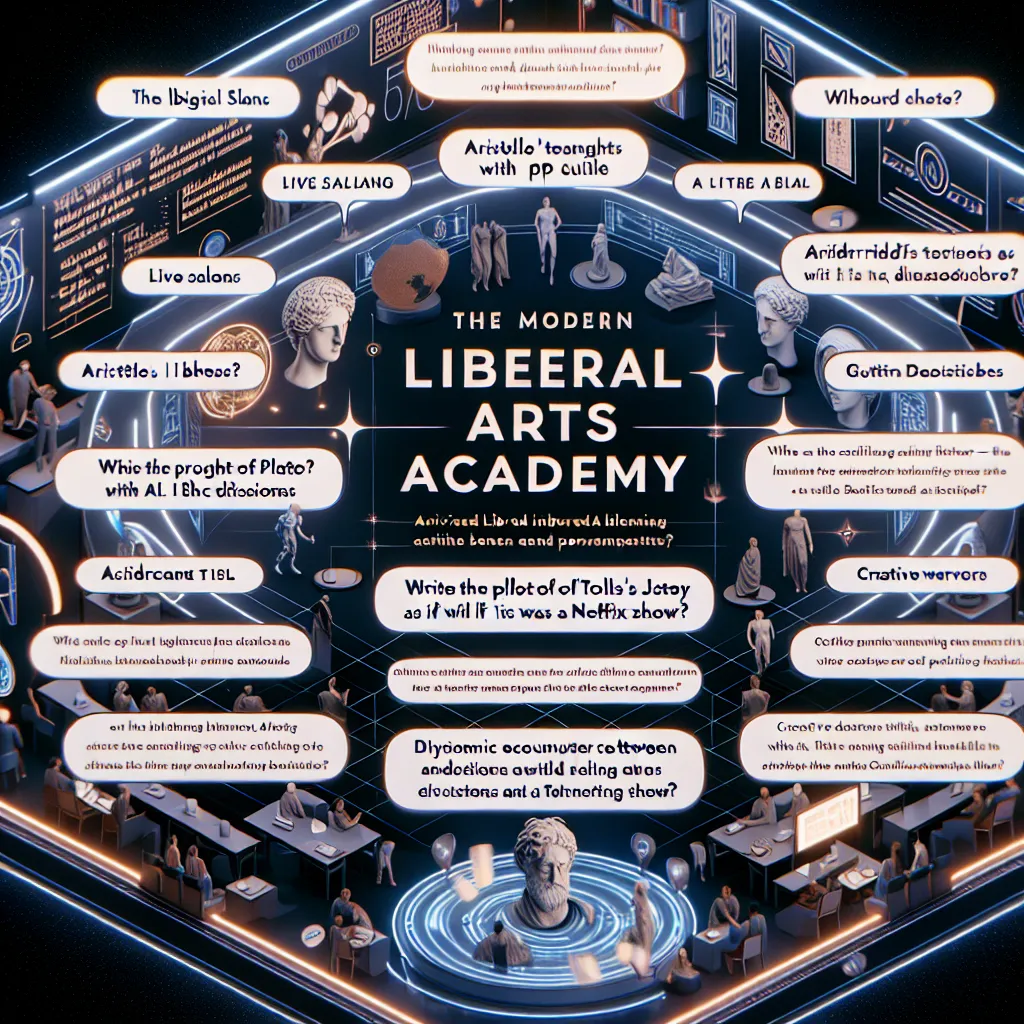
Description
No additional description provided.
The Pitch
In a world increasingly dominated by artificial intelligence and automation, the distinction between human and machine skills becomes ever more apparent. While machines excel at tasks involving speed, data processing, and efficiency, they cannot replicate the nuanced and deeply human skills of storytelling, ethics, and critical thinking. Despite the enduring importance of these abilities, the field of liberal arts struggles with perceptions of being elitist, abstract, or disconnected from modern realities. This presents both a challenge and an opportunity—a chance to reinvigorate and rebrand liberal arts education for a new era through the creation of the Modern Liberal Arts Academy.
**Backstory and Problem**
The liberal arts have long been associated with a well-rounded education, fostering individuals who can analyze, reason, and engage deeply with the world. However, its reputation has suffered in recent years. Many view liberal arts disciplines as impractical or irrelevant in our STEM-focused job market. This is coupled with the perception that they are reserved for an academic elite, disconnected from everyday life's practicalities and urgencies. In reality, the skills and methodologies offered by the liberal arts are more crucial than ever in navigating the complexities of modern life.
**Solution**
The Modern Liberal Arts Academy proposes a renewed approach to liberal arts education: a subscription-based platform dubbed a gym for the mind, where timeless wisdom meets contemporary context. By marrying classic philosophical texts with current cultural phenomena, we aim to make liberal arts feel accessible, relevant, and, most importantly, engaging.
**Product Details**
- **Content Structure**: Curate and create content that blends traditional liberal arts themes with modern elements like pop culture, emerging technology, and current events.
- **Interactive Features**: Live online salons, where members engage with guest speakers and discuss seminal texts in light of modern issues.
- **Community Engagement**: Facilitated group debates in chat forums, like Slack or Discord, fostering a community of inquisitive minds.
- **Creative Challenges**: Regular creative writing prompts and challenges that encourage members to apply critical thought and creativity, such as reimagining classic literature as modern media formats.
- **Tools and Resources**: Include platforms for content delivery, such as Zoom for live salons, Substack for written content, and Slack or Discord for community discussions.
**MVP and Launch Tools**
To launch this intellectual gym, a Minimum Viable Product (MVP) approach can be employed:
- **Initial Platform**: Use existing platforms like Substack for content hosting and subscriptions, Discord for community interaction, and Zoom for real-time events.
- **Pilot Testing**: Start with a smaller, focused cohort to test content, engagement strategies, and technological solutions.
- **Feedback Loops**: Establish clear mechanisms for user feedback to iterate and refine the platform quickly.
**Go-to-Market (GTM) Strategy**
- **Target Audience**: Focus on young professionals, lifelong learners, and digital natives eager for intellectual enrichment outside traditional academic environments.
- **Marketing Channels**: Leverage social media platforms, educational podcasts, and influential online educators to reach potential subscribers.
- **Content Partnerships**: Collaborate with educators, writers, and thinkers in the liberal arts field to co-create engaging and diverse content offerings.
- **Community Building**: Foster a sense of membership through interactive and dynamic community events that encourage participation and create a loyal subscriber base.
**Business Model**
- **Subscription-Based**: Offer tiered subscription plans that provide various levels of access and engagement, from basic content access to premium live events and one-on-one mentorship sessions.
- **Freemium Model**: Offer a selection of free content to attract users and demonstrate value, encouraging conversion to the full subscription model.
- **Corporate Partnerships**: Collaborate with businesses to provide modern liberal arts training as part of professional development programs, emphasizing the transferable skills these courses can nurture.
By reimagining liberal arts through the lens of contemporary issues and formats, the Modern Liberal Arts Academy can disrupt the current narrative, making these timeless skills attractive, accessible, and applicable for the modern learner.