mmNorm Bots: Secure Last-Mile Package Delivery Solutions
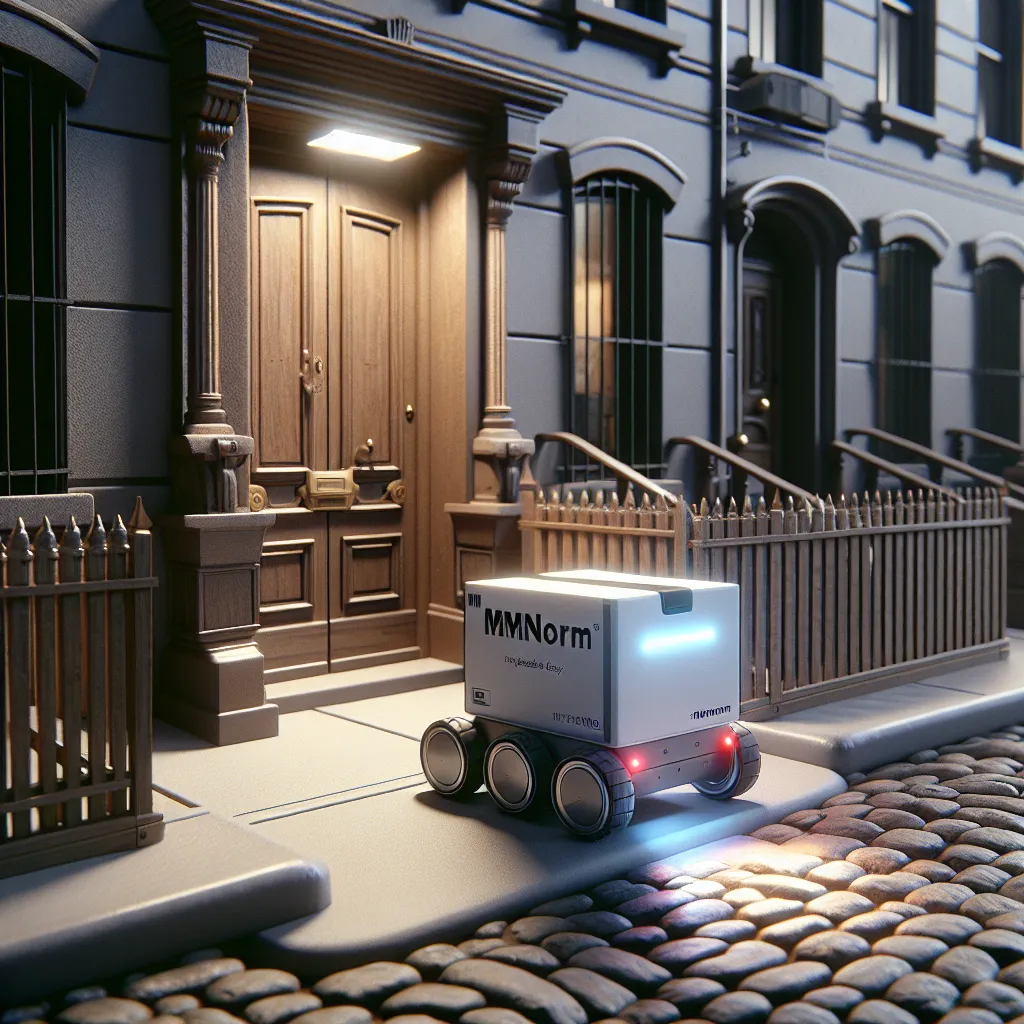
One challenge in last-mile delivery for drones and bots is identifying where to safely leave packages—especially when mailboxes, porches, or storage lockers are obscured or partially enclosed. A logistics startup could build mmNorm-powered autonomous bots that scan for valid drop zones behind fences, inside cubbies, or through mailbox slots, reconstructing usable shapes without opening anything. Why now? mmNorm enables spatial understanding of occluded areas through common materials like plastic or wood. A drone flying up to a brownstone might recognize the exact shape and empty space inside a locked parcel box behind a wooden gate—and safely deliver into it. This would enable secure deliveries even when visibility is blocked or access is tight.
Description
No additional description provided.
The Pitch
Understanding the landscape of last-mile delivery reveals a challenge that's becoming increasingly pertinent: identifying secure and accessible drop-off points for delivery drones and autonomous bots. A frequent issue arises when these drones or bots encounter obstacles such as fences, partially enclosed porches, or small storage lockers. These obstructions can impede straightforward deliveries and potentially compromise package security.
**Backstory and the Problem**
As e-commerce continues to grow, so does the demand for efficient and reliable delivery solutions. Consumers increasingly expect rapid delivery times with minimal fuss regarding where and how packages are delivered. Current last-mile delivery solutions sometimes struggle with delivering to residential areas where traditional drop-off points are obscured or not easily accessible. For example, a package may need to be placed through a mailbox slot or inside a locked storage unit usually behind a domicile's gate.
These challenges necessitate solutions that can physically adapt and understand dynamic urban and suburban infrastructure nuances. Failing to adequately address these constraints not only risks incorrect deliveries but also exposes packages to potential theft or damage, which could erode consumer trust and satisfaction.
**The Solution**
mmNorm technology presents a breakthrough opportunity by offering spatial understanding capabilities for autonomous delivery systems. Utilizing principles that enable detection of shapes and spaces even when obscured by materials like wood or plastic, mmNorm empowers delivery drones and bots to accurately identify safe and secure drop-off locations. This capability transforms the delivery process, making it more seamless and secure, thus directly addressing the unresolved issue of limited accessibility amidst common residential obstacles.
**Product Details**
The envisioned solution features delivery drones and autonomous bots integrated with mmNorm-driven spatial understanding. These devices will be equipped with advanced sensors and machine learning algorithms that facilitate real-time scanning of delivery environments. For example, they might fly or navigate up to a front porch enclosed by a fence and determine the precise location and contours of a parcel box hidden from direct sight. By reconstructing hidden spaces dynamically, these systems can execute deliveries more intuitively and securely.
**Tools for MVP Launch**
1. **Prototyping Tools:** Utilize software platforms such as ROS (Robot Operating System) for developing the autonomous navigation and control systems required for drone and bot operation.
2. **3D Spatial Mapping:** Implement 3D mapping technologies powered by LiDAR and mmWave sensors to facilitate accurate spatial reconstructions.
3. **Machine Learning Frameworks:** Deploy machine learning models using tools like TensorFlow that can evolve and adapt to different environmental queuing and delivery scenarios.
4. **Hardware Development Kits:** Use development kits from providers such as NVIDIA Jetson to provide the necessary onboard computation for processing spatially complex data.
**Go-To-Market Strategy**
Launch the solution with an initial focus on urban and suburban areas where delivery challenges are most pronounced. Key strategies may include:
* Partnering with major e-commerce platforms and logistics companies to integrate this technology within their delivery fleet. * Running pilot programs in select cities to gather data and refine machine learning models. * Launching marketing campaigns that highlight the increased security and efficiency provided by the solution, targeting both consumers and businesses with particular sensitivity to delivery safety.
**Business Model**
The business model should consider a B2B approach, providing the solution as a SaaS platform for logistics companies seeking to optimize their delivery operations. Revenue streams might include:
- Subscription fees based on fleet size or delivery volume. - Licensing of the navigation and spatial recognition software to drone and bot manufacturers. - Offering premium support and custom solutions for specific logistics challenges.
This combination of mmNorm technology and strategic delivery innovation sets the stage for a transformative leap in the way goods move across urban landscapes, providing a solution that is timely, necessary, and adaptable.