Mixed Reality Glasses for Industrial Use
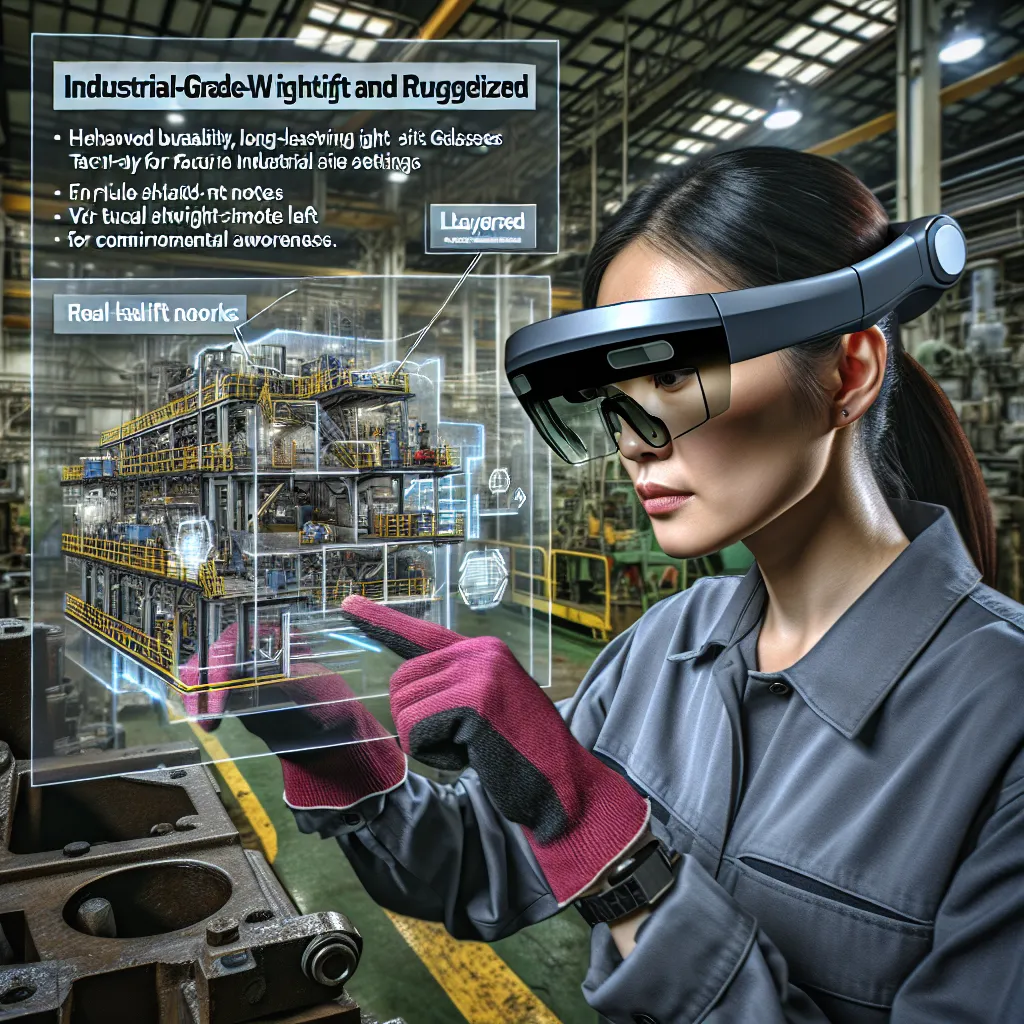
Factories and industrial sites need hands-free, reliable information access, but today’s MR glasses are too bulky, fragile, or impractical for harsh environments. No one has delivered lightweight, ruggedized MR glasses tailored for these settings. The solution: build industrial-grade MR glasses with enhanced durability, battery life, and real-time environmental awareness. Workers could overlay schematics, get live instructions, or leave virtual shift notes without breaking workflow. For instance, a technician repairing heavy machinery could see layered instructions directly on the equipment, reducing errors and downtime. The industrial market demands this, and the first company to solve it will transform frontline work globally.
Description
No additional description provided.
The Pitch
In many industries, particularly those involving factories and industrial sites, the need for real-time, hands-free information access has become increasingly important. The potential for augmented and mixed reality (MR) to transform these settings is significant, yet current MR solutions are not meeting the unique demands of these environments. The typical MR glasses available today are often too bulky, fragile, or impractical for the harsh and dynamic conditions found in industrial settings. The absence of a tailored solution has left a gap in the market with a promising opportunity for innovation.
**Identifying the Problem**
Workers in industrial environments grapple with the complex task of accessing information efficiently while keeping their hands free for operational duties. Conventional methods often involve stopping work to consult a manual or portable device, leading to interruptions that can cause inefficiencies and even safety hazards. Moreover, existing MR glasses lack the durability to withstand industrial conditions and the functionality necessary to support seamless workflow integration.
**Proposed Solution**
To address this gap, the idea is to develop lightweight, ruggedized mixed reality glasses specifically designed for industrial use. These glasses would offer enhanced durability, extended battery life, and real-time environmental awareness, providing workers with reliable and intuitive access to the information they need in a hands-free manner. Users would be able to overlay schematics, receive live instructions, and even leave virtual shift notes without disrupting their workflow. For example, a technician repairing heavy machinery could directly view step-by-step instructions layered over the equipment, reducing the likelihood of errors and minimizing downtime.
**Product Details**
The industrial-grade MR glasses would feature:
- **Rugged Construction**: Built to withstand dust, water, and impact, making them ideal for harsh environments. - **Enhanced Battery Life**: Extended power capabilities to ensure the glasses remain operational throughout long shifts. - **Real-Time Environmental Awareness**: Sensors to detect and adapt to the surrounding environment, providing relevant information and augmentations. - **Seamless Integration**: Compatibility with existing operational systems to allow for real-time data access and updates. - **User-Friendly Interface**: Intuitive controls and displays to facilitate ease of use by workers with varying levels of tech-savvy.
**Tools for Launching as an MVP**
To expedite the development and launch of an MVP (Minimum Viable Product), several tools and platforms can be leveraged:
- **Prototyping Tools**: Platforms like Sketch or Figma for design, and Unity or Unreal Engine for developing the AR/MR experience. - **Hardware Partnerships**: Collaborations with manufacturers specializing in durable electronic components. - **Testing & Iteration**: Utilizing AR development kits such as Microsoft's mixed reality toolkit to rapidly test and refine functionality. - **Lean Development**: Adopting lean startup methodologies to focus on core features and gather user feedback early on.
**Go-To-Market Strategy (GTM)**
A well-defined GTM strategy will be essential to successfully launch and scale the product:
- **Target Audience**: Focus initially on industries such as manufacturing, oil and gas, and construction where the need is most acute. - **Partnerships**: Form strategic alliances with industrial equipment manufacturers and large firms to pilot the solution. - **Pilot Programs**: Launch pilot programs with key industry players to generate case studies and validate the product. - **Marketing Initiatives**: Leverage industry conferences, digital marketing campaigns, and thought leadership content to raise awareness. - **Feedback and Iteration**: Use pilot program feedback to refine the product before a broader rollout.
**Business Model**
The business model would center around:
- **B2B Sales**: Direct sales to large-scale industrial firms. - **Subscription Services**: Offering a subscription model for software updates, maintenance, and support. - **Custom Solutions**: Providing bespoke software solutions tailored to the specific needs of different sectors or individual companies.
By successfully designing and implementing this innovative MR solution, the company has the potential to transform frontline work across various industrial sectors, providing a competitive edge in the market and setting new standards for efficiency and worker safety.