MicroShift Marketplace: Monetize Your Free Hours
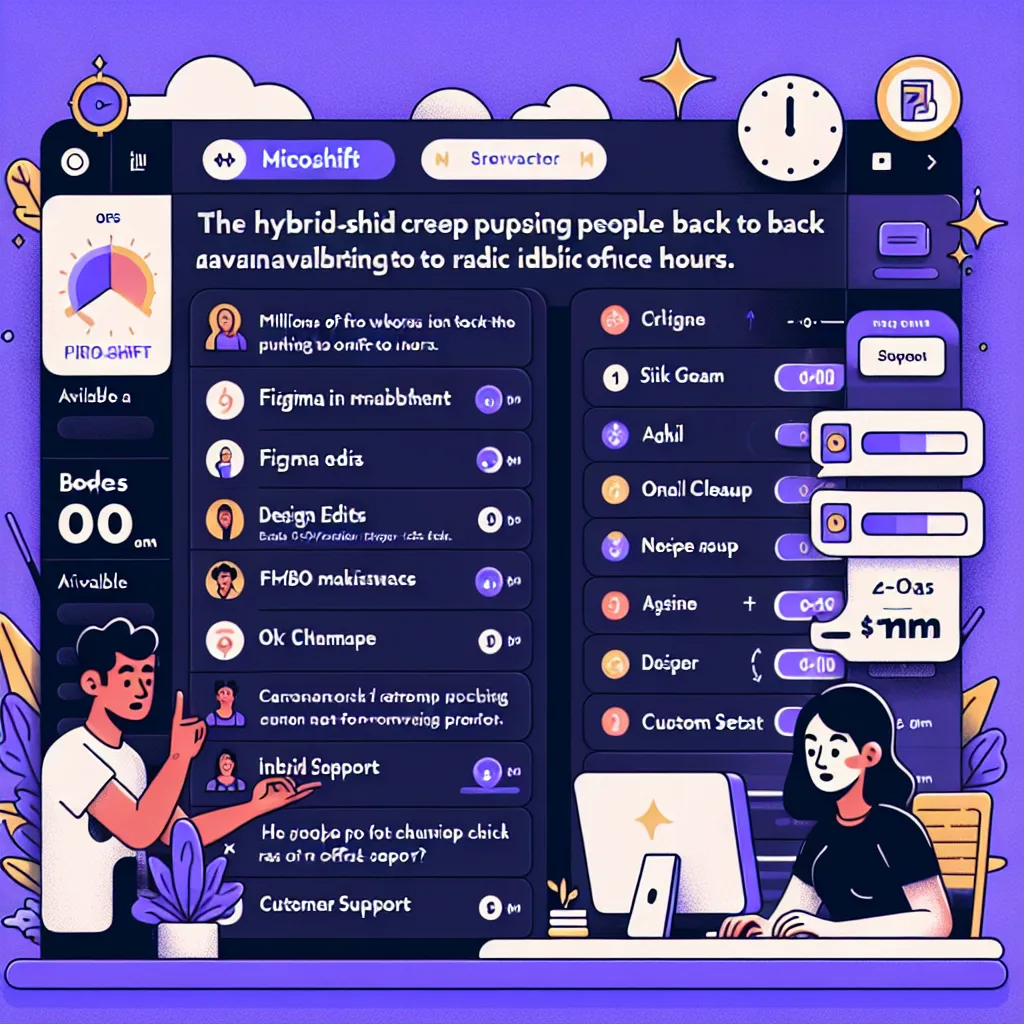
The gig economy is built for big chunks of time — hire a freelancer for a project, book a TaskRabbit for half a day — but micro-shifting has created a new reality: millions of workers have random 1–2 hour windows free between school pickups, errands, or other commitments. Right now, those hours vanish into unproductive gaps. MicroShift Marketplace turns them into income. Workers post their available “micro-shifts” — 90 minutes for Figma edits, an hour for inbox cleanup, two hours for customer support replies — and small businesses or solopreneurs can instantly book them. No proposals, no contracts, just quick hits of paid productivity. The timing is perfect: hybrid creep is pushing people back to rigid office hours while nearly half of employees still crave flexibility. Imagine a Shopify founder in crunch mode booking a designer for 2 hours this afternoon to tweak a landing page. The worker fills a gap in her day, the founder ships faster, and both sides win.
Description
No additional description provided.
The Pitch
Exploring the untapped potential of micro-shifts, the concept of MicroShift Marketplace is designed to address a growing gap in the gig economy. The traditional model of hiring freelancers or gig workers for extended periods overlooks the productive potential of shorter, more flexible time slots. These micro-shifts, often ranging from 1 to 2 hours, are currently underutilized due to the inability of existing platforms to effectively accommodate such brief engagements.
The backstory is rooted in the evolving nature of work. As hybrid work models emerge, many workers find themselves with sporadic, unoccupied time during the day. These gaps, though small, collectively represent significant productivity potential. Meanwhile, small businesses, startups, and solo entrepreneurs frequently encounter short-term tasks that require immediate attention but not full-day commitments. These include tasks like making design adjustments, clearing email backlogs, or handling customer queries.
The problem is twofold: workers with fragmented availability are unable to capitalize on their free hours effectively, while businesses with immediate, short-term needs struggle to find quick, reliable assistance. The lack of a platform dedicated to bridging these micro-opportunities leaves productivity untapped and income potential unrealized.
MicroShift Marketplace presents a solution by offering a digital platform that connects workers with small chunks of time to employers who need short-term assistance. Workers can list their availability for micro-shifts—like 90 minutes for graphic edits or an hour for inbox management—enabling businesses to book them instantly. This approach eliminates the need for lengthy proposals or contracts, streamlining the process and allowing both parties to benefit from rapid yet efficient collaborations.
The product, MicroShift Marketplace, is structured as a user-friendly app and online platform where:
- Workers create profiles, specifying their skills and real-time availability. - Employers post immediate tasks, categorized by skill and duration. - The system matches available micro-shifts to posted tasks, facilitating instant bookings. - Secure payment integrations ensure seamless transactions post-task completion.
To launch an MVP effectively, utilize no-code tools like Bubble or Glide to develop the platform's initial version. Integrating existing services such as Stripe for payments, and using analytics tools like Google Analytics for user insights, can streamline the development process.
The GTM (Go-to-Market) strategy would focus on targeting urban areas with high concentrations of startups and freelancers initially. Collaborating with co-working spaces and community hubs can facilitate word-of-mouth marketing. Digital marketing campaigns across LinkedIn, Instagram, and Facebook would raise awareness and drive early adoption.
In terms of the business model, MicroShift Marketplace could adopt a commission-based structure, charging a small percentage of the transaction fee from both workers and employers. Subscriptions for premium features or a tiered model granting access to exclusive job listings and faster payments could also be explored.
Overall, MicroShift Marketplace aims to revolutionize the gig economy by transforming short, idle times into productive and profitable opportunities, meeting the demands of both modern workers and businesses seeking flexibility and speed.