Microbot: Your Personal Retrieval Gadget Guru
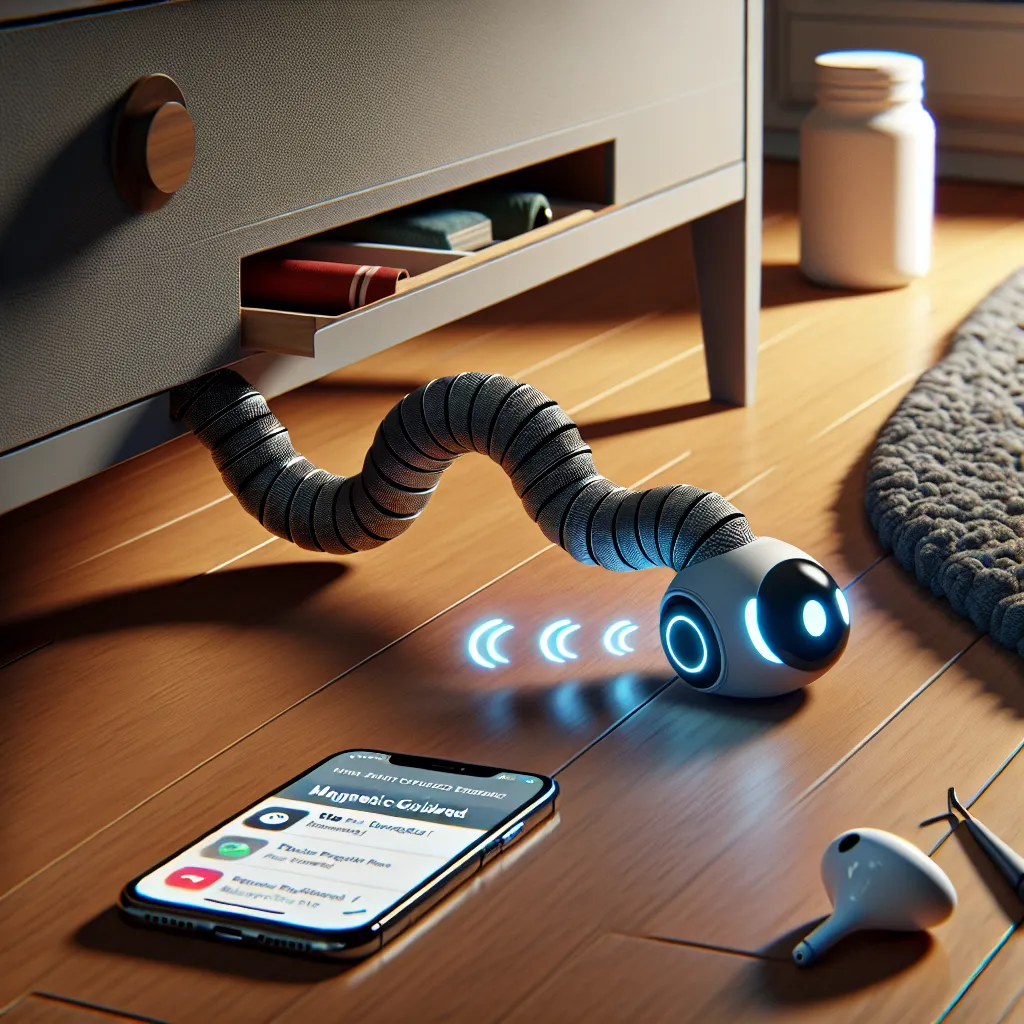
Losing small tech accessories — like AirPods, SIM cards, or styluses — in hard-to-reach places is an everyday annoyance with no elegant solution. Most people either give up or go through awkward, damaging retrieval efforts. But what if you had a personal rescue robot for that? With the emergence of ultra-small, soft robots that can be magnetically guided and equipped with sensors and micro-grabbers, a consumer-grade retrieval bot is now possible. It could slither behind heavy furniture, navigate through tight vents, or dip into drains — all without causing damage. Controlled via a smartphone app, this microbot could use visual or magnetic cues to find and collect your lost item and return it to you. No more tearing your home apart. This idea wasn’t feasible until now: prior tools were too bulky, and robotic control was too rigid. But the fusion of flexible electronics and magnetic motion makes it possible to offer a retrieval tool that feels like magic — but solves a problem millions face.
Description
No additional description provided.
The Pitch
Losing small tech accessories such as AirPods, SIM cards, or styluses in difficult-to-reach areas is a common frustration experienced by many. These items often slip behind furniture, fall into vents, or roll into narrow crevices, leading to either abandoning the item entirely or engaging in arduous and potentially damaging efforts to retrieve them. This frequent issue, despite being relatively minor, can disrupt daily life and cause considerable annoyance.
Enter the idea of a personal rescue robot designed explicitly for solving this everyday problem. Thanks to advances in ultra-small, soft robotics, it is now feasible to create a consumer-grade retrieval bot. These miniature robots, equipped with sensors and micro-grabbers, can be magnetically guided through tight spaces, behind large furniture, or into drains, retrieving lost items swiftly and efficiently. This innovation eliminates the need to dismantle parts of your home or undertake tedious searches.
The technology powering these retrieval bots includes flexible electronics and magnetic motion, which allow the device to maintain the delicate versatility necessary for navigating confined spaces without causing damage. These robots are controlled via a user-friendly smartphone app, which utilizes either visual or magnetic cues to guide the robot to the lost item. Once located, the microbot grabs the item and returns it to the user, demonstrating a seamless retrieval process that previously seemed like magic.
Bringing this innovation to market involves several strategic steps:
1. **Product Development**: Begin by developing a prototype that incorporates ultra-small robotics, flexible electronics, and magnetic navigation capabilities. Collaborate with experts in robotics and app development to create a seamless integration between the robot and the smartphone application.
2. **Tools and Resources**: Leverage platforms like Arduino and Raspberry Pi for prototyping the hardware, while using software development kits (SDKs) for the app interface. Consider using open-source libraries for robotics simulation to expedite the testing phase.
3. **Minimum Viable Product (MVP)**: Create a basic version of the retrieval bot focusing on core functionalities such as maneuverability and item retrieval. The MVP should demonstrate the bot’s effectiveness in retrieving common small tech accessories.
4. **Go-to-Market (GTM) Strategy**: Launch a crowdfunding campaign to build awareness and raise initial capital. Highlight the convenience, practicality, and innovation of the product through engaging video demonstrations. Cultivate partnerships with tech accessories brands for co-marketing opportunities, and leverage social media platforms to reach tech-savvy consumers.
5. **Business Model**: Adopt a direct-to-consumer sales model through an e-commerce platform, allowing consumers to purchase the retrieval bot directly. Additionally, explore subscription services offering replacement parts, extended warranty, and new feature updates as the technology evolves.
6. **Customer Engagement**: Gather feedback from early adopters to refine the product and enhance user experience. Develop a community around the product to encourage sharing of experiences and suggestions, fostering a sense of ownership among users.
With the right combination of innovation, customer-centric design, and strategic marketing, this retrieval robot stands to address a universal annoyance while capturing the imagination of technology enthusiasts worldwide.