Medication Wallet for Pet Prescriptions
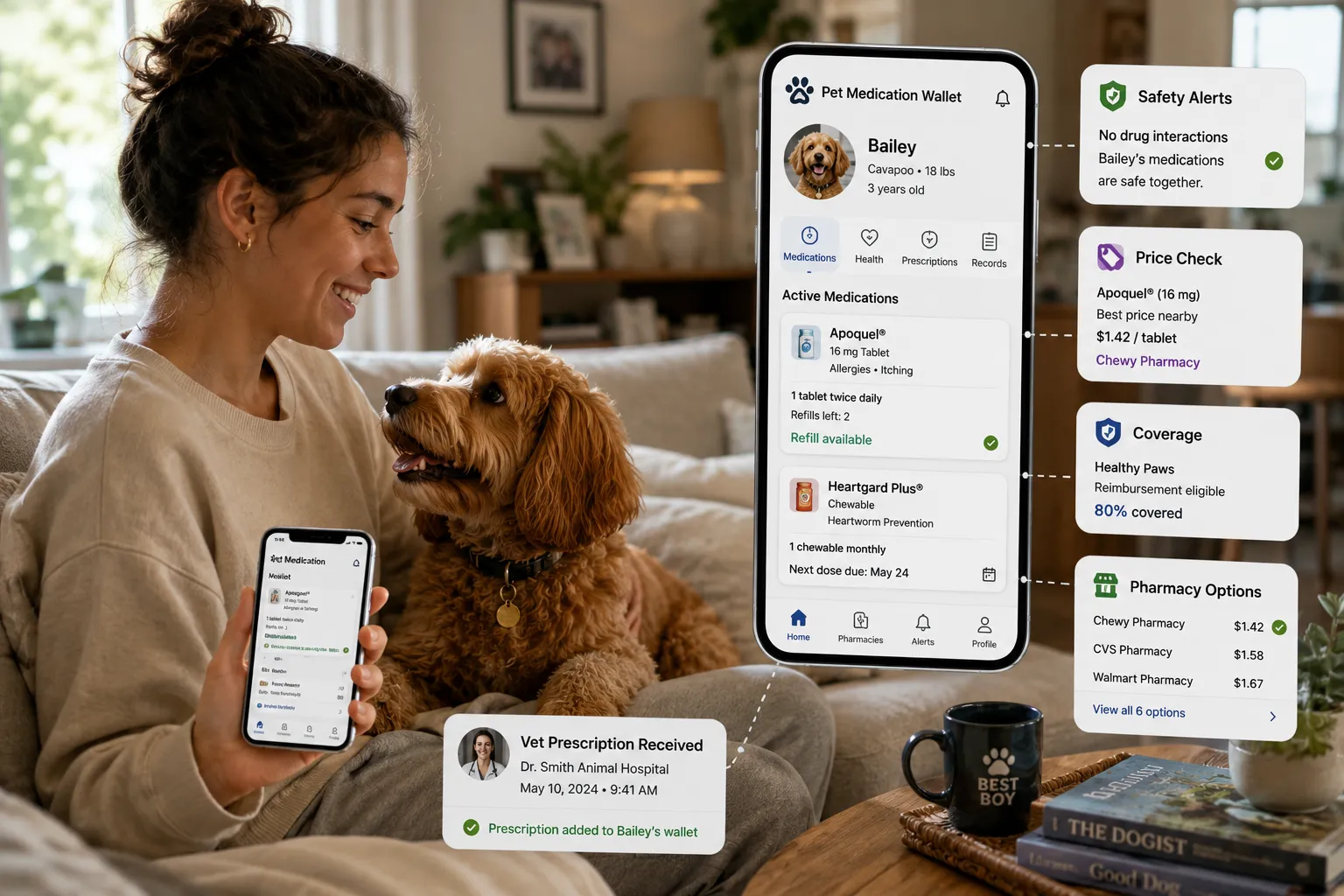
Pet prescriptions are becoming easier to fill through human pharmacies, online providers, and veterinary clinics, but an animal’s medication history is still fragmented across systems that rarely communicate with one another. A startup could create a lifelong medication wallet for every pet, storing prescriptions, allergies, weight changes, breed-specific risks, refill eligibility, insurance coverage, and potential drug interactions, while allowing owners to safely fill prescriptions through any participating pharmacy. This becomes more useful as major pharmacy chains enter pet care and veterinary medicine shifts toward digital prescriptions and broader distribution. For example, when a veterinarian prescribes medication for a dog, the wallet could immediately flag that the dosage no longer matches its current weight, compare prices across nearby pharmacies, check insurance coverage, and send the safest option to the owner.
Description
No additional description provided.
The Pitch
A pet’s medication record is an unusually valuable identity layer because the patient cannot speak, the owner is not the clinician, and the pharmacy is often not the prescriber. Human healthcare has spent decades trying to reconcile medical records around a person’s identity; pet care has largely skipped that infrastructure even as treatment has become more pharmaceutical, more chronic, and more distributed. The result is that the most basic safety information about an animal often lives in memory, paper, or whichever clinic happened to see it last.
The interesting business truth is that the record becomes more valuable precisely because fulfillment is fragmenting. When prescriptions can be filled at a vet, a grocery pharmacy, a national chain, or an online provider, the owner gains choice but loses continuity. A neutral medication wallet can sit above the channel conflict: not owning the clinic, not owning the pharmacy, but becoming the trusted translation layer between them. In markets where distribution is widening, the durable position often belongs to the system of record rather than any single seller.
Pets are also a rare consumer category where “convenience” and “safety” are emotionally fused. Owners may comparison shop, but they are not indifferent buyers; a cheaper prescription is only attractive if it is clearly the right one. That makes decision support unusually powerful. A wallet that knows weight, breed, allergies, prior reactions, and insurance context can turn a generic transaction into a confidence moment. The owner is not just buying medication; they are being reassured that they are not making a silent mistake.
The other compelling feature is frequency. Many pet services are episodic, but medication creates recurring touchpoints: refills, dose changes, renewals, flea and tick preventives, post-surgery drugs, senior care, chronic conditions. Over time, the wallet becomes more accurate and harder to replace because its value is cumulative. A ten-year-old dog’s medication history is not a commodity database entry; it is a longitudinal health asset that improves every future decision.
This could also quietly shift power in the pet health market toward interoperability. Vets, pharmacies, insurers, and owners all benefit from fewer errors and less administrative friction, but none of them alone has a complete view. A company that earns permission to connect those views would not merely make prescriptions easier to fill. It would make pet healthcare behave more like a coordinated system.