Marketplace for Vintage Tech Company Swag
An Apple employee T-shirt from 1984 is more interesting than another vintage Nike sweatshirt. Build the marketplace for old company swag. Early Google hoodies, Netscape shirts, Yahoo jackets, Facebook hackathon tees, startup launch merch, conference shirts, employee-only jackets. Authenticate the item, identify approximately when it was issued, and tell the story behind it. Tech created its own version of sports history, complete with legendary teams, iconic moments, and companies that disappeared. Someone should sell the jerseys.
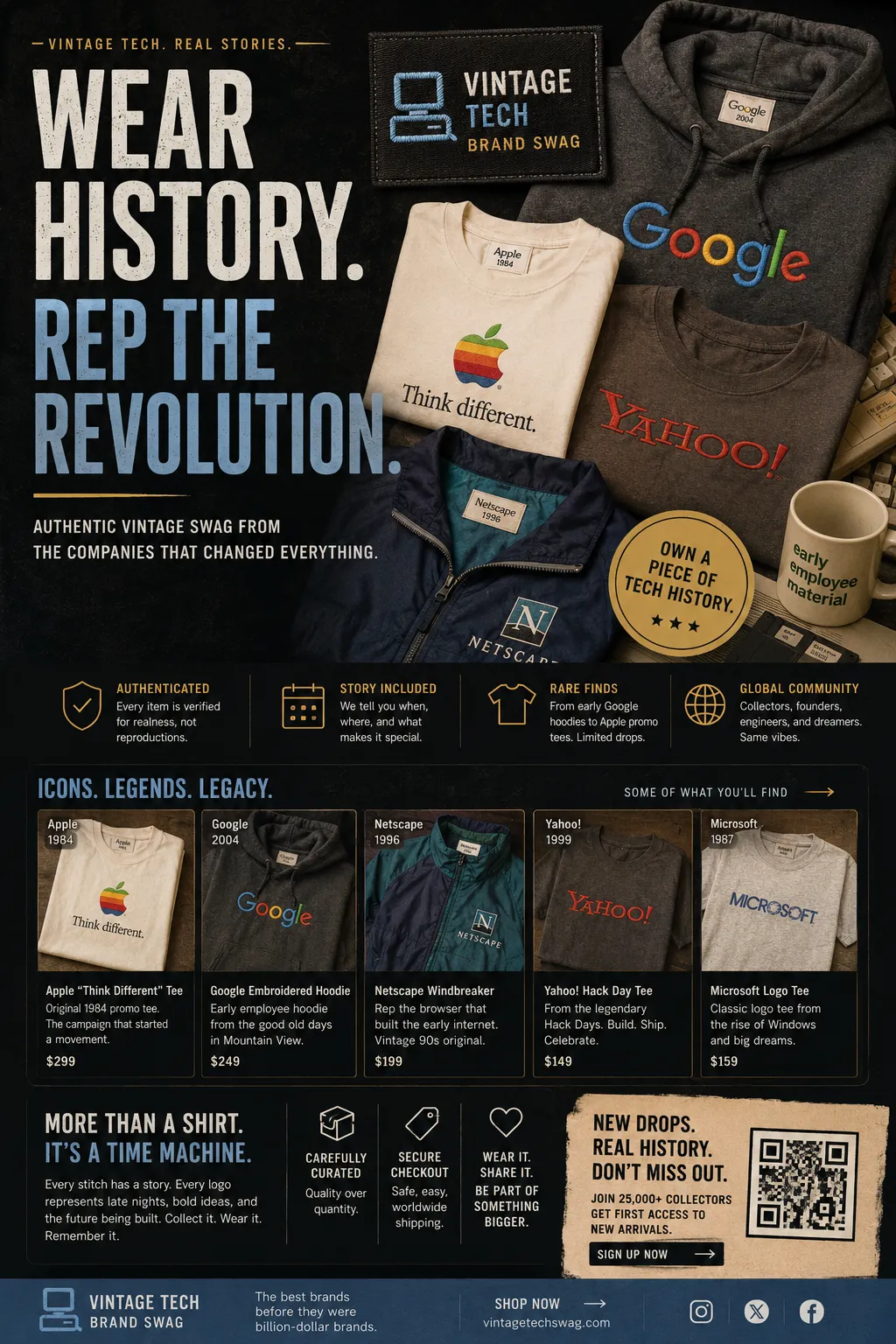
Description
No additional description provided.
The Pitch
Old company swag is one of the few collectible categories where the object can be cheap in material terms and rich in cultural meaning. A faded employee T-shirt is not valuable because it is well-made; it is valuable because it places the wearer near a moment when something that now feels inevitable was still fragile, weird, and local. That makes it different from ordinary vintage clothing. The artifact is proof of proximity to a story.
The category also benefits from a strange supply dynamic: the best pieces were never designed to become collectibles. They were handed out at offsites, hackathons, launch parties, recruiting events, and internal milestones, then stuffed in closets by people who did not think of themselves as preserving history. That accidental scarcity is powerful. A mass-produced brand archive often feels manufactured, but a Sun Microsystems fleece or Friendster staff shirt carries the texture of an institution before anyone knew how the story would end.
The buyer psychology is broader than nostalgia. Tech workers use company affiliation almost the way sports fans use teams, but with an added layer of identity: where you worked, what era you were part of, what stack or movement you believed in. A vintage SGI shirt is not just a shirt; it is a signal about taste, lineage, and fluency in a subculture. The right marketplace would not merely sell apparel. It would translate obscure artifacts into social meaning.
Authentication and context matter because most of the value is narrative. Without a date, provenance, or explanation, an old logo tee is just cotton with a mark on it. With the right story, it becomes a relic of the browser wars, the dot-com crash, the early social web, or the pre-iPhone internet. The business becomes compelling if it can turn inventory into a catalog of technological memory, where each listing teaches the buyer why the object deserves to exist.
What makes the idea especially durable is that technology ages into myth faster than almost any other industry. Companies rise, dominate, vanish, and become emotionally legible within a single generation. The people who lived through those cycles now have money, taste, and a desire for artifacts that feel more personal than luxury goods. In a world where software itself leaves few physical traces, the hoodie may be the closest thing to a fossil.