Marketplace for Trading Synthetic Memories
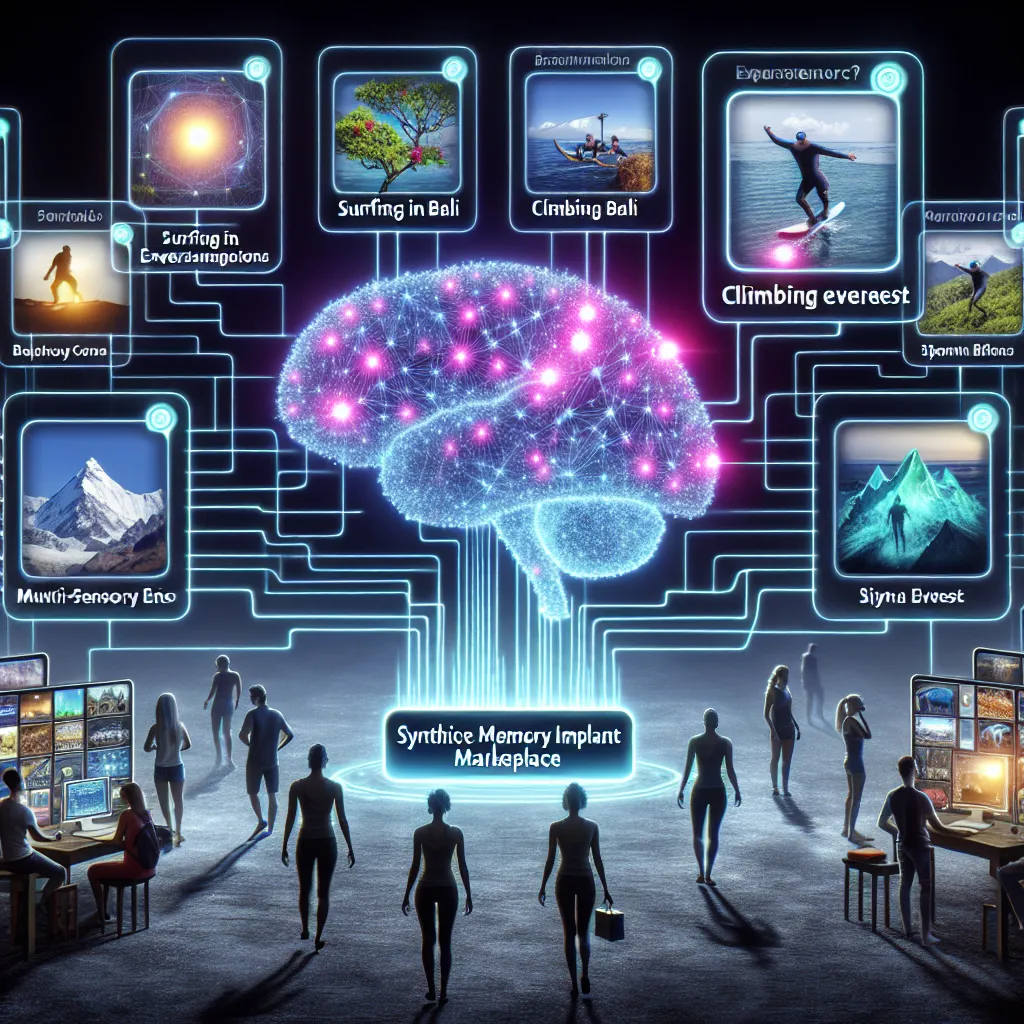
Memories are some of the most valuable, unique human experiences — but they remain trapped in our minds. A synthetic memory implant marketplace would allow users to record multisensory brain activity tied to significant experiences and sell or share those memories. Buyers could implant these neural recordings via BCIs, allowing them to “remember” experiences they never lived. Early neuroscience shows potential for memory implantation using targeted stimulation. Imagine buying the memory of surfing in Bali or climbing Everest without leaving your home. It’s a new economy where experiences are assets, expanding empathy, education, and entertainment. Memories would become a tradable resource — emotional NFTs backed by neural authenticity.
Description
No additional description provided.
The Pitch
Human experiences are enriched by the memories we form, serving as a fundamental aspect of our identities. Despite their value, memories are confined within our minds, inaccessible to others. However, advancements in neuroscience, particularly in memory implantation using brain-computer interfaces (BCIs), offer a revolutionary opportunity. Envision a synthetic memory implant marketplace, where individuals can record, buy, sell, and share multisensory neural experiences, rendering memories tradable resources with profound personal and societal implications.
Backstory: Recent scientific breakthroughs indicate the possibility of accurately recording and stimulating brain activity to implant artificial memories. Experiments on memory recall and neural stimulation have demonstrated early promise, suggesting that the future could hold a marketplace for synthetic memories, where experiences are stored as digital files and shared or sold. This innovative concept blurs the lines between the tangible and intangible, redefining memorable experiences as potential assets.
Problem: Memories, while intrinsic to personal growth and relationships, are inherently limited by individual experience. This restricts one's understanding of diverse perspectives and cultures. Furthermore, certain experiences, such as extreme sports or significant historical events, are inaccessible to many due to physical, financial, or geographical constraints, leading to a disparity in shared knowledge and empathy.
Solution: The synthetic memory marketplace would democratize the sharing of human experiences, enabling anyone, anywhere, to understand and live through moments they have never experienced firsthand. By allowing memories to be recorded, exchanged, or sold, individuals gain access to a diverse array of life experiences, fostering greater empathy and cultural understanding. This innovation has the potential to transform education, entertainment, and personal growth by leveraging the expansion of perspective through synthetic memories.
Product Details: The core offering of this marketplace would be a platform that facilitates the capture, purchase, and distribution of neural experiences. Key components include:
1. Memory Recording Device: Utilizing a wearable BCI, users can securely record multisensory brain activity linked to specific experiences. 2. Neural Memory Files: Recorded experiences are encoded into secure, digital files that retain the sensory and emotional essence of the memories. 3. Online Marketplace: A digital platform for buying, selling, and sharing these neural files, equipped with robust security measures and authenticity verification protocols. 4. Memory Implantation Service: Partnering with certified healthcare providers, users can have memories implanted using advanced BCI technologies, enabling safe and ethical integration of new experiences.
Tools for MVP Launch: - Platform Development: Use tools like Webflow or Bubble for building a no-code marketplace platform prototype. - BCI Equipment: Collaborate with companies specializing in neural technology, such as OpenBCI, for early access to developing user-friendly memory recording devices. - Secure Storage: Implement cloud-based storage solutions with high encryption standards for storing sensitive neural data.
Go-to-Market Strategy: 1. Target Segment: Focus on early adopters, such as technology enthusiasts and neuroscience professionals, along with partnership opportunities with educational institutions and experiential marketing firms. 2. Strategic Partnerships: Collaborate with BCI manufacturers and neuroscience research institutes to ensure technical feasibility and ethical compliance. 3. Awareness Campaigns: Leverage digital marketing and influencer partnerships to raise awareness about the potential of synthetic memories. 4. Beta Testing: Conduct closed beta testing with a select group of users to refine the product offering and gather authentic feedback.
Business Model: 1. Transaction Fees: Charge a percentage fee on every successful memory transaction made through the platform. 2. Subscription Model: Offer premium subscription tiers providing access to exclusive experiences and discounts. 3. Collaboration with Creators: Work with experience creators, such as artists and educators, to design unique, salable experiences, while sharing revenue from sales.
Conclusion: The synthetic memory marketplace presents a bold new frontier, transforming human experiences into shareable assets. By making experiences accessible to all and promoting greater understanding between individuals and cultures, this initiative not only pioneers a new economy but also enriches and expands the definition of human connection. As we stand on the cusp of this technological evolution, the potential for change is as vast as the memories we wish to create and share.