Marketplace for Peer-to-Peer Car Relocation
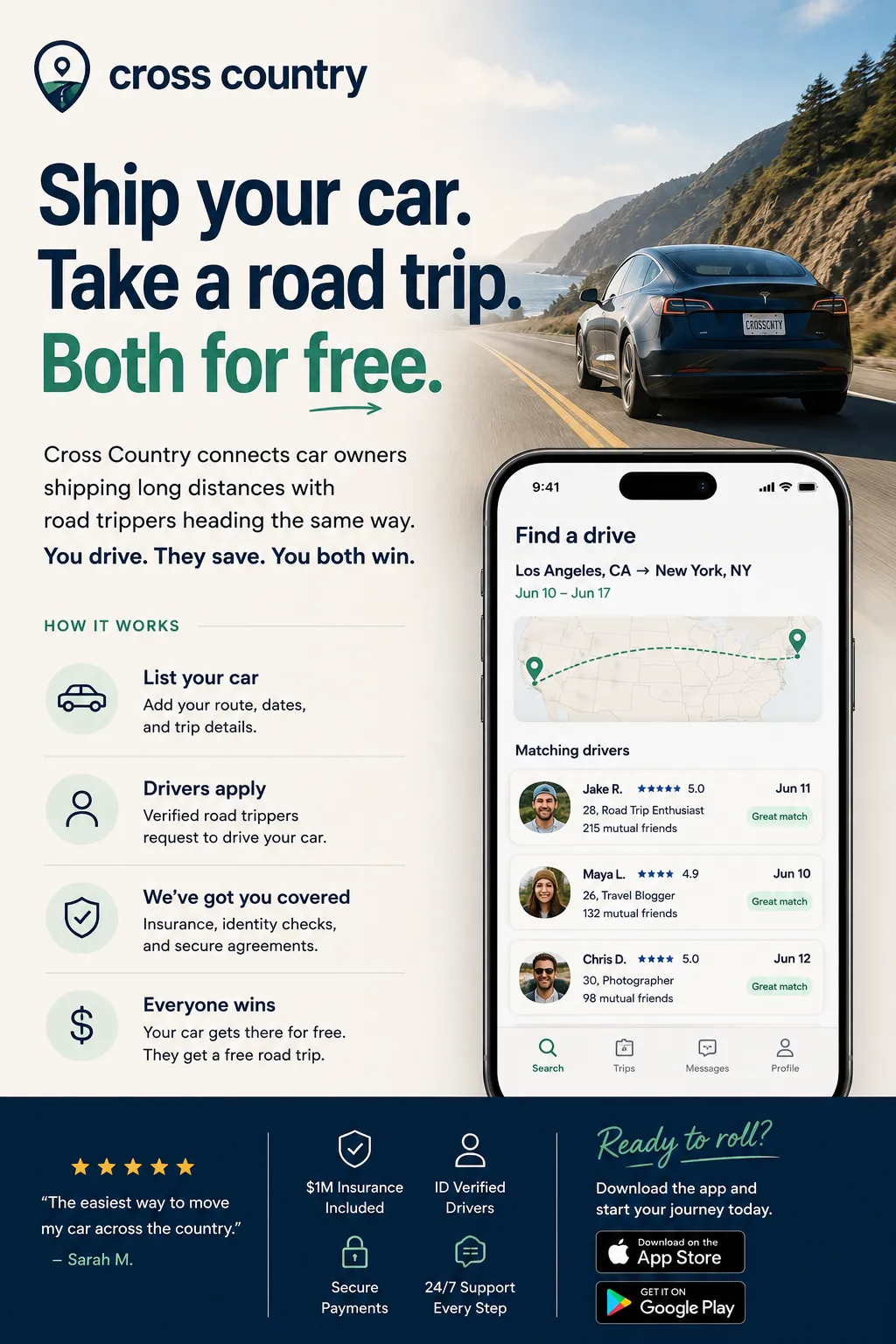
Every day, someone pays hundreds or thousands of dollars to put their car on a truck and move it across the country. At the same time, someone else is paying hundreds or thousands of dollars to rent a car for a road trip in the exact same direction. Those two people should meet. Build a marketplace where people who need cars transported list the route and dates, and travelers apply to drive them there. The owner gets their car moved for free or close to it. The traveler gets a free car for the trip. Add insurance, identity verification, mileage limits, deposits, and vehicle tracking. One person's logistics problem becomes someone else's vacation.
Description
No additional description provided.
The Pitch
Underused asset into a directional match. A car being shipped is not really cargo; it is a working vehicle trapped inside an expensive logistics transaction. A road-trip rental is not really a car need; it is a desire for mobility along a route. The insight is that both sides are already spending money to solve opposite halves of the same problem, and the market exists because they cannot safely trust each other.
The most interesting part is that the supply is inherently time-sensitive and route-specific, which makes it unlike ordinary car sharing. A parked car can wait for demand, but a car that needs to be in Denver by Friday has perishable value. That urgency can make owners unusually flexible: saving $800 on transport may matter more than maximizing the economics of the trip. Meanwhile, travelers are often more flexible than renters appear on paper. Many people planning a cross-country drive care less about the exact make of car than about avoiding a massive rental bill and one-way fee.
Trust is not a feature here; it is the product. The reason this does not already happen informally at scale is not lack of imagination, but the high consequence of something going wrong. If the company can make identity, insurance, deposits, telematics, condition reports, and dispute resolution feel routine, it is not merely connecting strangers. It is converting a private favor too risky to ask for into a standardized transaction people can repeat.
There is also a subtle advantage in the psychology of the exchange. Both parties can feel like they are getting away with something. The owner avoids paying for a carrier. The traveler avoids paying for a rental. That mutual sense of found value creates more emotional pull than a slightly cheaper logistics quote or a discounted rental car. The transaction feels clever, not commoditized.
The business works best if it owns the weird middle ground between freight and travel. Traditional auto transport treats the car as an object; rental companies treat the traveler as the customer. This model sees the car’s required movement as the inventory. If enough routes accumulate, the marketplace becomes a living map of latent trips, where transportation demand and travel desire cancel each other out.