Marketplace for Outcome-Based Education Financing
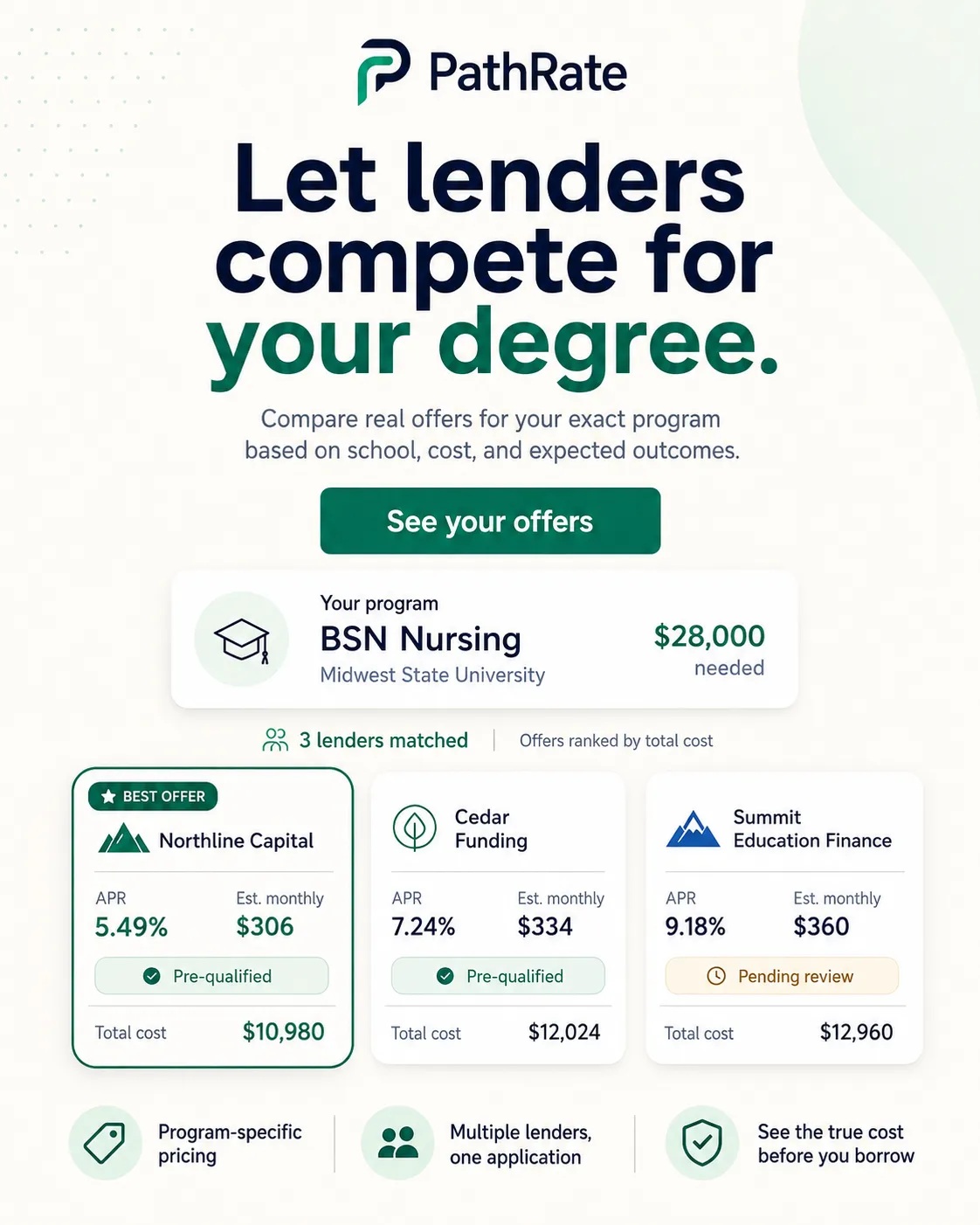
Private student lending prices the borrower, but the thing being financed is really a specific economic outcome: a particular person attending a particular program. Education Financing Exchange turns that into a market. Students submit the school, degree, cost, background, and financing need, and lenders or other capital providers bid to fund that exact educational pathway based on their view of its future earning potential. A nursing program with strong placement could attract cheaper capital than a similarly priced program with weak outcomes. Over time, those bids create something that does not really exist today: a live market price for the financial value of individual educational paths.
Description
No additional description provided.
The Pitch
A business like this is compelling because it would expose the hidden spread between what education costs and what the market believes it is worth. Today, that spread is blurred by brand, hope, federal loan mechanics, and crude credit underwriting. A live financing market would force every program to carry an implied return signal: not a magazine ranking, not a marketing claim, but the price capital is willing to attach to its graduates’ likely outcomes.
The most interesting part is that the borrower is not the only product being underwritten. The school is being underwritten too, whether it likes it or not. Programs that reliably convert tuition into earnings would be rewarded with cheaper money flowing to their students. Programs that depend on prestige, opacity, or emotional demand would face a visible penalty. That shifts lending from a private judgment about an individual’s creditworthiness into a public referendum on institutional performance.
This could become valuable because education is one of the largest purchases people make without a functioning price discovery mechanism. A house has comps. A stock has a market. Even used cars have better pricing infrastructure than many degrees. If enough financing bids accumulate, the exchange would produce a data asset that students, schools, employers, insurers, and capital providers all want to reference: the market-implied value of a credential in a specific context.
There is also a structural reason this market could improve over time. Each funded pathway eventually resolves into repayment behavior, income data, default risk, and career trajectory. That feedback loop would make the market smarter with every cohort. Unlike generic student loan portfolios, the unit of analysis would be granular enough to reveal that two programs inside the same university can have radically different financial realities.
The deeper business insight is that trust in higher education is weakening at the same time that people still need education to change their economic position. A neutral pricing layer could become the arbiter between aspiration and evidence. It would not need to declare which degrees are “good” or “bad.” It would simply show what different futures cost when people with capital are asked to put a number on them.