Lunar Nuclear Power: Sustaining Moon Colonization
A lunar nuclear power plant is a bold yet necessary leap for sustained off-Earth infrastructure. As nations and private companies push to establish a long-term presence on the moon, the need for consistent, high-output energy becomes urgent. The backstory lies in the limitations of solar power on the moon—two-week-long nights and dust storms make solar unreliable. The problem is clear: powering essential lunar operations like water mining, hydrogen fuel production, and scientific research requires a dense, durable energy source. The solution? Small modular nuclear reactors, purpose-built to function in extreme lunar conditions. As the transcript states: "You're going to need a lot of power to do the things you want to do on the moon: mine water, turn it into hydrogen fuel..." and "I think someone will build a nuclear power plant on the moon." An example could be a fission reactor supplying energy to a moon base that supports autonomous mining bots extracting ice from lunar craters, which is then converted into oxygen and fuel—essential for off-planet life and travel.
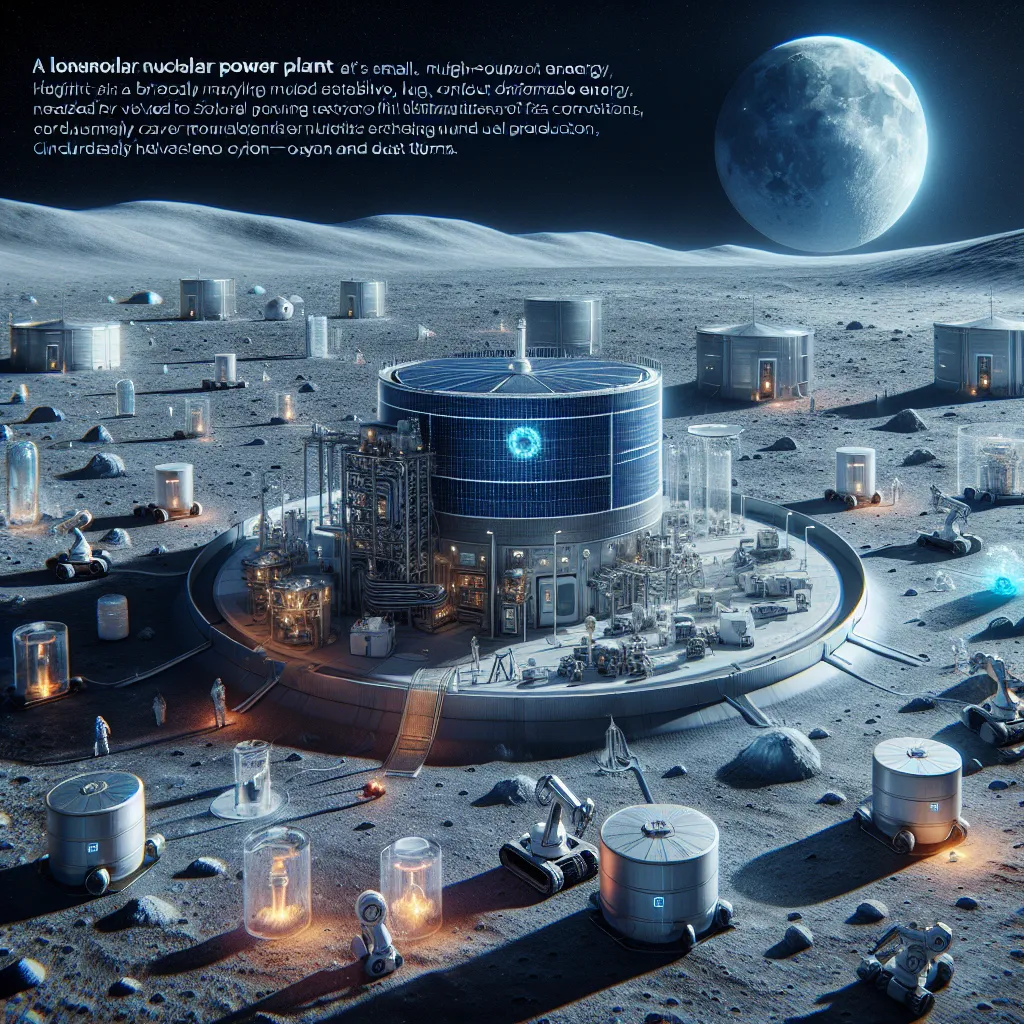
Description
No additional description provided.
The Pitch
The concept of a lunar nuclear power plant is driven by the increasing ambitions of both national space agencies and private aerospace companies to establish a sustained human presence on the Moon. The lunar environment poses unique challenges for power generation, primarily due to the Moon's two-week-long night cycles and frequent dust storms, which severely limit the effectiveness of solar power systems. In the decades-long pursuit of lunar exploration, the dependence on solar panels has been identified as a significant vulnerability for long-term lunar missions and habitation.
## 2. **Problem Statement**
The pivotal challenge facing lunar colonization is the need for a reliable and powerful energy source that can withstand the Moon’s harsh conditions. Essential operations including regolith processing, water mining, hydrogen fuel production, and scientific experimentation necessitate a more robust solution than current solar power technology can provide. The extended periods of darkness and susceptibility to dust make traditional solar power an unreliable sole energy source.
## 3. **Proposed Solution**
The introduction of small modular nuclear reactors (SMNRs) designed specifically for lunar conditions could provide a continuous and stable power supply necessary for the advanced operations planned on the Moon. These reactors would be capable of withstanding extreme variations in temperature and high levels of radiation, offering a substantial output to support both basic and high-demand activities.
## 4. **Product Details**
**a. Modular Design:** The reactor units would be modular, allowing for scalability depending on the energy needs. Each module would be a self-contained unit that could be transported to the Moon and assembled on-site.
**b. Safety Features:** Given the criticality of safety in a lunar environment, the design would include fail-safe nuclear control systems, robust cooling systems that do not rely on atmospheric factors, and heavily shielded constructions to protect from radiation.
**c. Operational Adaptability:** Designed to function autonomously with minimal maintenance, accommodating the lunar environment’s lack of atmosphere and extreme temperatures.
## 5. **Tools and Technologies for MVP**
To swiftly move from concept to MVP (Minimum Viable Product), the following tools and technologies can be instrumental:
- **CAD Software:** For detailed designs and simulations of the nuclear reactor modules. - **3D Printing:** Utilizing regolith 3D printing for constructing shielding and structural components directly on the Moon to reduce launch weight. - **Robotics:** Advanced robotics for the assembly and maintenance of the reactors on the lunar surface. - **Simulation Environments:** High-fidelity simulation tools to model reactor behavior in lunar conditions before deployment.
## 6. **Go-To-Market Strategy**
**a. Partnership Development:** Collaborate with established space agencies and major private aerospace companies for funding, endorsements, and logistical support.
**b. Demonstration Missions:** Deploy a prototype reactor module during an upcoming lunar mission to demonstrate the capability and efficiency of the reactor in situ.
**c. Regulatory Approvals:** Work with international space law bodies and safety organizations to ensure compliance with all regulatory requirements and to establish guidelines for nuclear power on the Moon.
## 7. **Business Model**
**a. B2B Sales:** Direct sales of reactors to space agencies and private space-faring companies planning lunar bases.
**b. Licensing:** Licensing the technology to international partners to expand globally while respecting international space treaties and regulations.
**c. Service Contracts:** Providing ongoing maintenance, updates, and support for the systems, creating a continuous revenue stream post-installation.
By addressing the profound energy challenges on the Moon with a solid, scalable, and safe nuclear power solution, this initiative can power a new era of lunar exploration and habitation, paving the way for future off-Earth endeavors.