Localized Autonomous Vehicle Data Networks
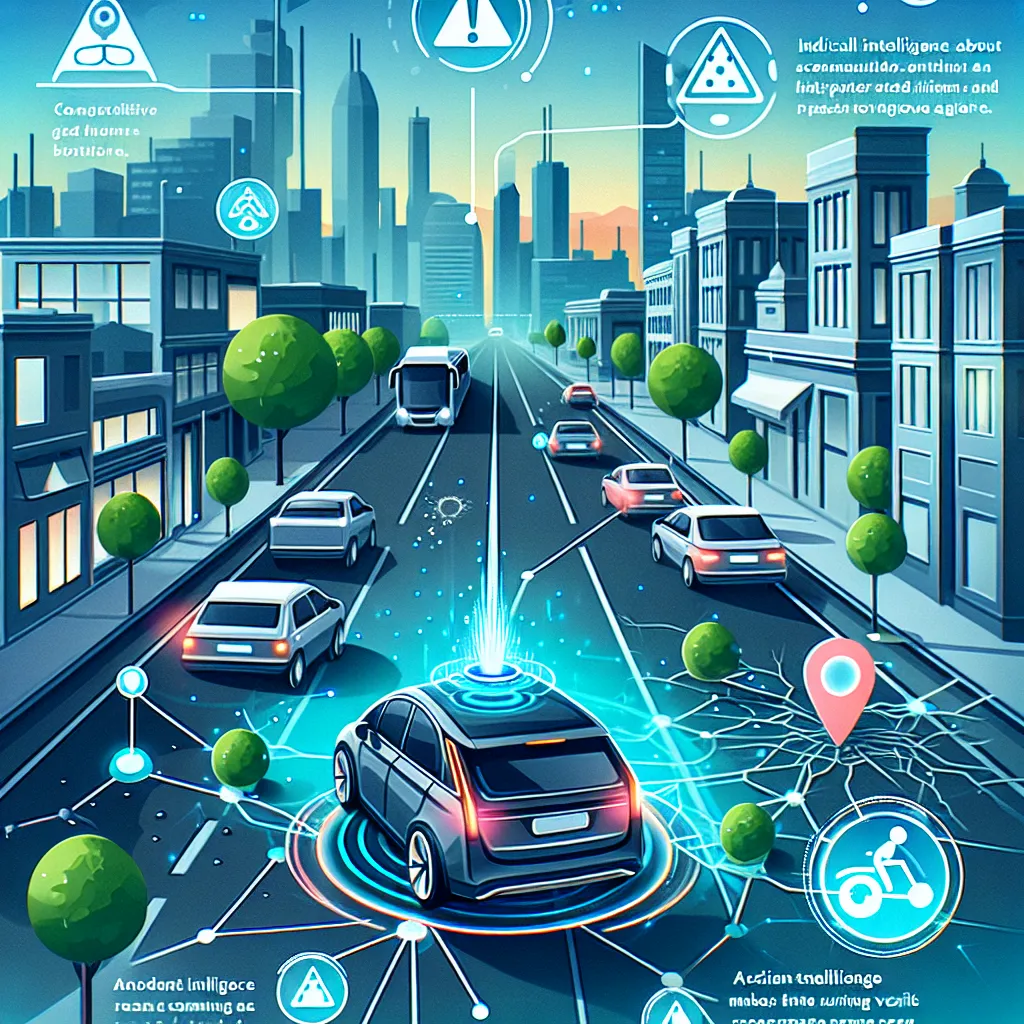
Autonomous vehicles (AVs) still struggle with unpredictable road conditions, and while centralized mapping updates exist, there’s no real-time, decentralized data-sharing network for local hazards. The solution is a blockchain-based or peer-to-peer network where AVs share on-the-ground observations instantly — like potholes, ice patches, or detours — without depending on slow central systems. A Tesla avoiding a new pothole could instantly warn nearby vehicles. This system would make AVs safer and smarter as a collective, much like how Waze transformed GPS navigation by crowdsourcing traffic data, but at the machine-to-machine level.
Description
No additional description provided.
The Pitch
Autonomous vehicles have significantly evolved over the years, yet they still grapple with unpredictable road conditions. Existing solutions often rely on centralized mapping updates that cannot provide the immediacy necessary for real-time hazard detection. This gap presents an opportunity for innovation. Imagine a decentralized network where AVs can share real-time observations about local hazards, such as potholes, ice patches, or detours. This concept is akin to a more technologically advanced version of what Waze did for GPS navigation through crowdsourced traffic data, but implemented at a machine-to-machine level, enabling AVs to become collectively smarter and safer.
Currently, when a new road hazard appears, there is a delay before it impacts the centralized maps that autonomous vehicles rely on. This delay can result in safety risks and suboptimal routing decisions. The inability to respond in real-time to immediate and unexpected road conditions is a critical issue that demands a solution.
The proposed solution is to establish a blockchain-based or peer-to-peer network. This system would allow AVs to share their on-the-ground observations instantly and autonomously with nearby vehicles. For example, if a Tesla detects a new pothole, it could immediately alert other vehicles in the vicinity, allowing them to make informed decisions. Such a network reduces reliance on slower, centralized systems and ensures that all participating vehicles are updated almost instantaneously about changing road conditions.
The product would be a software platform that utilizes blockchain technology or peer-to-peer protocols to facilitate secure and rapid data sharing. The system could be integrated into existing autonomous vehicle frameworks, enhancing their ability to communicate hazards in real-time.
Key features of the product include: - Real-time data transmission: Immediate sharing of hazard information among AVs. - Secure, decentralized network: Utilizes blockchain for secure, traceable, and reliable data exchange. - Compatibility and integration: Designed to work seamlessly with current AV hardware and software. - Machine learning algorithms: Continuously improving data interpretation and hazard detection capabilities.
To facilitate the launch of this project as a minimum viable product (MVP), tools such as open-source blockchain platforms (e.g., Ethereum or Hyperledger), development kits for autonomous vehicles, and existing mapping APIs can be used. This will help in quickly prototyping and implementing the system on a small scale for initial testing.
The go-to-market (GTM) strategy involves collaborating with leading automotive manufacturers and tech companies in the autonomous vehicle space. Demonstrating the system's efficacy through pilot programs and partnerships will be crucial. Additionally, deploying this technology in smart city infrastructure could further bolster its adoption and effectiveness.
The business model could be built around a subscription-based service for vehicle manufacturers or an infrastructure-as-a-service model for municipalities and smart city planners. Offering premium services, such as enhanced data analytics and advanced AI-driven insights, could provide additional revenue streams.
In summary, this decentralized data-sharing network has the potential to transform how autonomous vehicles communicate and respond to real-time road hazards, significantly enhancing safety and efficiency on the roads. Through strategic collaborations and a robust technological foundation, this innovation could become a pivotal component in the autonomous vehicle ecosystem.