Living Hard Drives: Tardigrades Storing Digital Data
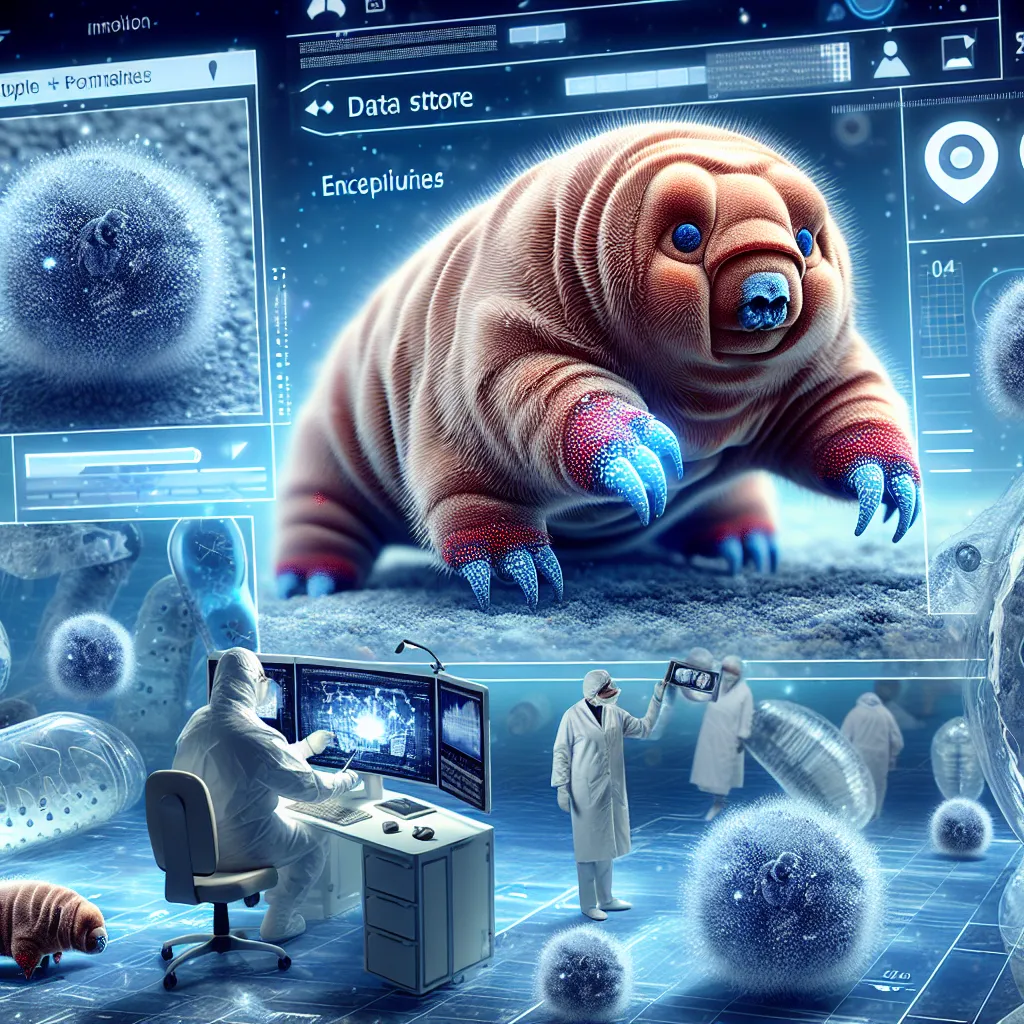
Storing digital data takes a ton of electricity and space—and we’re running out of both. That’s a big problem for keeping important info safe long term. But what if we could store data on living things instead? Tardigrades are tiny animals that can survive anything—freezing, boiling, even outer space. Scientists can now mark them with nanoscale patterns, kind of like writing on their skin at a microscopic level. A startup could use them as super-durable “living hard drives.” For example, your wedding video or important documents could be stored on these tiny creatures and kept safe for hundreds of years—without needing electricity or a server.
Description
No additional description provided.
The Pitch
In today’s digital age, the vast amounts of data being generated daily require substantial resources for storage and maintenance. Traditional data storage solutions not only consume significant electricity but also demand physical space, both of which are finite resources. Additionally, these solutions may lack the longevity required for preserving data over extended periods, posing a risk to the safekeeping of critical information. Amidst these challenges, the need for innovative and sustainable data storage solutions is more pressing than ever.
Enter the world of tardigrades. Also known as water bears, these microscopic creatures are known for their remarkable resilience, able to withstand extreme conditions such as freezing, intense heat, and even the vacuum of space. Recently, advances in nanotechnology have enabled scientists to inscribe nanoscale patterns onto the bodies of tardigrades, providing a novel medium for data storage. This breakthrough presents a unique opportunity to leverage tardigrades as durable, living hard drives for storing essential data without the continuous need for electricity or physical infrastructure.
**Problem**
The core issues with current data storage mechanisms are their resource intensity, limited lifespan, and vulnerability to physical and environmental damage. Key concerns include:
1. Energy Consumption: Conventional data storage systems require constant electrical power, contributing to high operational costs and environmental impact. 2. Space Constraints: Physical storage mediums necessitate large, secure facilities, often challenged by increasing real estate costs. 3. Longevity and Durability: Risks of data degradation over time due to environmental factors and technological obsolescence pose significant threats to information security.
**Solution**
The proposed solution involves utilizing tardigrades as a medium for data storage, effectively creating a sustainable and virtually indestructible alternative. By encoding digital information onto the durable epidermis of tardigrades through advanced nanoscale patterning, this method ensures long-term storage that is resistant to environmental factors and negates the need for constant power.
**Product Details**
1. **Data Encoding and Retrieval**: Utilize nanoscale laser technology to inscribe data onto tardigrades. Develop a proprietary software interface for encoding and retrieving data seamlessly.
2. **Storage Vessels**: Design bio-secure micro-environments to house tardigrades, ensuring their survival and data integrity.
3. **Scalability**: Adaptable for various data sizes, from small-scale personal use to large-scale enterprise solutions.
4. **Security Protocols**: Implement robust encryption methods to safeguard data from unauthorized access or manipulation.
**Tools for MVP Launch**
1. **Nanotechnology Equipment**: Invest in cutting-edge lasers and microscopes for precise nanoscale patterning. 2. **Software Development Kits (SDKs)**: Develop user-friendly SDKs for third-party developers to integrate and expand functionalities. 3. **Bio-engineering Expertise**: Collaborate with biologists and genetic engineers to optimize tardigrade viability and handling procedures.
**Go-to-Market (GTM) Strategy**
1. **Market Segmentation**: Target initial market segments that value data longevity and security, such as government archives, research institutions, and high-net-worth individuals.
2. **Partnerships**: Form strategic alliances with scientific research organizations and data storage companies to gain credibility and accelerate development.
3. **Awareness Campaigns**: Launch educational initiatives to highlight the benefits of tardigrade-based storage as a sustainable alternative.
4. **Pilot Programs**: Implement pilot projects with select partners to showcase technology effectiveness and validate market demand.
**Business Model**
1. **Subscription Service**: Offer tiered subscription plans based on storage capacity and access frequency. 2. **Licensing**: License the technology to other entities for specific applications, such as disaster recovery and archival services. 3. **Customization Fees**: Provide bespoke solutions tailored to the unique needs of enterprise clients.
In conclusion, the Tardigrade Initiative has the potential to transform the data storage landscape by introducing a sustainable, durable, and secure option that aligns with the growing global emphasis on environmental responsibility and innovation. Through strategic execution and continuous refinement, this venture can lead the charge in redefining how vital information is preserved for future generations.