Living Art: Bio-Engineered Color-Changing Canvases
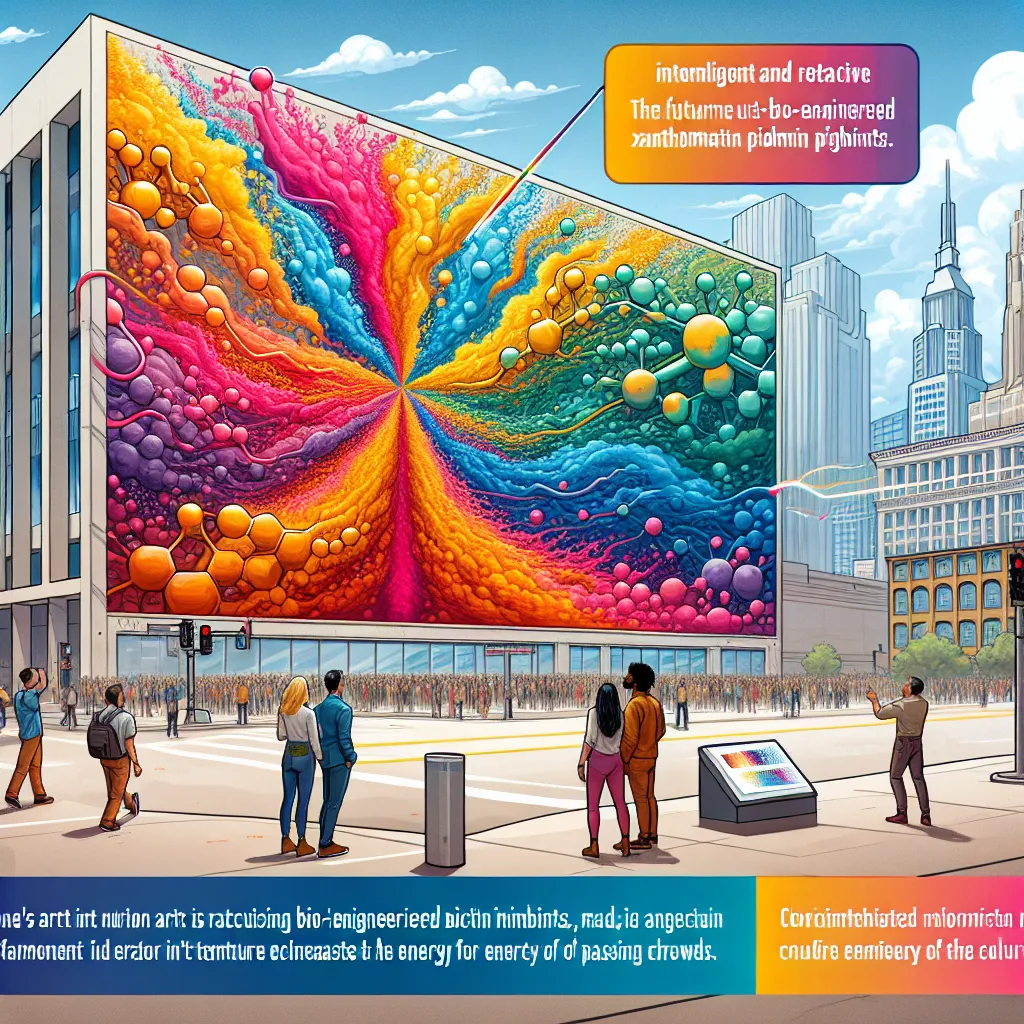
Art has always reflected life, but never literally. Paintings fade; digital screens feel sterile. Bio-engineered xanthommatin could turn canvases, murals, and public art into responsive organisms—works that change color with time, temperature, or even crowd energy. UCSD’s pigment breakthrough finally allows stable, long-lasting biological color change at human scale. Imagine a mural that blooms red when the city’s temperature rises or an art piece that mirrors human motion through hue. Why now: art and biotech are merging; living pigments redefine what “alive” looks like in design. Culture meets science—literally on the wall.
Description
No additional description provided.
The Pitch
In recent years, the intersection of art and technology has opened up groundbreaking opportunities for innovation. One such opportunity is the use of bio-engineered xanthommatin to create living art that changes with its environment. This idea builds on the recent breakthrough by researchers at UCSD, who have managed to stabilize this biological pigment for long-term use, enabling it to change color in response to various stimuli.
The Problem: Traditional artwork, while beautiful, tends to be static. Paintings and murals offer fixed visuals that don't engage dynamically with their surroundings or the people interacting with them. In an ever-evolving world, there is a growing demand for art that not only reflects life but interacts with it; art that feels as dynamic and alive as the world it depicts.
The Solution: By integrating bio-engineered xanthommatin into art installations, we can create pieces that are responsive to environmental factors such as temperature, movement, or crowd energy. This would give rise to living artworks that transform in real-time, allowing for a deeply engaging and interactive experience. Imagine murals that shift to deep reds as temperatures climb or installations that echo the movement of passersby through changing hues. Such art would not only be visually captivating but would also offer a new medium for cultural and scientific expression.
Product Details: The primary component of this project would be a biological pigment system integrated into substrates suitable for murals, canvases, and public art projects. These substrates would be engineered to support the life cycle of the pigment and facilitate its responsive nature. Essential features would include:
1. Long-lasting and stable bio-pigments that are easy to apply and maintain. 2. Compatibility with various environmental stimuli to trigger color change. 3. Scalability to accommodate different art sizes and purposes, from small installations to large-scale public murals.
Tools for MVP Launch: Developing an MVP (Minimum Viable Product) for a living art installation involves several steps:
1. Collaboration with biotechnologists to fine-tune the stability and responsiveness of the xanthommatin pigment. 2. Partnering with artists and muralists to create compelling pilot pieces that demonstrate the technology's potential. 3. Utilizing software to simulate various environmental conditions and test the pigment's responsiveness.
GTM Strategy: The go-to-market strategy should focus on targeting forward-thinking cities committed to public art, innovation, and sustainability. Engaging with key stakeholders in art and technology communities through exhibitions and demonstrations will help build awareness and interest in the concept. Collaborations with leading art institutions and participation in art and tech festivals will be crucial for gaining visibility and credibility.
Business Model: The business model could involve licensing the pigment technology to artists and institutions, offering custom installation services for public projects, and partnering with urban planners to integrate living art into city landscapes. Subscription services for maintenance and updates of bio-art installations could provide a recurring revenue stream.
The merger of art and biotechnology through living pigments not only redefines aesthetics but also invites viewers to reimagine what it means for art to be alive. By embracing this innovative fusion, we can expand the horizon of creative expression and challenge the boundaries between the organic and the crafted.