Limited-Access Outdoor Recreation Booking Platform
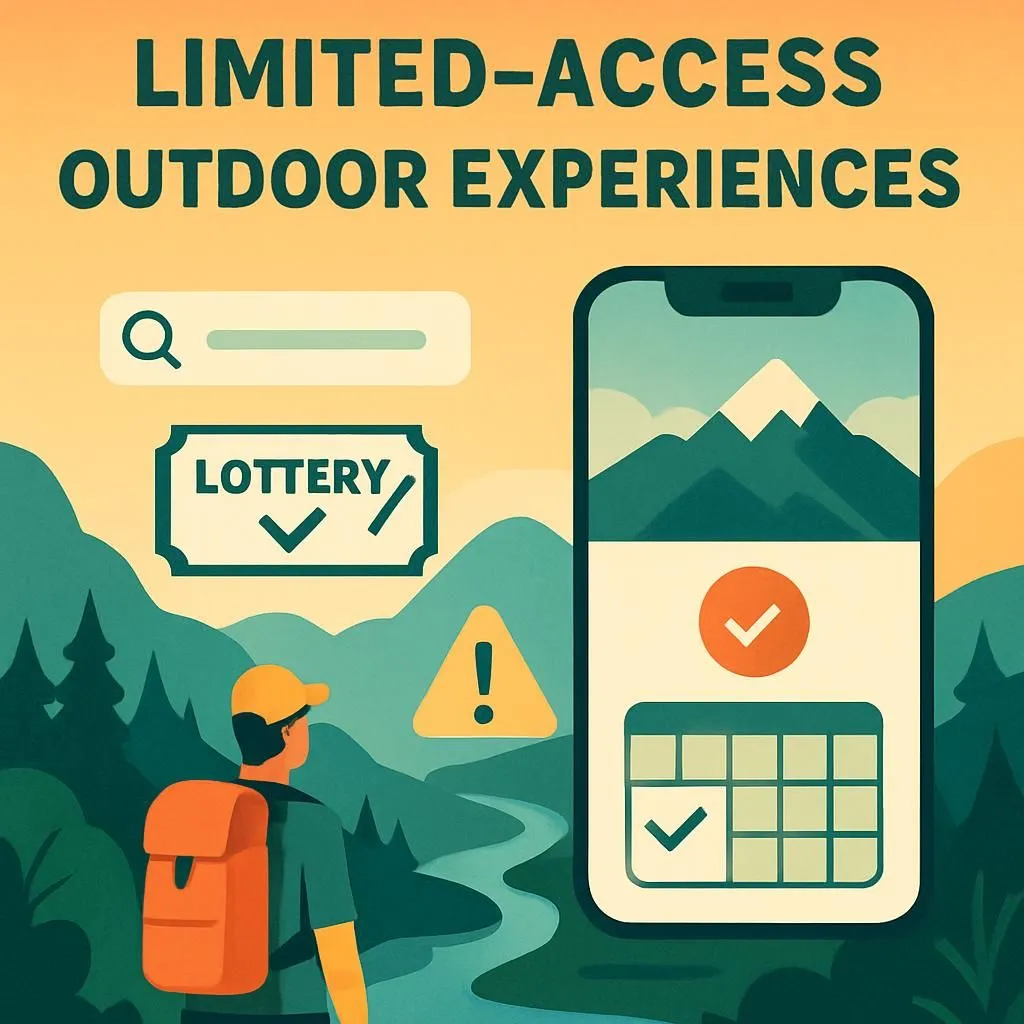
Across the world, access to many of the most desirable outdoor experiences is becoming increasingly restricted due to limited capacity and environmental concerns. Permits, lotteries, reservations, and waiting lists now exist for everything from national park hikes and camping sites to wildlife viewing events and seasonal natural phenomena. Yet there is no central platform that helps consumers discover, track, and manage access opportunities. This startup becomes the “OpenTable for nature,” allowing users to discover limited-access experiences, receive alerts, enter lotteries, manage permits, and find alternative opportunities when demand exceeds supply. As outdoor recreation continues to grow and capacity remains constrained, the complexity of gaining access becomes its own valuable problem to solve.
Description
No additional description provided.
The Pitch
The most beautiful places are not simply “visited” anymore, they are allocated through rules, windows, quotas, cancellations, and opaque local systems. That turns access itself into a fragmented market. A company that understands the calendar, the exceptions, the substitution patterns, and the hidden availability would sit between desire and permission in a category where demand keeps rising while supply is intentionally capped.
This is not just convenience software for hikers. It would become a map of constrained experiences. Once a platform knows that someone failed to get one canyon permit, it can infer what kind of trip they actually wanted: solitude, difficulty, seasonality, scenery, wildlife, bragging rights, proximity. The valuable asset is not the booking flow, but the translation layer between human intent and a messy world of regulated natural capacity. Most travel platforms are built around inventory that wants to be sold; this one would be built around inventory that often cannot expand.
The business also benefits from an unusual emotional asymmetry. Missing a restaurant reservation is forgettable; missing the two-week bloom, the migration window, the firefall, the salmon run, or the one annual permit lottery feels like losing a year. These experiences are time-sensitive, identity-laden, and often planned around work, family, and weather. That makes timely information disproportionately valuable. A well-timed cancellation alert or credible alternative is not a small optimization; it can rescue an entire season of anticipation.
The defensibility would come from becoming the memory layer for a disorganized access system. Agencies, parks, local operators, and recreation sites change rules constantly, often in PDFs, newsletters, social posts, and separate reservation tools. Consumers do not want to monitor bureaucracy as a hobby. If one service becomes trusted to know when the window opens, what the odds are, what changed this year, and what to do when Plan A fails, it becomes habit-forming long before it becomes transactional.
The deeper opportunity is that restricted access may make outdoor recreation more planned, not less popular. As spontaneity disappears from famous places, people will need help navigating the new etiquette of scarcity. The company that wins does not merely help people get into nature; it helps them understand what is realistically available, when to try, and how to redirect desire without turning every fragile place into the next overcrowded prize.