Limb-On-Chip with Synthetic RA Gradients
Researchers and drug companies want to study how limbs form or regrow — but animal testing is slow and full limb models are hard to replicate. The answer is a “limb-on-chip” device: a lab-grown system that mimics a regenerating limb using real cells and microfluidic channels. Thanks to new insights into RA gradients and the role of CYP26B1, we can now build a system that simulates how positional identity works in a developing limb. This would let scientists test therapies that affect different limb zones — like drugs that promote bone growth in arms versus hands. The timing is right because organ-on-chip platforms are mature, and RA patterning mechanisms are finally understood at the molecular level. For example, a biotech company testing a new regenerative drug could use this chip to see whether it helps grow a wrist instead of an elbow — saving years of animal trials and speeding up breakthroughs in precision regeneration.
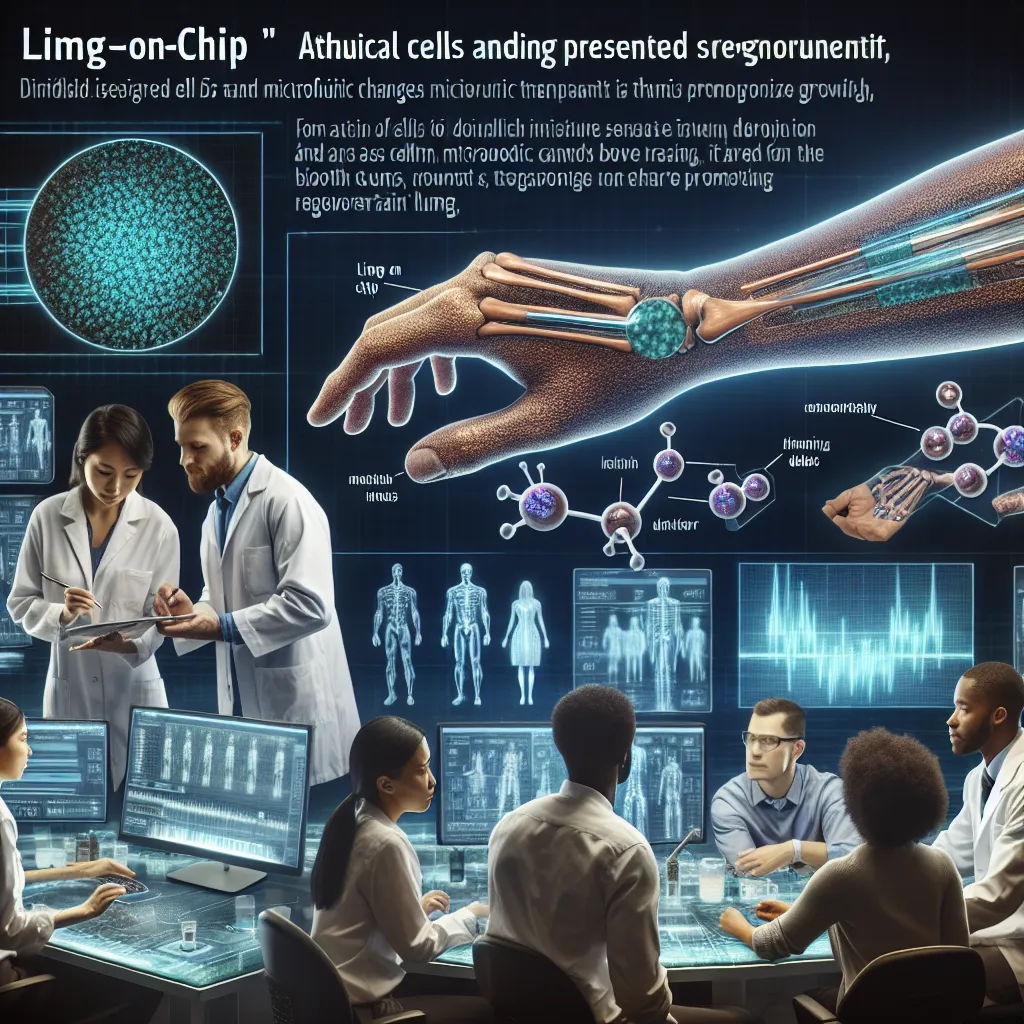
Description
No additional description provided.
The Pitch
The field of regenerative medicine is on the cusp of transformative breakthroughs, particularly in understanding how limbs form and regrow. Researchers and pharmaceutical companies are keenly interested in studying these processes to develop targeted therapies that can enhance or replicate natural growth patterns or regenerate damaged tissues. However, traditional research methods, such as animal testing, present significant challenges. These methods are not only slow and ethically contentious but also struggle to provide consistent and reliable models of full limb formation.
The Problem
Animal testing, the current standard for studying limb development and regeneration, has multiple drawbacks. The variability in biological responses, ethical concerns, high costs, and prolonged timelines are major hurdles. Moreover, replicating the intricate processes of limb morphogenesis in animal models is often imprecise, making it difficult to draw definitive conclusions about the efficacy of potential therapies. This creates a bottleneck in understanding the underlying biological mechanisms and developing effective regenerative drugs, as treatments may perform differently across various zones of the limb.
The Solution
Enter the transformative concept of a limb-on-chip device—a groundbreaking alternative designed to mimic the growth and regeneration of limbs using real cells and advanced microfluidic technology. This lab-grown system can accurately replicate the developmental and regenerative processes of limbs, offering a controlled and ethical platform for experimentation.
With new insights into retinoic acid (RA) gradients and the crucial role of CYP26B1 enzymes, it is now possible to develop a system that simulates the positional identity of cells in a developing limb. This enables scientists to test the effects of therapies on different zones of the limb, such as distinguishing the impact of a drug on bone growth in the arm versus the hand. Such precision testing could dramatically reduce the time and expense associated with drug development, potentially replacing years of animal trials.
Product Details
The limb-on-chip system will integrate a series of microfluidic channels populated with limb-specific cells and scaffold materials that faithfully recreate the microscale environment of a developing limb. By manipulating RA gradients and other chemical signals within the chip, the device can emulate distinct zones of growth. Key features include
1. High-throughput screening capability: Allows rapid testing of multiple compounds simultaneously across various limb zones. 2. Modular design: Tailors the microenvironment to replicate specific limb areas (e.g., hands, elbows) to match experimental requirements. 3. Real-time monitoring: Provides ongoing observation of cellular responses and growth patterns for accurate and immediate feedback.
Tools for Launching as an MVP
To facilitate a swift and efficient launch of a minimal viable product (MVP), the following tools and strategies are recommended
- Open-source microfluidic design software: For the rapid prototyping of specific chip configurations. - Commercially available cell lines: Sourced from cell banks specializing in regenerative medicine. - Bioreactor systems: To culture cells and maintain physiological conditions. - Partnership with academic institutions: To access cutting-edge RA patterning research and resources. - Crowdfunding platforms: To secure initial funding and generate public interest.
Go-to-Market (GTM) Strategy
The GTM strategy will focus on targeting early adopters in the biotech and pharmaceutical industries. Key elements include
- Demonstrating the technology at industry conferences and through publications in peer-reviewed journals. - Building partnerships with regenerative medicine companies seeking alternatives to traditional animal testing. - Offering pilot programs to research institutions to showcase the efficacy and versatility of the technology. - Developing case studies illustrating successful applications of the chip in pre-clinical settings to build credibility.
Business Model
The business model will encompass both product sales and recurring revenue streams. Strategic components are
- Selling custom-designed chip units to biotech firms and research labs, addressing specific limb regeneration needs. - Licensing the technology to pharmaceutical companies for their in-house drug development pipelines. - Providing subscription-based access to real-time data analytics software and microfluidic design updates. - Offering consulting services for tailored integration of the limb-on-chip system into existing research frameworks.
Conclusion
The limb-on-chip device stands to revolutionize the research landscape in regenerative medicine, offering an ethical, efficient, and precise alternative to traditional animal models. By leveraging advances in RA gradient understanding and organ-on-chip technology, this innovation promises to accelerate the development of targeted regenerative therapies, ultimately driving breakthroughs in precision medicine.