Licensed Character Product Demand Testing Marketplace
Brands spend months negotiating expensive licensing deals with entertainment companies without knowing whether consumers actually want a specific character on a specific product. A Licensed Character Demand Exchange would let companies test ideas with real shoppers before signing a deal, using votes, waitlists, or refundable preorders to measure demand for combinations like Bluey cereal, Marvel protein bars, or Disney-themed sauces. With entertainment companies looking for more ways to monetize their characters and consumer brands desperate for products that stand out, the platform could become a marketplace where proven demand determines which collaborations get made. For example, Kraft Heinz could test ten Disney character-and-product combinations and only license the two that attract enough buyers.
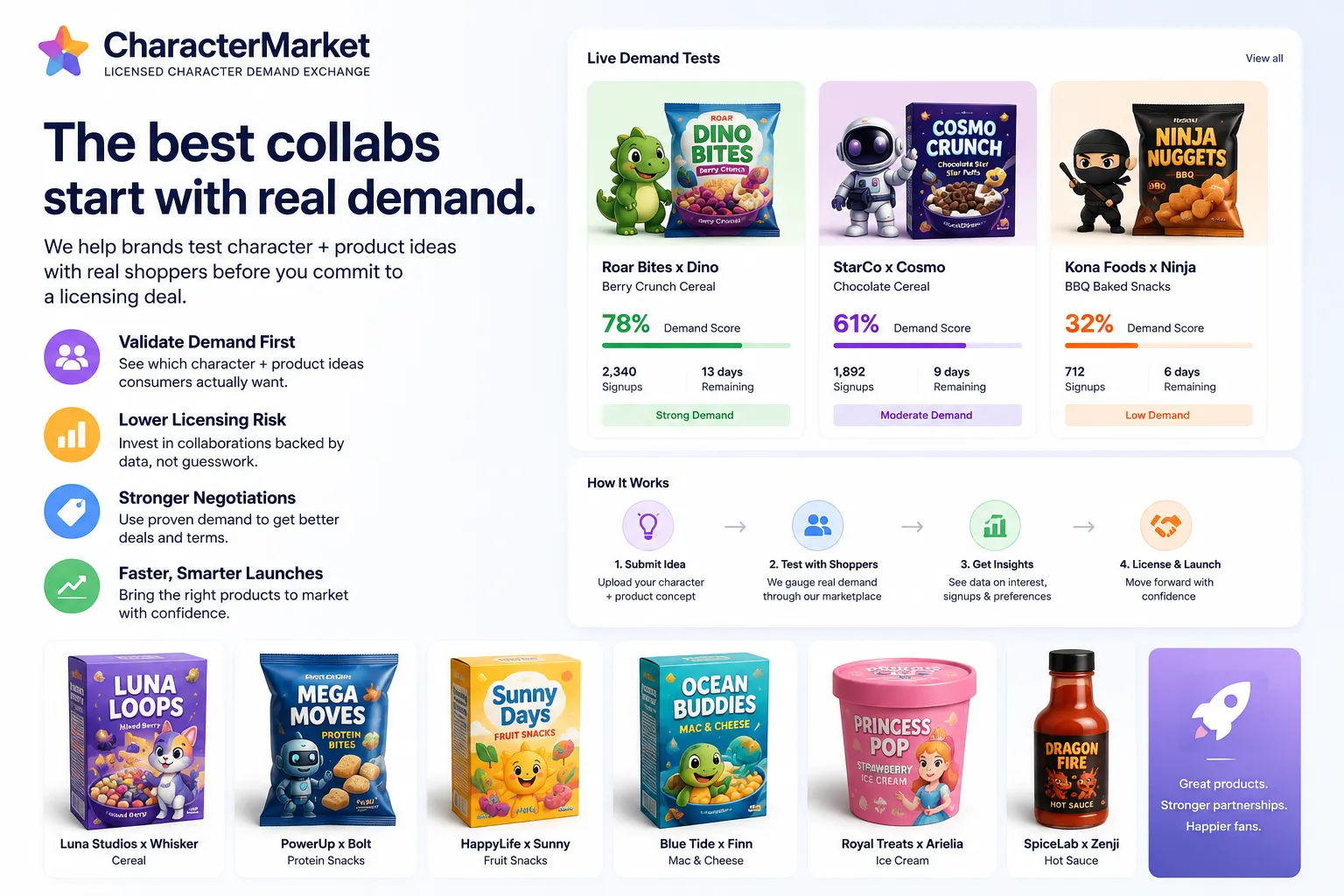
Description
No additional description provided.
The Pitch
Licensing is one of the stranger corners of consumer products because the most important decision is usually made before the market is allowed to speak. A brand is not really buying Mickey Mouse or Bluey; it is buying the belief that this character will change behavior at a specific shelf, in a specific aisle, at a specific price point. That belief is often expensive, slow, and mediated by taste, precedent, and internal politics. A demand exchange would be compelling because it turns licensing from a reputation-based guessing game into a revealed-preference market.
The most valuable thing such a business would create is not a prettier way to collect consumer feedback, but a new asset: evidence that a certain cultural property has commercial pull in a particular context. “People love this character” is too broad to price intelligently. “Parents will put down money for this character on this breakfast product” is much more useful. Over time, the platform could map the hidden compatibility between fandoms and categories, showing that some characters travel well into lunchboxes, others into personal care, others into adult indulgence. That map would be hard to build anywhere else because no single brand or studio sees enough failed experiments.
It also changes the balance of power in licensing negotiations. Today, entertainment companies benefit from scarcity and brand anxiety, while consumer brands take much of the demand risk. If demand is proven before the deal, both sides can argue over something more concrete than brand fit. The studio can charge more for concepts that already have buyers attached, while the brand can avoid paying for ideas that merely sounded good in a conference room. The platform sits in the middle because it makes the uncertainty visible and therefore tradable.
The timing is interesting because popular characters have become less like occasional marketing decorations and more like portable distribution. In crowded grocery, beauty, apparel, and toy aisles, recognition itself is a form of shelf space. But recognition is becoming fragmented: children, parents, nostalgic adults, gamers, anime fans, and streaming audiences all respond to different symbols. A centralized demand layer could help translate cultural attention into physical products without requiring every brand to become an expert in every fandom.
The business works if it becomes the place where unrealized collaborations are discovered before they are licensed. That is a subtle but powerful position: not the store, not the studio, not the manufacturer, but the market signal that tells all three what deserves to exist.