Lego Upcycling Platform Leveraging Machine Learning for Sustainable Brick Resale
Lego Upcycling Technology Platform proposes a solution to the waste problem associated with Lego. With Lego’s growing popularity and significant second-hand market value, the platform buys used Lego bricks from customers, sorts them using machine learning and computer vision, and resells complete or newly created sets online. Customers weigh and input their Lego’s weight into an app, receive an offer, and ship the bricks to the business. The business model focuses on selling via established marketplaces like eBay and Bricklink, later expanding to a dedicated website. The tech-driven sorting process makes the business defensible and attractive for acquisition, particularly by Lego as part of a sustainability initiative. With funding, the business has potential for multi-million-dollar revenue or acquisition.
Description
No additional description provided.
The Pitch
The Lego Upcycling Technology Platform is a solution designed to address a growing problem: the sustainability of Lego bricks. Despite being a beloved childhood toy, and still wildly popular among adults, Lego's environmental impact is significant. The plastic bricks, while durable, don't biodegrade easily, leading to a significant waste issue. As most Lego sets are built once and then either placed on display or returned to storage, they often sit unused for years. Many eventually end up as random piles of mixed bricks or, worse, in the trash. The platform aims to tackle this waste problem by offering a technology-driven way to recycle and reuse Lego bricks, keeping them in circulation rather than contributing to environmental harm.
Backstory Lego is a cultural icon, having been a part of millions of childhoods worldwide. From massive architectural builds to complex Star Wars sets, Lego sparks creativity and nostalgia. It’s also an unexpectedly valuable asset. Historically, second-hand Lego sets have appreciated in value by 11% annually between 1987 and 2015, outpacing stocks, bonds, and even gold. This market, combined with the environmental challenge Lego faces, presents a unique business opportunity: turning unused Lego into a sustainable revenue stream.
At the same time, consumer demand for sustainable and eco-friendly products is higher than ever. As more people look for ways to reduce waste, a platform that upcycles Lego not only meets a market demand but taps into a cultural shift toward environmental responsibility. Furthermore, Lego's reported $10 billion in sales in 2022 proves that interest in Lego products is stronger than ever, solidifying the potential for a thriving second-hand market.
Problem/Opportunity Despite the growing market, Lego has a significant sustainability issue. Millions of sets are built once and forgotten, with bricks sitting unused, waiting for either a return to storage or the landfill. Additionally, Lego bricks are made from plastic, which doesn't degrade easily, meaning the environmental footprint of this beloved toy is considerable. The upcycling platform aims to solve this problem by creating a circular economy for Lego: repurposing unused bricks into complete sets or creating entirely new, unique sets from mixed collections. This not only addresses the sustainability issue but also allows Lego enthusiasts to continue enjoying the product without the environmental guilt.
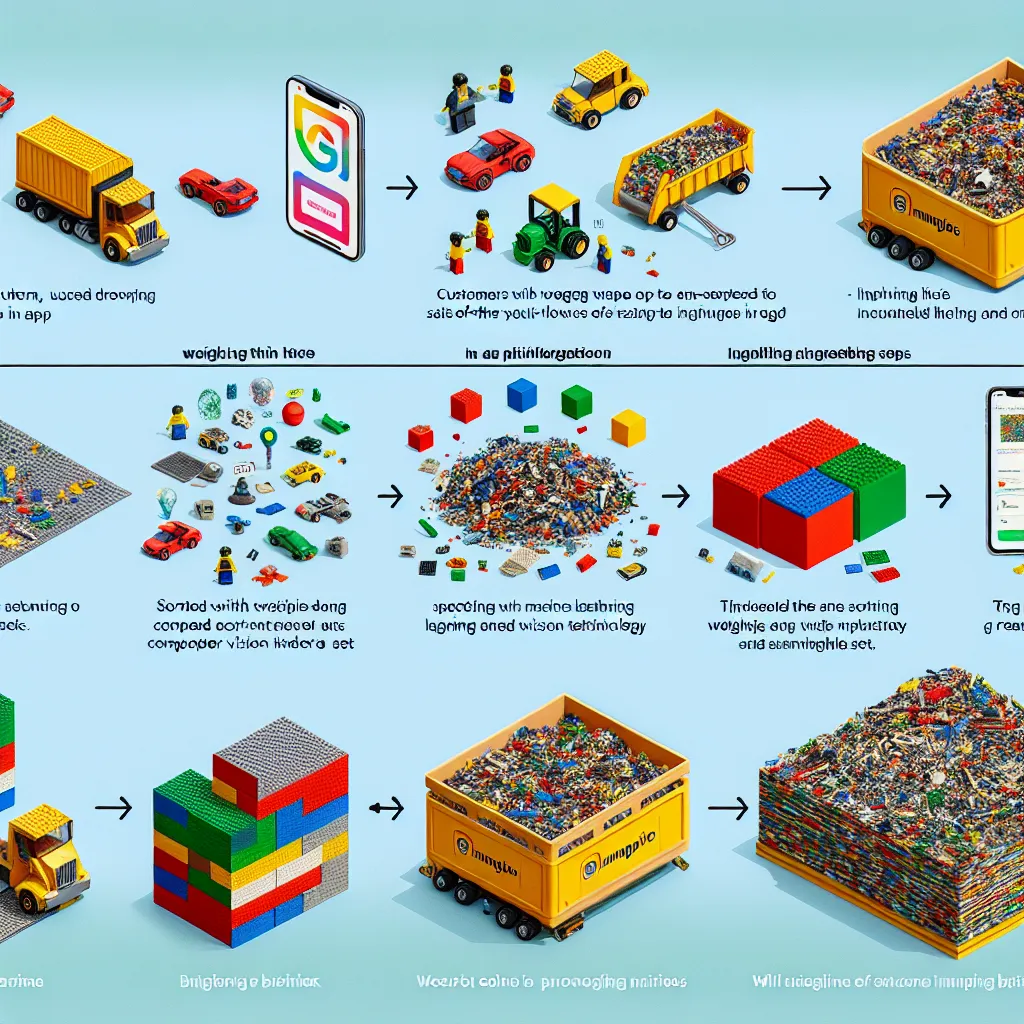
Solution The core idea of the platform is to buy used Lego bricks from customers, sort them using machine learning and computer vision, and resell them as complete sets or new, never-before-seen sets. Here’s how the process would work:
Customer Interaction: Customers who want to sell their Lego bricks will use the platform's app to weigh their bricks and input the weight. Based on this weight, the platform will generate an instant offer.
Logistics & Payment: Once the offer is accepted, the customer ships the Lego to the business, and they are paid through the app.
Sorting Technology: Using a combination of machine learning and computer vision, the platform will automatically sort the received bricks, identifying which sets the pieces belong to or creating entirely new sets from mixed assortments. This tech-driven approach is key to making the business scalable and efficient.
Resale: The sorted sets, whether they are complete, pre-existing Lego sets or newly created sets, are then sold online through various marketplaces.
Go-to-Market Strategy (GTM) Initially, the platform would focus on selling through existing Lego marketplaces like eBay, Bricklink, and Brickowl, where demand already exists. These marketplaces are well-known among Lego enthusiasts and have a built-in audience searching for both new and second-hand sets. By tapping into these established platforms, the business can generate sales quickly without the need for significant marketing investment upfront.
As the business grows and generates more revenue, it can expand to its own dedicated e-commerce site. With enough brand recognition, the platform could drive direct traffic, cutting out marketplace fees and increasing margins. There’s also potential for partnerships with eco-conscious retailers or brands that support sustainability initiatives.
Business Model The platform’s revenue model is straightforward: buy Lego bricks at a discounted price, sort them, and sell the sets at a higher price. Here’s a breakdown of the model:
Revenue: The platform earns money on every Lego set sold. By buying Lego bricks in bulk and selling them as complete sets (or creative new sets), the business can mark up the price and generate profit.
Costs: Initial startup costs would include developing the tech stack, building the sorting machine, and operational logistics (shipping, handling, storage). Outside funding will likely be necessary, potentially requiring a few hundred thousand dollars to get off the ground.
Profitability: Once operational, the business would rely on a scalable, automated sorting system to keep costs down. As it builds a customer base and optimizes the sorting and selling process, profit margins will grow. Given the strong demand for Lego, this could lead to significant revenue over time.
Product Features App for Selling Lego: Customers can easily sell their Lego bricks by weighing them and receiving an instant offer through the app. The app also handles payments and tracks shipping.
Machine Learning Sorting System: A key feature of the platform is the machine learning-based sorting machine, which can identify which set each piece belongs to and dynamically create new sets from random assortments.
Online Marketplace Integration: The platform will start by selling on eBay, Bricklink, and other established Lego marketplaces before expanding to a custom-built e-commerce site.
Unique Set Creation: Not only will the platform sort pieces into existing sets, but it will also use the sorted bricks to create brand-new, one-of-a-kind sets. This taps into the creative aspect of Lego, giving customers a reason to purchase unique sets they can’t find anywhere else.
How You’ll Get Rich The platform has significant potential, not just as a successful e-commerce business but as a highly attractive acquisition target. The company that cares most about sustainability in the Lego market? Lego itself. Positioning the platform as a solution to Lego’s sustainability issue could open the door to acquisition by Lego as part of its Corporate Social Responsibility (CSR) efforts.
Even if Lego doesn’t pursue acquisition, the platform has the potential to generate millions of dollars in revenue annually. The demand for Lego is strong, and with the added tech component, the business is defensible against competition, making it a highly scalable opportunity.
Next Steps Build the sorting technology: The machine learning and computer vision system is the backbone of the platform. Securing funding to develop this is the first major milestone.
Launch on established marketplaces: Start small by selling sorted sets through platforms like eBay and Bricklink. This generates cash flow while the business builds its own customer base.
Expand with a dedicated site: Once the business grows, the next logical step is launching a standalone e-commerce platform to control the customer experience and increase margins.
Explore acquisition opportunities: As the business grows, approaching Lego with the potential for acquisition or partnership could result in a massive payday for the founders.
This platform presents a unique opportunity to solve a major sustainability problem, leverage existing market demand, and create a tech-driven, scalable business. By combining nostalgia, creativity, and environmental responsibility, the Lego Upcycling Technology Platform is poised for success.