Legacy DAO: Empowering Aging with Wisdom Sharing
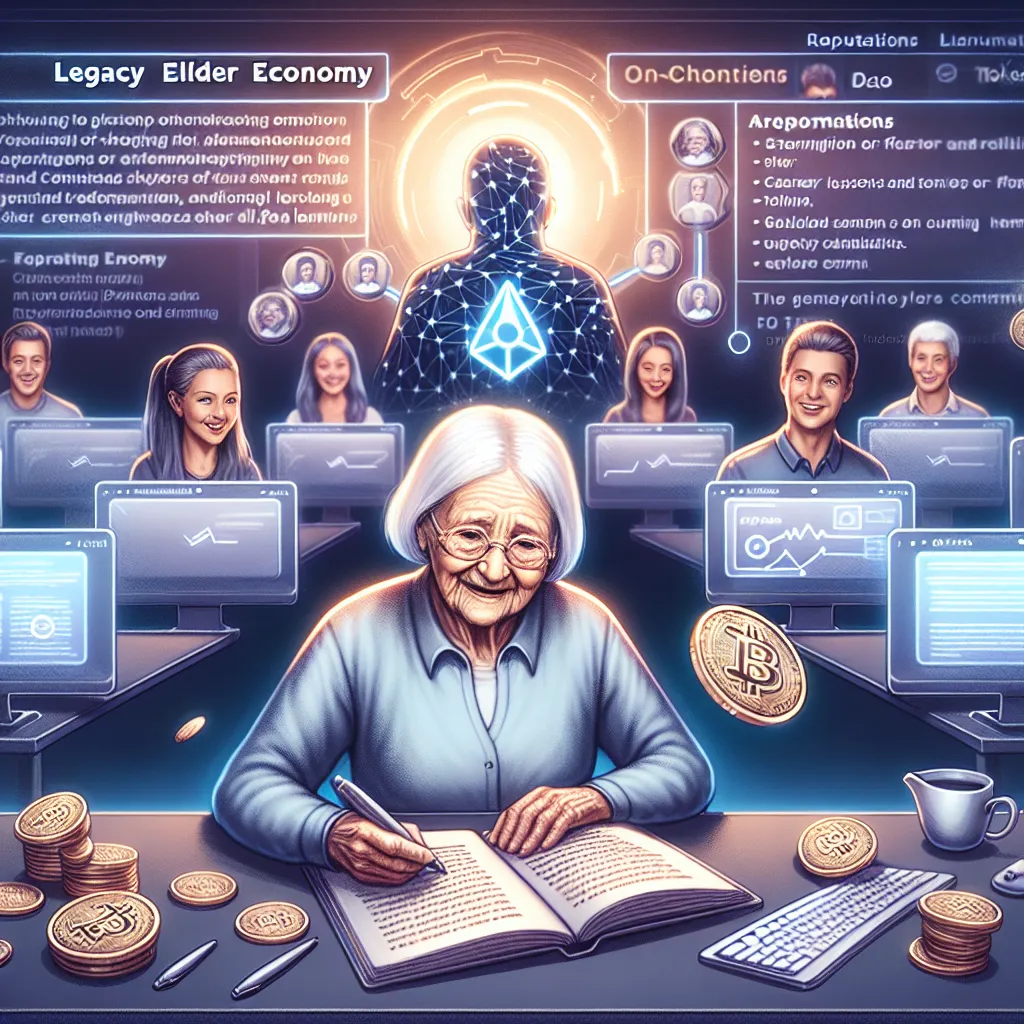
Aging is typically framed as a decline. But what if it were an on-chain contribution economy? Legacy DAO rewards elders for sharing their life lessons in structured formats—career learnings, parenting advice, survival tactics, love stories—by turning each contribution into a verifiable data unit. Community voting surfaces the most meaningful stories. Contributors earn reputation and tokens that can be redeemed by family members, caregivers, or donated to causes. Why now? We’re entering a world of user-owned data, generational wealth transfer, and AI learning from human nuance. Example: A retired engineer shares a 10-part series on failure and resilience. It’s upvoted by a DAO community of young founders and preserved in the public ledger. Her grandchildren can one day query her lessons via AI — and she’s rewarded in the present by a tokenized, reputation-rich elder economy.
Description
No additional description provided.
The Pitch
In a world where aging is often seen as a period of decline, there is a unique opportunity to redefine how we value and utilize the wisdom and experiences of our elders. Imagine a platform where this wisdom is not only preserved but also rewarded and made accessible to future generations. This concept introduces Legacy DAO, a decentralized autonomous organization that incentivizes elders to share their life lessons, transforming their insights into verifiable data units within a contribution economy. Through community voting, the most impactful stories are highlighted, and contributors earn reputation and tokens that can be redeemed by family members, caregivers, or even donated to charitable causes.
Backstory
The idea for Legacy DAO emerges at a critical time, as society transitions towards user-owned data paradigms, the massive transfer of generational wealth, and the rise of artificial intelligence systems that can learn from human intricacies. Today, we are witnessing a significant shift in the way knowledge is stored, shared, and utilized. Yet, the vast repository of life experiences from older generations often remains untapped and undervalued. By creating a structured system where elders can document and share their life stories, Legacy DAO aims to not only preserve this rich source of knowledge but also provide tangible rewards in acknowledgment of its value.
The Problem
Currently, much of the life wisdom held by our elders is lost to time, either because it isn't documented or because there are no incentives for sharing it. Traditional family storytelling is diminishing, and the valuable lessons learned through decades of experience often don't reach younger generations who could greatly benefit from them. In a time of rapid technological advancement, there is a lack of systems that can effectively capture, verify, and share these insights across generations.
The Solution
Legacy DAO proposes a solution by creating an on-chain system where elders are incentivized to contribute their life stories in organized formats. These contributions can range from career insights to parenting advice, survival strategies, love stories, and more. Each entry is turned into a verifiable data unit, stored on the blockchain for transparency and immutability. Community members vote on contributions to surface the most impactful stories, which helps in curating content that resonates most with the audience. Contributors are rewarded with tokens and reputation, which can be used for personal benefit or philanthropy.
Product Details
1. Platform: A decentralized platform that allows elders to contribute their life lessons in a variety of formats, such as written articles, audio recordings, and video content.
2. Verification & Curation: An on-chain system for verifying and curating content, using community voting to elevate the most meaningful stories.
3. Token System: A native token that rewards contributors. These tokens can be redeemed for services, gifted to family members, or donated to causes.
4. Reputation System: A system that tracks and displays the reputation of contributors based on community feedback and engagement with their content.
5. AI Query: An AI-powered interface that allows future generations to query the preserved stories, ensuring the wisdom of elders remains accessible over time.
Tools for Easy Launch
1. Blockchain Frameworks: Utilize platforms like Ethereum or Binance Smart Chain to set up the DAO and integrate smart contract functionalities.
2. Decentralized Storage Solutions: Implement solutions such as IPFS or Filecoin for robust and secure content storage.
3. Community Engagement Tools: Use platforms like Discord or Telegram to build and engage the community around specific topics of interest.
4. Low-Code Platforms: Leverage low-code tools for rapid development and iteration to get the MVP up and running swiftly.
GTM Strategy
1. Initial Community Building: Begin by engaging with communities focused on elder care, retirement, and family storytelling to build an early adopter base.
2. Partnerships: Collaborate with organizations in elder care, libraries, and historical societies to encourage contributions from their networks.
3. Social Campaigns: Launch campaigns on social media targeting younger generations who are interested in history, storytelling, and blockchain technology.
4. Events: Host storytelling events and webinars to showcase the platform’s potential and gather initial content contributions.
Business Model
1. Token Economy: Earn revenue through transaction fees on token exchanges and staking services within the platform.
2. Subscription Model: Offer premium services or features for subscribing members, such as advanced AI querying capabilities or personalized content curation.
3. Sponsorship and Donations: Allow organizations and individuals to sponsor content categories or donate to specific causes facilitated by the platform.
Legacy DAO not only reimagines how society values the wisdom of its elders but also leverages cutting-edge technology to ensure this wisdom is preserved, utilized, and rewarded. By creating an incentive structure that respects and uplifts elder contributions, it is possible to build a thriving, intergenerational knowledge economy.