Leftover Meal Planner: Reduce Waste, Save Money
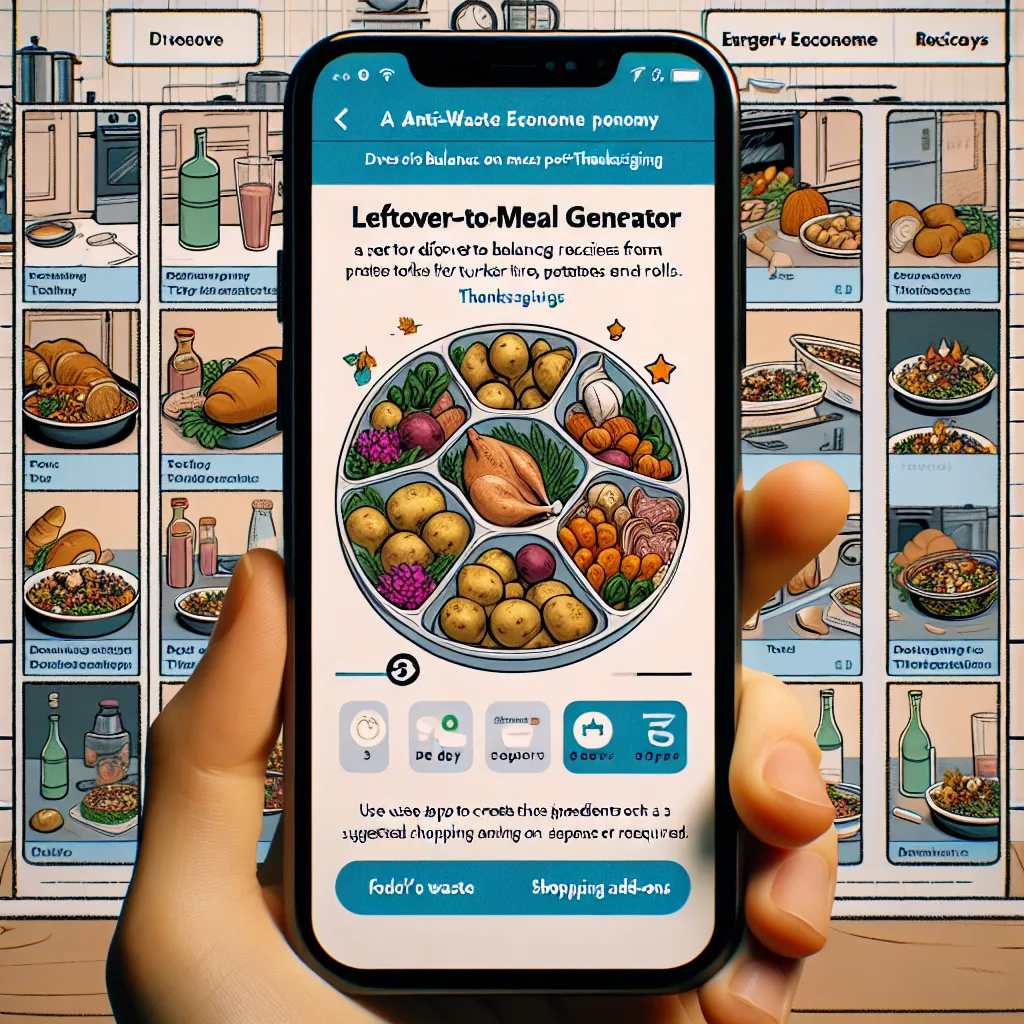
After Thanksgiving the real problem starts: waste. $400M+ in food is thrown away annually. People don’t know what to do with leftovers or how to reuse ingredients efficiently. The solution: a leftover-to-meal generator that builds three days worth of recipes based on what’s left in your kitchen, estimated shelf life, and dietary preferences. Why now? Food inflation has forced consumers to think like CFOs. Reducing waste is a money-saver and sustainability win. Example: After dinner, the app detects leftover turkey, potatoes, and rolls and turns it into 5 recipes over 3 days, with shopping add-ons if needed. It’s the anti-waste economy platform.
Description
No additional description provided.
The Pitch
After Thanksgiving, a significant issue emerges: food waste. Annually, more than $400 million worth of food is discarded, primarily due to confusion over how to repurpose leftovers or use ingredients efficiently. Many households find themselves unsure of how to creatively utilize what remains in their kitchens, leading to unnecessary waste.
To address this, consider a solution: a leftover-to-meal generator. This innovative application designs meal plans spanning three days based on available ingredients, their estimated shelf life, and dietary preferences. The timing for such a solution is ideal, as food inflation has prompted consumers to prioritize frugality, much like a CFO managing a budget. Reducing food waste not only saves money but also supports sustainability efforts.
Here’s how it works: after dinner, the app identifies ingredients like leftover turkey, potatoes, and rolls in the user's kitchen. From these, it generates five unique recipes to be prepared over the following three days. If additional ingredients are required, the app offers optional shopping suggestions.
This platform represents a stride towards the anti-waste economy, marrying economic sensibility with environmental consciousness.
To quickly and efficiently launch this concept as a Minimum Viable Product (MVP), key steps involve:
1. **Development Tools**: Utilize app development frameworks like React Native or Flutter for cross-platform compatibility. Backend solutions could include Firebase for real-time database management and AWS for hosting. Incorporating AI for recipe generation can use natural language processing and machine learning algorithms.
2. **Market Entry Strategy**: Position the app to appeal to environmentally conscious consumers and budget-focused families. Partner with food bloggers and influencers to showcase app functionality. Incentivize users to provide feedback for continuous improvement. Implement a referral program to encourage word-of-mouth promotion.
3. **Business Model**: Adopt a freemium approach where basic features are free with ads, and premium services (like personalized dietary recipes and ad-free experience) are available via subscription. Collaborate with grocery stores for potential shopping partnerships, earning commissions on ingredient purchases through the app.
By tapping into the growing demand for sustainable living and effective budgeting, this leftover-to-meal generator can transform how households approach food consumption, making it a valuable tool in both economic and environmental marketplaces.