Kid-Safe AI Companion for Curious Minds
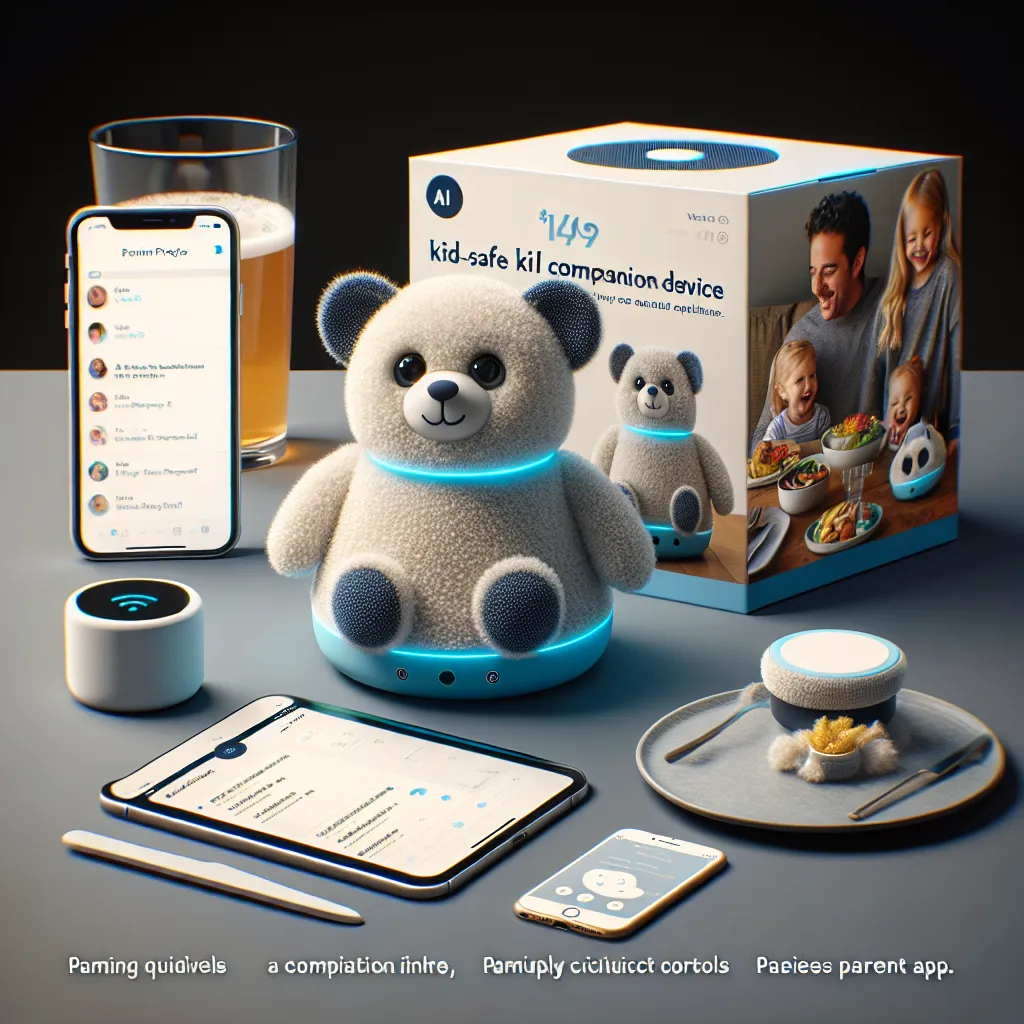
Parents whose kids ask a thousand questions a day are reaching for whatever AI is closest, which right now means propping the family iPhone on the dinner table or letting the car infotainment system explain how chocolate gets made. The dedicated AI toys on the market are visibly early prototypes, with bare circuit boards and clunky responses, so nothing has won the slot. A premium kid-safe companion device, built around a model fine-tuned to answer at a six-year-old's level, with parental controls that show every question your kid asked that day, would walk into a category that has demand but no winner. Voice models cheap enough to run partly on-device and safe enough for kids only became viable in late 2025, and the first wave of janky toys did the work of teaching parents this product should exist. Start with a soft animal-shaped device sold for $149 in pediatrician offices and high-end children's stores, paired with a companion parent app.
Description
No additional description provided.
The Pitch
In recent years, the demand for smart, interactive devices catering specifically to children has grown significantly. Parents with inquisitive children often find themselves overwhelmed by the barrage of questions their kids ask each day. While many turn to their smartphones or car infotainment systems for answers, these solutions are not ideally tailored for children. The market is ripe for a dedicated, kid-friendly AI device that not only satisfies the curiosity of young minds but also provides a safe and controlled environment for learning.
### Backstory
The journey of AI tools aimed at assisting children started with the advent of general-purpose voice assistants making their way into homes. However, these were not designed with children in mind, leading to potential safety and appropriateness concerns. The first generation of dedicated AI toys emerged in the mid-2020s. These early prototypes, though innovative, were often clunky, exposed circuit boards, and offered subpar conversational experiences, indirectly teaching parents both the potential and the current shortcomings of such devices. Meanwhile, advancements in AI models, particularly those fine-tuned to understand and respond at a child's cognitive level, have continued to evolve.
### Identified Problem
Parents face a dual challenge. First, there is the practicality issue: general-purpose devices are not optimized for children's educational and engagement needs. Second, safety concerns arise from allowing children unrestricted access to devices not designed for them. The lack of adequate parental controls and data privacy measures makes existing solutions less appealing to cautious parents.
### Proposed Solution
Introduce a premium, kid-safe AI companion device designed specifically for children. This device would be equipped with a voice model capable of understanding and responding to inquiries at a six-year-old’s intellectual level. It would also feature stringent parental controls, enabling parents to monitor and review all interactions.
### Product Details
1. **Device Design**: A soft, animal-shaped companion that is both engaging and non-intimidating for children.
2. **Functionality**: The device would run AI models capable of handling various child-like inquiries, both fun and educational. Its on-device processing would ensure real-time answers, minimizing the need for internet connectivity unless necessary for updated information.
3. **Parental Controls**: A comprehensive system allowing parents to monitor the interactions, including a daily summary of questions asked, ensuring transparency and safety.
4. **Pricing**: Set at a competitive price point of $149 to align with premium educational toys' pricing.
5. **Distribution Channels**: Initially available in pediatrician offices and high-end children’s stores, leveraging these trusted environments to build credibility and trust with parents.
### Tools and Technologies
1. **AI Development**: Utilize pre-trained voice models and refine them specifically for a child's vocabulary and comprehension level.
2. **Hardware**: Collaborate with manufacturers focusing on child-safe materials and innovative design.
3. **App Development**: A companion app for parents, available on iOS and Android, to manage device settings, view interaction logs, and update device firmware.
### Go-To-Market Strategy
1. **Partnerships**: Collaborate with educational professionals and pediatricians to validate and endorse the product.
2. **Marketing**: Focus on content marketing aimed at parenting blogs and forums, showcasing the product's unique advantages and safety features.
3. **Events**: Attend family-oriented events and expos to directly engage with potential customers and offer hands-on demonstrations.
4. **Online Presence**: E-commerce platforms initially supplemented by a strong social media presence to engage with young parents.
### Business Model
The primary revenue stream would be from device sales. Potential ancillary revenue streams could arise from subscription-based educational content updates or thematic conversation packs parents might choose to add over time for extended engagement. Additionally, long-term brand extensions could include expanding the range of AI companions catering to different age groups or learning needs.
By focusing on a premium product experience that addresses both children’s curiosity and parental concerns about safety, the proposed device aligns with a clear market gap, paving the way for its powerful entry into family homes.