Intergenerational Campus: Combining Children's Day Care with Senior Living Communities for Mutual Benefits
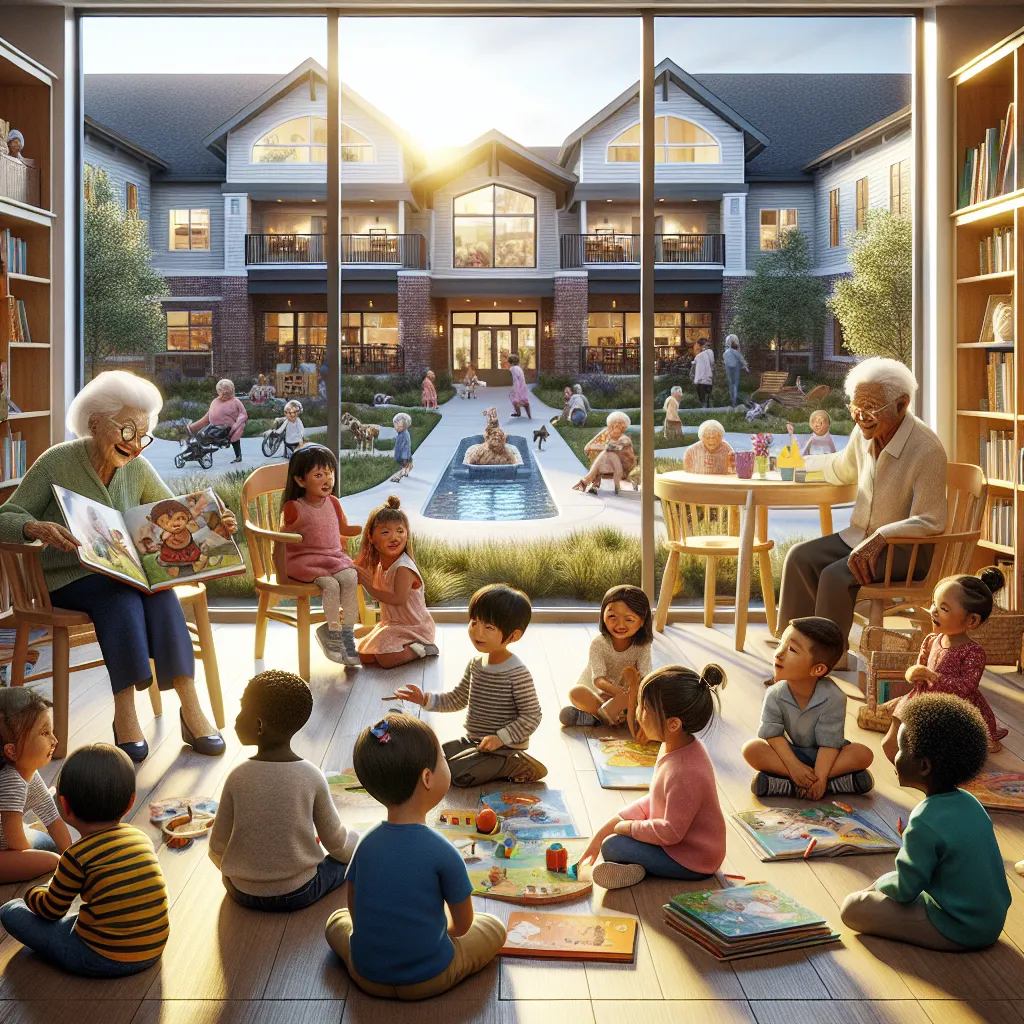
have children’s day care & senior living communities in the same campus? possibly elderly people would enjoy volunteering in the day care and spending time with babies & toddlers? older people get so lonely and overall many of them cherish little ones i could see the elderly reading books to the children, doing a craft with the kids maybe this would make the cost of day care cheaper as well as give social interaction opportunities for the elderly population
Description
No additional description provided.
The Pitch
In today’s rapidly aging society, combined with increasingly busy lifestyles of working families, two pressing issues are evident: the isolation of the elderly and the hefty costs of quality childcare. Bridging this gap is a visionary idea that brings together senior living communities and children's daycares on the same campus. This integration not only addresses the problem of loneliness among the elderly but also offers a financially viable solution for quality child care.
By creating a symbiotic environment, seniors experience joyful interactions that significantly improve their emotional and mental health by engaging with children. Activities like reading stories, arts and crafts, and supervised playtime provide meaningful daily activities that keep seniors mentally and physically active. For children, the benefit comes from the interaction with grandparents-figure adults, promoting emotional intelligence and social skills at a young age.
The go-to-market strategy would include partnerships with existing senior living providers and daycare centers, initially rolling out pilot projects in selected communities with high populations of seniors and young families. Engagements with local governments and advocacy groups for the elderly and children would also be crucial to gaining necessary endorsements and potentially, subsidies.
The business model would capitalize on shared resources, reducing operational costs for both daycare and senior living facilities. Income would be generated through the usual channels of service fees from families and possibly subsidized funding for providing social benefits to seniors. Additionally, offering membership or subscription models could provide continuous revenue while maintaining high occupancy rates.
Key product features would include: - Integrated Learning Programs: Curated activities that involve both children and seniors, designed to teach new skills and provide enjoyable shared experiences. - Customizable Schedules: Allowing for various levels of interaction based on the comfort and health of the seniors, and the developmental needs of children. - Health and Security Monitoring: To ensure safety at all times, with staff trained in both childcare and elder care. - Community Events: Regular events that invite families to participate, fostering a sense of community and openness.
At the heart of this idea is the potential for a profound social impact, reducing the burden on the healthcare system by keeping seniors active and mitigating loneliness, while also easing the financial and emotional strain on working families seeking affordable, trustworthy childcare. The inherent warmth of intergenerational interaction not only makes this idea appealing but also a potentially transformative community solution.