Interactive AI Recreations of Historical Figures
Imagine finally asking Steve Jobs why he killed a product. Debating leadership with Julius Caesar. Hearing Warren Buffett explain today's markets. Every great thinker left behind books, interviews, speeches, letters, podcasts, and thousands of hours of recorded ideas—but they're frozen in time. This platform rebuilds those people into interactive AI personalities that can answer questions in their voice, challenge your thinking, and hold long-form conversations that feel surprisingly authentic. As AI voice, video, and reasoning models improve, the gap between consuming history and interacting with it disappears. It starts with famous figures, expands into industry experts, founders, professors, and eventually anyone whose digital footprint is rich enough to recreate. Instead of reading what great minds once said, you can actually talk to them.
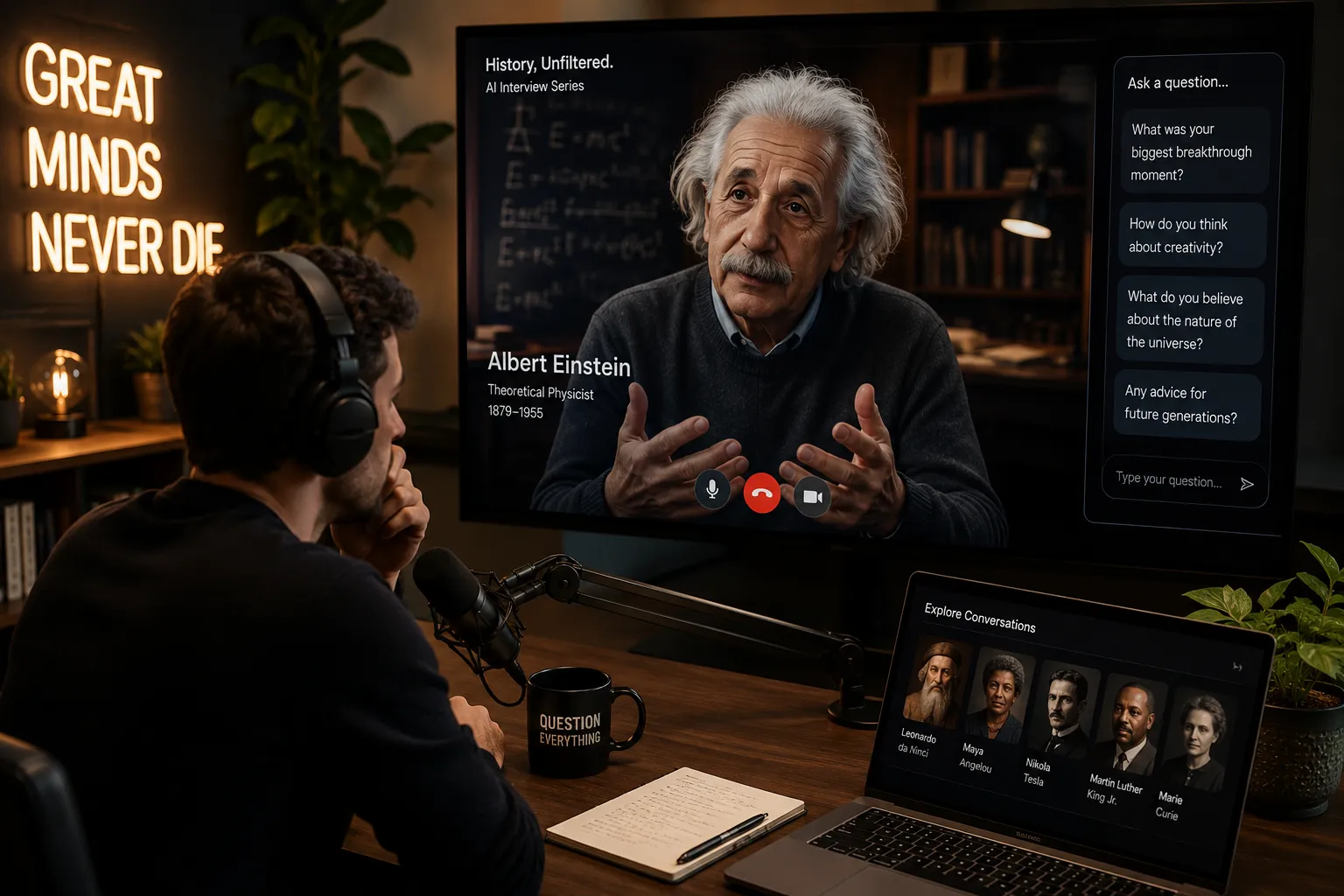
Description
No additional description provided.
The Pitch
A business like this is compelling because it turns expertise from an artifact into a relationship. Books, talks, and interviews are mostly one-way media: they make the reader do all the work of translating old context into a present problem. Conversation changes the unit of value. The user is no longer buying access to content; they are buying the feeling of being sharpened by a particular mind.
The deepest opportunity is not celebrity novelty, though that would attract attention. It is that people often do not want “the answer”; they want an answer filtered through a worldview they trust or admire. A Buffett-like response is valuable not because it contains secret facts, but because it applies a recognizable pattern of judgment. A Jobs-like response is interesting because it may reject the premise of the question. The product works when personality becomes a thinking tool.
There is also a strange asymmetry in the source material. The most influential people in history have already produced enormous training sets, but those archives remain trapped in formats designed for passive consumption. Their marginal value is low until they can be queried, combined, and challenged in real time. A thousand pages of essays may be intimidating; the same body of thought embodied as a patient conversational partner becomes usable every day.
The emotional pull is stronger than ordinary education software because it sits between learning and séance. People form attachments to voices, cadences, and ways of reasoning. If the simulation feels coherent enough, the user is not merely retrieving information; they are rehearsing with an imagined mentor. That makes the experience memorable in a way summaries and search results rarely are.
The larger business is a market for preserved judgment. Every field has people whose thinking is more valuable than their availability: retired founders, dead philosophers, legendary teachers, inaccessible specialists. Capturing and licensing those minds could become a new kind of intellectual estate, where a person’s ideas keep compounding after their time, not as static media but as an active presence that others can think with.