Intelligent Task Routing for AI Workflows
As companies adopt more AI agents, managing who does what becomes chaotic—tasks get duplicated, misrouted, or dropped entirely. This infrastructure tool solves the problem by intelligently routing tasks to the right agent based on context, capabilities, and past performance. Think of it as Zapier for agent workflows, but smarter and fully autonomous. It connects your existing agents and systems, ensuring the right work lands with the right AI at the right time. Whether it’s routing a legal review to a compliance agent or sending a follow-up task to a sales agent, it keeps your AI stack coordinated and efficient.
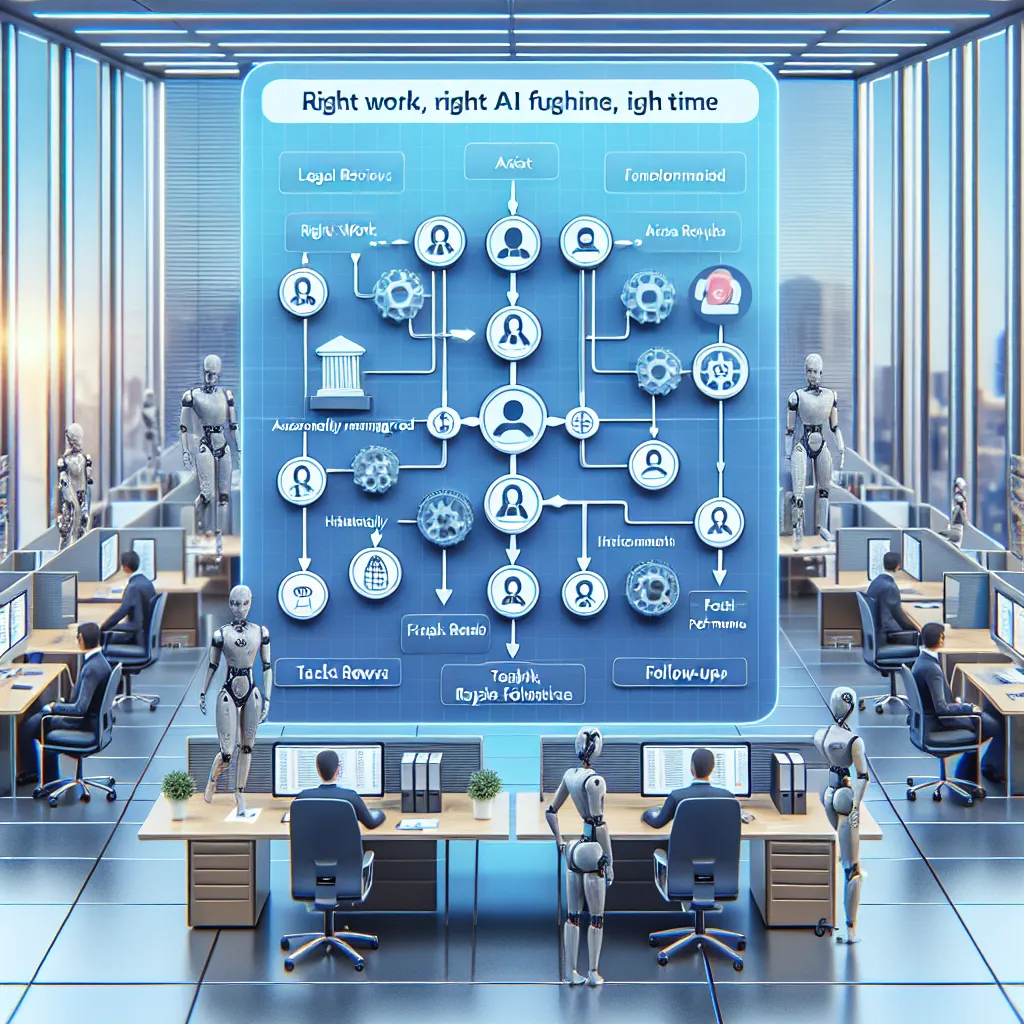
Description
No additional description provided.
The Pitch
As companies increasingly embrace artificial intelligence to optimize their workflows, the landscape of AI agents continues to expand. Each AI agent is designed to handle specific tasks, bringing efficiency and speed to various business operations. However, as the number of these agents grows, managing their coordination and task distribution becomes a complex challenge. Businesses that once envisioned seamless operations powered by AI now find themselves facing chaos. Task overlap, miscommunication, and the occasional drop of crucial tasks have become common, negating the very benefits these intelligent agents are supposed to provide.
---
**Problem**
The lack of an efficient, centralized system for managing task distribution among AI agents leads businesses to face several challenges:
1. **Task Duplication**: Multiple agents may end up working on the same task due to improper coordination, wasting resources and time.
2. **Misrouting**: Tasks might be assigned to agents that are not well-suited for them, leading to inefficiencies and potential errors.
3. **Task Overload or Neglect**: Without proper task management, certain agents may become overburdened while others remain underutilized, leading to operational imbalances.
4. **Loss of Productivity**: The overarching chaos results in decreased productivity, as companies spend valuable time and resources fixing problems rather than leveraging AI for growth.
---
**Solution**
An intelligent infrastructure tool designed to route tasks to the optimal AI agent based on context, capabilities, and performance history offers a transformative solution. This tool acts as a central nervous system for AI orchestrations, intelligently and autonomously coordinating the efforts of all AI agents within an organization.
Key features include:
- **Contextual Task Assignment**: The tool assesses each task's requirements, dynamically assigning it to an agent with the relevant expertise and capabilities.
- **Performance-based Routing**: By analyzing past performance, the system ensures that high-priority tasks are assigned to agents that have demonstrated competence and reliability.
- **Adaptable and Scalable**: Capable of integrating with existing AI and IT infrastructure, the tool scales effortlessly alongside business growth.
- **Autonomous Operations**: With minimal human intervention, the system improves efficiency and reduces operational costs.
---
**Product Details**
Think of this product as a smarter, autonomous version of traditional workflow automation tools that connects AI agents in a synchronized ecosystem. Its primary components are:
1. **Task Analysis Engine**: Processes incoming tasks, discerning nuances and requirements. 2. **Routing Logic Unit**: Utilizes algorithms to match tasks with the most suitable agents. 3. **Performance Tracker**: Continuously monitors agent performance to inform future routing decisions. 4. **Integration Interfaces**: Seamlessly connects with existing enterprise systems and AI agents.
---
**Tools for MVP Launch**
To quickly bring this product to market, the following tools can be used:
- **Workflow Automation Platforms**: Platforms like Zapier or Integromat serve as initial environments for creating prototypes that mimic task routing. - **AI and Machine Learning Frameworks**: TensorFlow or PyTorch to develop and train algorithms that manage task distribution. - **APIs and SDKs**: Leverage APIs for easy integration with existing business systems such as CRMs or ERPs. - **Cloud Providers**: Use AWS, Google Cloud, or Azure for scalable infrastructure solutions.
---
**Go-To-Market Strategy**
1. **Target Market Identification**: Focus on industries with significant AI adoption, such as finance, healthcare, and e-commerce.
2. **Value Proposition Marketing**: Clearly communicate the benefits of reduced chaos, increased efficiency, and cost savings.
3. **Partnerships and Alliances**: Collaborate with companies offering popular AI solutions to offer integrated experiences.
4. **Pilot Programs**: Engage with early adopters to validate the solution and gather feedback for iterative improvements.
---
**Business Model**
- **Subscription**: Monthly or annual subscription fees based on the number of agents or the volume of tasks processed. - **Tiered Pricing**: Offer different pricing levels depending on the complexity and number of integrations required. - **Freemium Model**: Provide basic functionality free of charge, with advanced features accessible via a premium subscription.
By implementing this intelligent task routing tool, businesses can regain control over their AI operations, ensuring optimal performance without the chaos currently hindering productivity.