Instant Deployable Homes for Disaster Relief
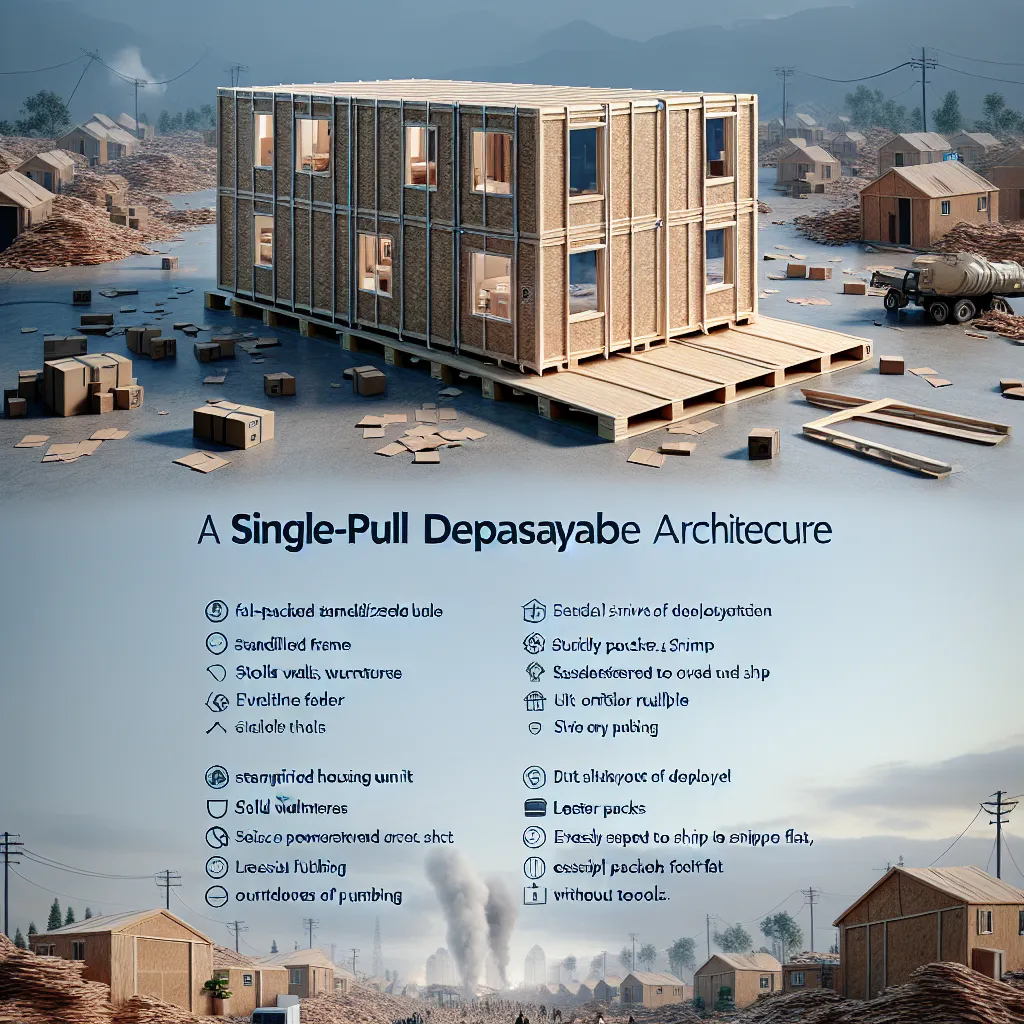
Temporary housing after disasters is slow, expensive, and logistically painful. Tents are flimsy, modular housing is heavy, and assembly costs time and labor that communities don’t have. The reason better solutions never emerged is that structural complexity traditionally required either rigid shipping or on-site construction. Single-pull deployable architecture changes that. Entire housing units — frames, walls, furniture, even plumbing shells — can ship flat and deploy in seconds without tools. A startup could offer standardized or customizable disaster homes that arrive on pallets and become livable shelters almost instantly. This unlocks faster relief, lower transport costs, and radically simpler deployment — something that was structurally impossible before.
Description
No additional description provided.
The Pitch
Natural disasters, while unpredictable, continue to be a significant concern worldwide. Communities affected by these catastrophes often face prolonged periods of displacement due to the inefficiencies in the current temporary housing solutions. Available options, such as tents and modular housing, present significant challenges. Tents, though quick to deploy, lack durability and the essential features of a home. Modular housing solutions, on the other hand, are cumbersome due to their weight and the complex logistics of assembly, which often require skilled labor and significant time investment.
The core issue lies in the traditional approach to deploying temporary housing. Structural complexity has always demanded either rigid shipping methods or on-site construction. This necessity not only limits efficiency but also escalates costs and prolongs the timeline for providing essential shelter.
**Identifying the Problem**
The primary challenges identified in the current system include:
1. **Time Consumption**: Building shelters on-site or assembling heavy modular units is labor-intensive and slow, creating delays in providing relief to those in urgent need. 2. **Logistical Complexity**: Transporting and assembling traditional temporary housing is logistically complex and often costly. 3. **Inadequate Solutions**: Many temporary housing options fail to meet the essential requirements of safety, comfort, and adaptability.
**The Innovative Solution**
The advent of single-pull deployable architecture offers a groundbreaking solution to these challenges. By transforming the way temporary housing is approached, this innovation introduces a housing unit design that can be flat-packed for shipping and rapidly deployed without the necessity of tools. The concept involves:
- **All-in-One Design**: Each unit includes frames, walls, furniture, and even plumbing shells, integrated into a cohesive system that is easy to handle. - **Rapid Deployment**: The housing units can be set up in seconds, significantly reducing the time from delivery to usability. - **Simple Logistics**: Flat-packing reduces volume, lowering transportation costs and making it easier to distribute units quickly over large areas.
**Product Details**
These units are designed to cater to both standard and customizable requirements, providing flexibility depending on the disaster scenario and specific needs of the impacted population.
- **Materials**: Durable, lightweight materials ensure longevity and ease of transportation. - **Customization**: Various configurations are available to meet different spatial and functional requirements. - **Sustainability**: The design considers the environmental impact, with options for solar energy and sustainable materials.
**Tools for MVP Launch**
For engineering the Minimum Viable Product (MVP), several tools can facilitate the development and testing process:
- **Prototyping Software**: Leverage tools like CAD for designing the initial structures. - **Material Testing Platforms**: Utilize services that offer stress and durability testing. - **3D Printing**: For early prototypes and parts testing to ensure the design is both practical and scalable.
**Go-to-Market (GTM) Strategy**
1. **Partnerships with NGOs and Governments**: Collaborate with organizations and governments involved in disaster relief to ensure immediate market entry and credibility. 2. **Field Tests**: Conduct pilot deployments in regions prone to natural disasters to refine product offerings and gather real-world feedback. 3. **Media Campaigns**: Utilize digital platforms to highlight success stories and innovative features to build awareness and interest. 4. **Trade Shows and Conferences**: Present at disaster management and emergency relief conferences to reach a targeted audience.
**Business Model**
The business model centers on a two-pronged approach:
- **Direct Sales**: Selling to governments, NGOs, and relief organizations. - **Leasing Options**: Providing a leasing model for temporary setups, allowing quicker access and affordability.
In conclusion, single-pull deployable architecture stands as a beacon of innovation in temporary housing solutions, turning what was once a logistical nightmare into a swift, efficient, and economical process. This approach positions a startup uniquely to make a significant social impact while capturing a vital segment of the disaster relief market.