Innovative Scanners Improve Safety for Construction Workers
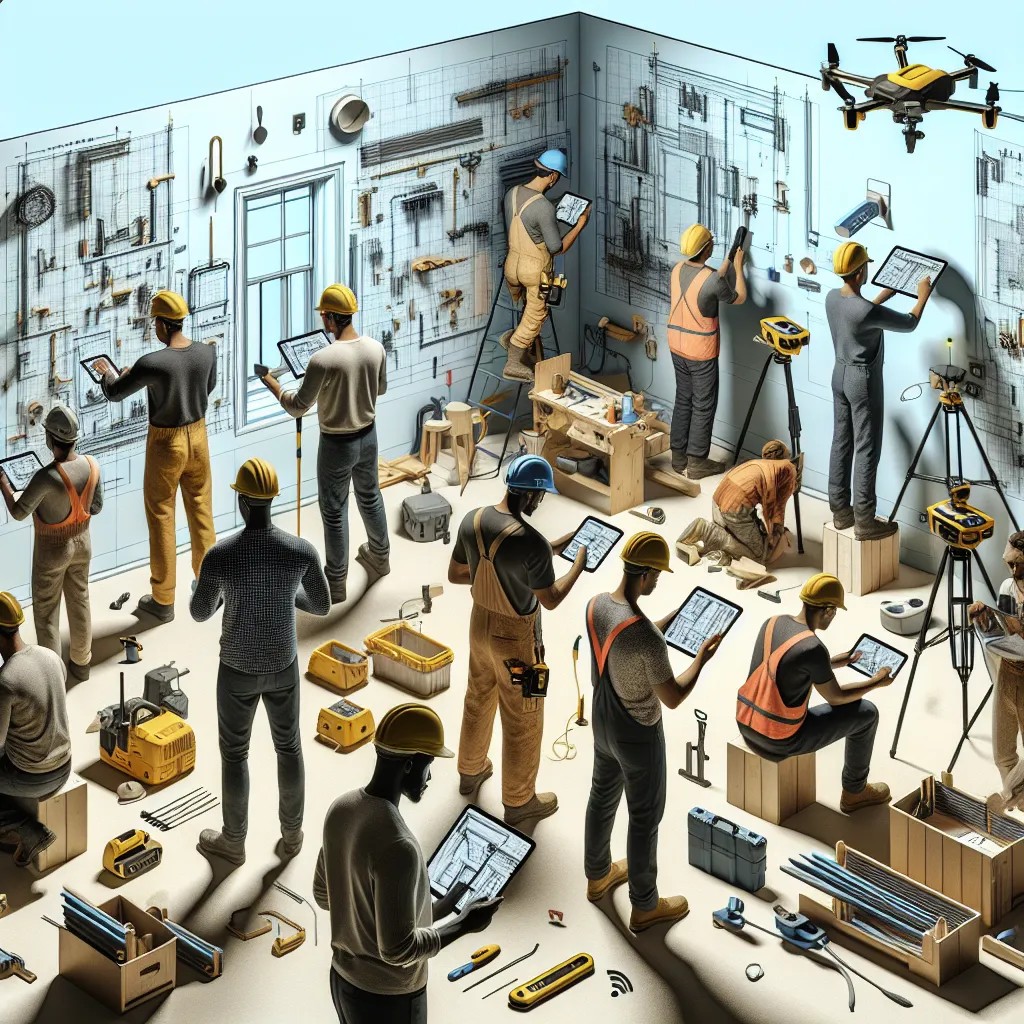
Construction workers often drill into walls or demolish structures blind, risking injury or damage to hidden pipes, wires, or structural elements. Current scanners are limited in resolution or depth. A startup could commercialize mmNorm-enabled handheld or drone-based scanners that reconstruct the shape and location of hidden components inside walls or behind fixtures. With mmWave reflections and deep learning, the tool maps internal cavities or objects non-invasively and at scale. This is timely because the new technique works well even in chaotic, cluttered environments common on job sites. A contractor using this tool could identify metal pipes behind drywall or detect load-bearing studs before cutting—improving both speed and safety on remodels.
Description
No additional description provided.
The Pitch
Construction activities, whether drilling, cutting, or demolishing, are often carried out with limited knowledge of what lies beneath the surface of walls or floors. This lack of visibility poses significant risks, including injury to workers, accidental damage to essential infrastructure like pipes and wires, and potentially costly repairs. Traditional scanners used in these scenarios often fall short due to their limited resolution or depth of detection, failing to provide a comprehensive view of hidden components.
**The Problem**
The issue faced by construction workers is the inability to accurately and non-invasively detect important structural elements or utilities hidden behind walls and other obstructions. Existing solutions are either inadequate or too costly, and many are not adapted to the complex, cluttered environments typical of construction sites. These limitations often lead to delays, increased costs, and a higher risk of incidents during renovation or construction projects.
**Proposed Solution**
To address these challenges, there is a promising opportunity to develop and commercialize advanced scanners equipped with mmNorm technology. These devices, designed either as handheld tools or mounted on drones, leverage millimeter-wave (mmWave) technology and deep learning algorithms to map the internal structure of walls and floors accurately. This innovative approach allows users to visualize the precise shape and location of hidden elements such as pipes, wires, and structural supports, even in cluttered environments.
**Product Details**
The core of the proposed solution is a mmNorm-enabled scanning device, available in both handheld and drone-mounted versions. Key features include:
- High-resolution imaging capable of detecting objects several centimeters deep into surfaces - Integration of mmWave technology that can create detailed maps of internal spaces - Deep learning algorithms to interpret scanned data in real-time - Lightweight and user-friendly design suitable for various construction site conditions - Wireless connectivity to instantly share data with other smart devices
**Tools and Launch Strategy**
To facilitate the development and launch of this product as a Minimum Viable Product (MVP), the following tools and strategies can be employed:
- Prototyping Platforms: Use rapid prototyping tools such as Arduino or Raspberry Pi for initial designs. - Software: Implement machine learning algorithms using platforms like TensorFlow or PyTorch for data interpretation. - Manufacturing: Partner with experienced manufacturers who specialize in sensor technologies and electronics. - Testing: Conduct field trials on active construction sites to refine the technology and gather user feedback.
**Go-To-Market Strategy**
To effectively introduce this product to the market:
1. **Target Audience**: Focus on construction companies, renovation contractors, and facilities management firms. 2. **Partnerships**: Collaborate with industry associations and safety organizations to increase visibility and credibility. 3. **Demonstrations**: Host live demonstrations and webinars showcasing the product's capabilities in real-world scenarios. 4. **Marketing**: Utilize digital marketing channels and trade publications to reach potential clients. 5. **Training**: Offer comprehensive training programs to ensure clients can maximize the benefits of the technology.
**Business Model**
The business model revolves around a combination of direct sales and a subscription-based offering:
- **Direct Sales**: Sell the hardware unit with MMV scanning capabilities directly to construction companies and other target customers. - **Subscription Services**: Offer a subscription model for software updates and advanced data analytics features that provide ongoing value.
By addressing a critical need in the construction industry with an innovative solution, this venture stands to significantly improve safety and efficiency on job sites, positioning itself as a leader in construction technology.