Independent Candidate Reference Check Service
References are one of the most important parts of hiring and somehow one of the least useful. Candidates give you three people they already know will say nice things, you ask them five predictable questions, and everyone pretends something was learned. Build a service that does the reference check you actually want to do. Give it a candidate and it finds former managers, coworkers, employees, maybe even people who worked with them outside of work, then conducts structured interviews and builds a detailed picture of how the person operates. What are they unusually good at? Where do they struggle? Would people work with them again? Hiring someone can cost hundreds of thousands of dollars. The diligence should probably be better than three pre-selected cheerleaders.
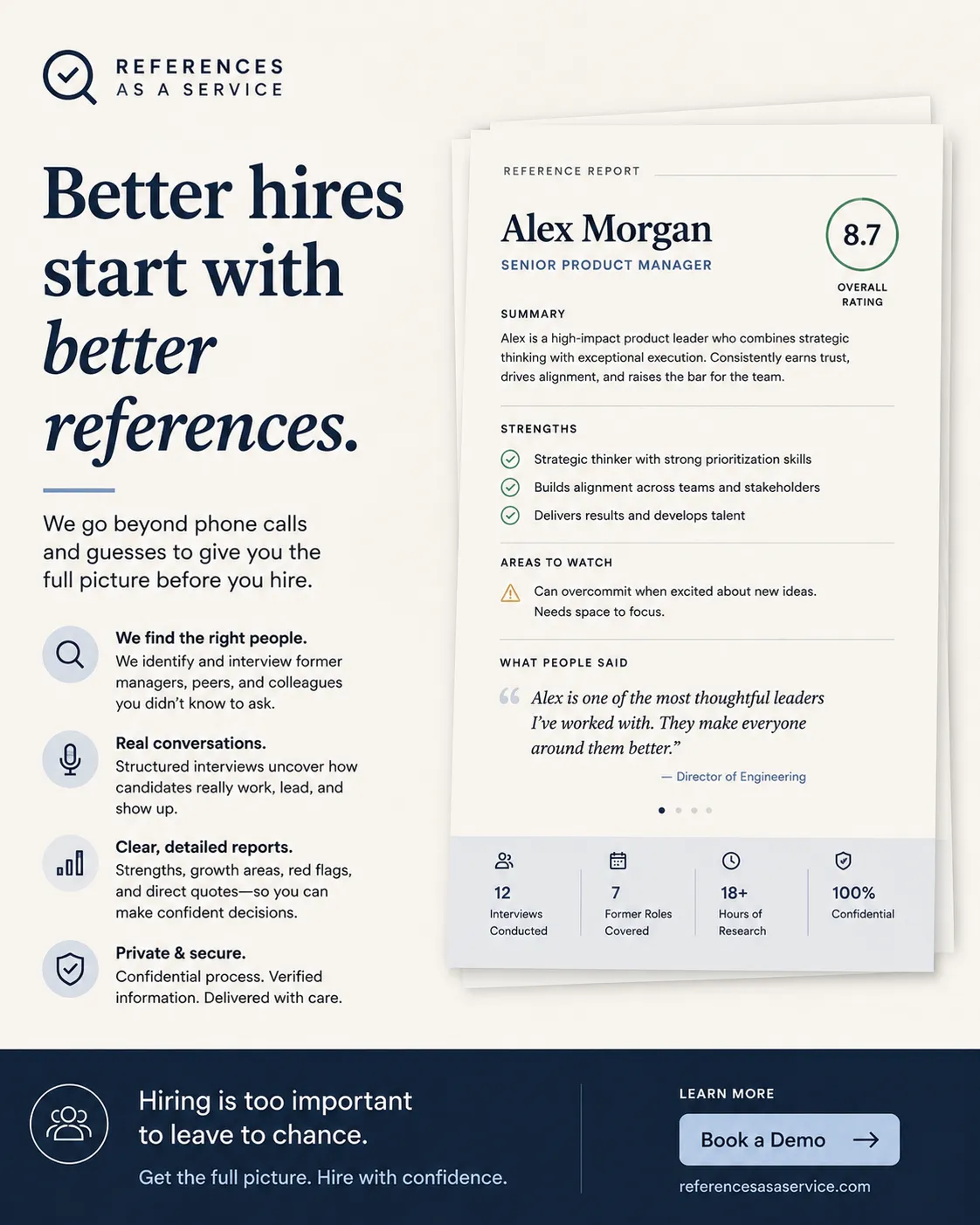
Description
No additional description provided.
The Pitch
Hiring has a strange asymmetry: companies will spend months sourcing and interviewing a candidate, then outsource the highest-signal part of the process to the candidate’s own curated fan club. The most valuable information about a person is not whether they can perform in an interview, but what patterns they leave behind after the performance is over. Former colleagues have seen the missed deadlines, the quiet saves, the emotional defaults under pressure, the difference between claimed strength and lived behavior.
The real product is not “reference checking”; it is a map of professional reputation that is hard to manufacture on demand. Most hiring systems evaluate candidates as isolated individuals, but work is social. A brilliant engineer who makes every team around them slower is not the same asset as a slightly less flashy one who raises the judgment of everyone nearby. The people who have actually worked with someone are often the only ones who can describe this difference, yet that knowledge is trapped in private conversations and informal backchannels.
This business becomes especially powerful because the current alternative already exists, but in an unequal and unreliable form. Well-connected hiring managers quietly call friends-of-friends to get the “real story,” while everyone else follows a sanitized process. A structured service would not invent backchannel references so much as civilize them: broaden the sources, ask better questions, compare patterns, and reduce the randomness of whisper networks. The value is not gossip; it is turning scattered firsthand memory into something legible and fair enough to use.
It would also get more useful as careers become less linear. Titles and résumés increasingly fail to explain what someone actually does, because the same job title can mean operator, politician, architect, firefighter, or passenger depending on the company. A good reference graph can reveal the role someone naturally plays inside organizations. That is often more predictive than credentials, because companies do not merely hire skills; they import habits.
The strongest reason this should exist is that bad hires are expensive in ways balance sheets rarely capture. They consume management attention, deform team norms, delay decisions, and cause good people to leave. If better diligence prevents even a small number of those mistakes, it is not an administrative tool; it becomes insurance against organizational regret.