Immersive Experiences for Private Venues
Description
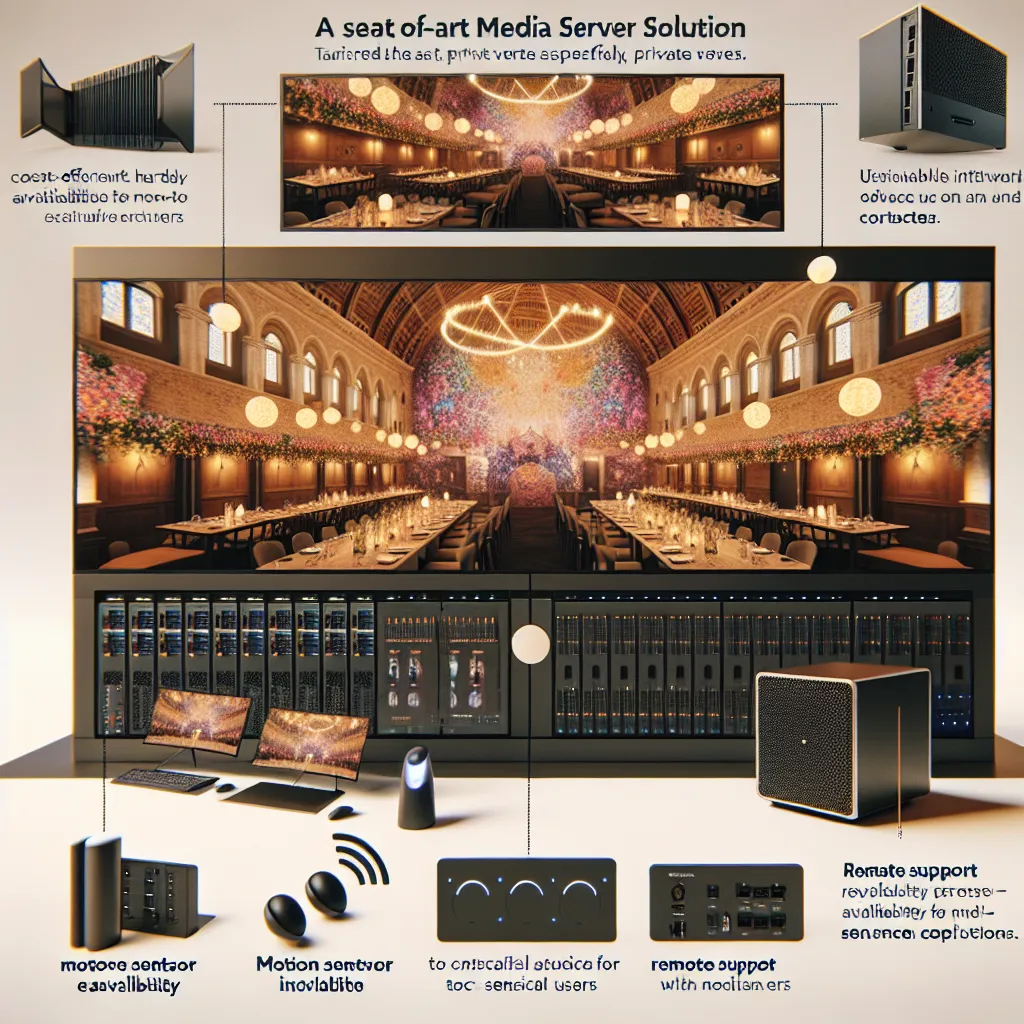
A media server solution for smaller, private venues like restaurants and event spaces enables immersive and interactive experiences at a lower cost. Key features include cost-effective hardware, user-friendly interfaces, and interactive capabilities like touch-sensitive displays and motion sensors. The system should offer flexible content management, scalability, and integration with existing AV setups. Pre-programmed modes, content customization, and energy efficiency are essential, along with remote support for non-technical users. This solution allows venues to create dynamic, personalized environments that enhance guest engagement and differentiate them from competitors.
The Pitch
As immersive experiences become increasingly popular in entertainment, there’s a growing demand for smaller, private venues like restaurants, boutique hotels, and event spaces to offer unique and engaging visual experiences. However, many of these venues face budget constraints and lack the technical expertise required for large-scale setups. A tailored media server solution for these venues would enable them to deliver high-quality, immersive experiences without the hefty costs and complex installations associated with traditional systems.
Key Features Needed: Cost-Effective Hardware: Since budget is a primary concern, the media server should be designed with affordable hardware options that still offer powerful performance. This could include compact servers with sufficient processing power to handle high-quality video playback and interactive content without requiring expensive, high-end equipment.
User-Friendly Interface: Many operators in these smaller venues may not have a technical background. The media server should feature an intuitive interface that allows users to easily manage content, control displays, and adjust settings without needing specialized training. Drag-and-drop content management, customizable templates, and straightforward controls are essential.
Interactive Capabilities: One of the key elements of immersive experiences is interactivity. The media server should support interactive features such as touch-sensitive displays, motion sensors, or audience-triggered content. This allows venues to create dynamic environments where the visuals respond to the actions of the guests, making the experience more engaging.
Flexible Content Management: Smaller venues often need to change their visual content frequently, whether it’s for different events, themes, or promotions. The media server should offer flexible content management tools that allow users to quickly upload, organize, and schedule content changes. This could include cloud-based management systems, remote access, or mobile app control for convenience.
Scalability: Although the initial setup may be modest, venues might want to expand their capabilities over time. The media server should be scalable, allowing for easy upgrades to additional displays, more advanced content, or new interactive features as the venue grows or its needs change.
Pre-Programmed Modes and Templates: To simplify the creation of immersive experiences, the media server should come with pre-programmed modes and templates tailored to common venue setups. For example, a restaurant could choose a "dining ambiance" mode that adjusts lighting and visuals automatically, or an event space could select a "party mode" that syncs visuals with music.
Integration with Existing Systems: Many venues already have basic AV setups, so the media server should easily integrate with existing sound systems, lighting controls, and display hardware. This minimizes the need for extensive reinstallation and allows venues to enhance what they already have without a complete overhaul.
Content Customization and Localized Themes: For smaller venues, personalization is key. The media server should allow for content customization to fit the unique vibe or theme of the venue. This could include custom graphics, branding elements, or localized themes that reflect the venue’s identity and create a more personal connection with guests.
Energy Efficiency: Since many of these venues may be running displays for extended periods, energy efficiency is important. The media server should be optimized to use less power while still delivering high-quality visuals, helping venues keep operational costs low.
Remote Support and Troubleshooting: To assist venues without in-house technical teams, the media server should include remote support features. This could involve cloud-based monitoring, real-time troubleshooting, and easy access to software updates to ensure the system runs smoothly with minimal downtime.
Example Use Cases: Restaurants: A restaurant could use the media server to create themed dining experiences where the visuals and lighting change based on the time of day, season, or special events like holidays. Interactive elements, such as wall projections that respond to diners’ movements, could enhance the atmosphere.
Event Spaces: For weddings, corporate events, or parties, the media server can manage dynamic visuals that align with the event’s theme, from elegant background imagery to interactive photo walls that guests can control via touchscreens.
Boutique Hotels: Hotels could use the media server to offer unique experiences in their lobbies, bars, or even rooms. This might include immersive welcome messages for guests, art installations that change throughout the day, or interactive displays that highlight local attractions.
Retail Spaces: Stores and boutiques can enhance customer engagement by using media servers to create visually striking displays, such as virtual fitting rooms, interactive product showcases, or seasonal window displays.