Hyperlocal Weather Alerts via Community Sensors
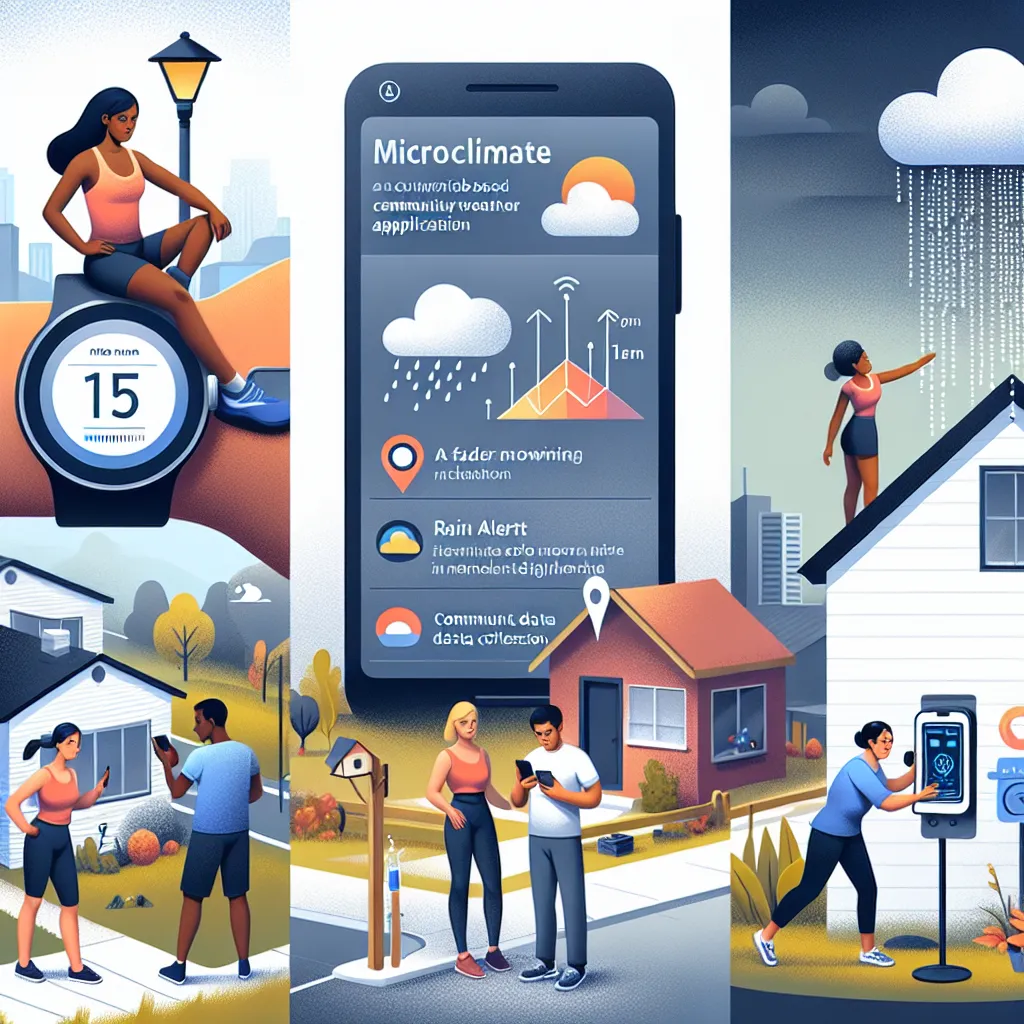
Weather apps are too broad for microclimates. This app uses community sensors for street-level forecasts and alerts. Trend: crowdsourced data is growing in accuracy. Example: a runner gets a hyperlocal rain alert 15 minutes before a sudden downpour in their neighborhood.
Description
No additional description provided.
The Pitch
In recent years, the growing influence of climate change has made weather patterns increasingly unpredictable, creating unique challenges for both individuals and businesses. Urban areas, with their distinct microclimates, experience these changes more acutely. Traditional weather apps often struggle to provide precise forecasts at the street or neighborhood level, which can be crucial for activities like outdoor exercising, small-scale farming, and event planning.
**Backstory**
John, a passionate marathon runner and community organizer, often found himself caught in sudden weather changes during his runs. His neighborhood, situated in a valley with unique wind patterns, was often inaccurately forecasted by conventional weather services. After another soaked run, John decided there had to be a better way to receive timely and accurate weather updates for his area.
He started researching advancements in weather technology and discovered a growing trend: the accuracy of crowdsourced weather data was improving significantly. By leveraging community input and sensors, it was possible to create hyperlocal weather forecasts that could serve community needs more effectively than traditional methods.
**Problem**
Existing weather applications tend to offer broad, city-wide forecasts that do not account for the microclimates within different city areas or neighborhoods. This lack of precision can lead to unexpected inconveniences and even potential safety risks. For individuals like John, who need reliable and timely weather information for specific locations, the current solutions are insufficient.
**Solution**
A crowdsourced weather platform designed to provide street-level weather data and real-time alerts by employing community sensors and user input. This system will allow individuals and communities to contribute data, thus ensuring high precision for hyperlocal weather forecasts.
**Product Details**
- **Community Sensors**: Deploy small, affordable weather sensors that users can easily place on their property to gather localized weather data such as temperature, humidity, wind speed, and precipitation.
- **Mobile Application**: A user-friendly interface where members can view hyperlocal weather forecasts, receive real-time alerts, and report current conditions in their area.
- **Data Aggregation and Processing**: Use machine learning algorithms to analyze and refine data collected from community sensors and user reports, improving the forecast model continually over time.
- **Weather Alerts**: Push notifications to users who have opted in for specific weather conditions, such as rain alerts during specific hours or wind conditions that may affect activities like outdoor events.
**Tools for an MVP**
- **Hardware**: Collaborate with a manufacturer who provides cost-effective weather sensors ready for consumer use.
- **Software Development**: Use platforms such as Firebase for backend services, React Native for mobile app development, and TensorFlow for implementing machine learning algorithms.
- **Cloud Services**: Use AWS or Google Cloud for data storage and processing capabilities.
**Go-to-Market Strategy**
1. **Pilot Program**: Launch a pilot in one urban area with known microclimates, capitalizing on local running clubs, agricultural groups, and community organizations to champion the product.
2. **Community Engagement**: Develop a campaign to emphasize the benefits of hyperlocal forecasting and engage communities to become contributors to the platform.
3. **Partnerships**: Collaborate with local governments and educational institutions to widen network coverage and participation.
4. **Feedback and Iteration**: Use consumer feedback from the pilot to refine product features and functionalities before a broader release.
**Business Model**
- **Freemium Model**: Offer a basic version of the app for free, with premium features available through subscription such as detailed analytics, personalized alerts, and an ad-free experience.
- **Hardware Sales**: Generate revenue from the sale of IoT weather sensors.
- **Data Licensing**: Offer weather insights and data analytics services to businesses interested in detailed meteorological information.
This platform represents an evolution in how communities interact with and benefit from weather data, ensuring more individuals can make informed decisions based on current, relevant information, directly improving their day-to-day activities.