Hyperlocal AI Tools Empowering Global Communities
AI has exploded globally, yet most products remain Western and English-centric. Emerging markets are underserved with AI tools that miss local languages, behaviors, and economic realities. A hyperlocal AI Agent Builder could empower non-technical users to spin up AI services tailored to their community’s needs — from local language customer service bots to agriculture advisors tuned to specific climates. This would democratize AI infrastructure without heavy tech overhead. Why now? 90% of ChatGPT users are already outside North America; the real growth lies in localizing AI at scale. For example, a farmer in rural India could build — in minutes — an AI agent that answers farming questions in Marathi, tuned to his soil conditions, without writing a single line of code or needing a cloud engineer.
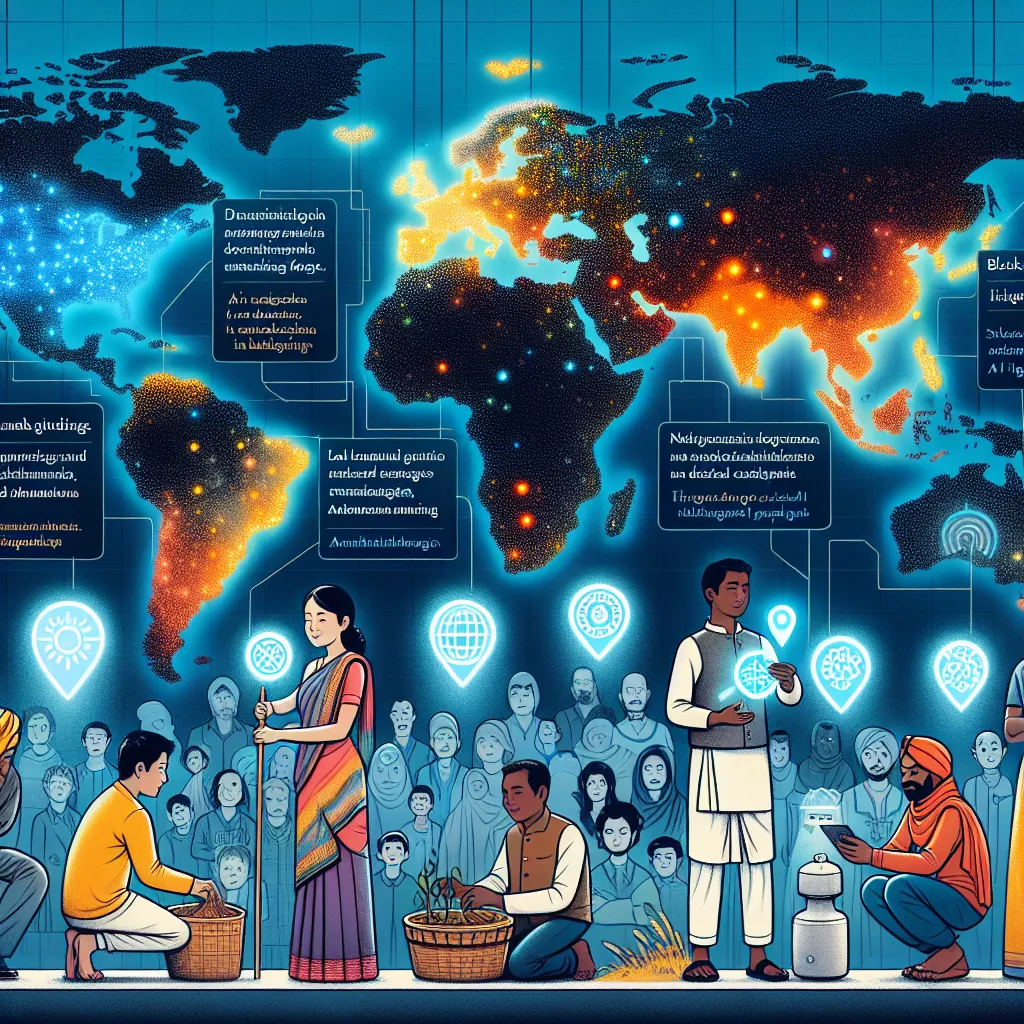
Description
No additional description provided.
The Pitch
The global rise of AI has transformed various sectors, enabling automation, enhancing customer experiences, and driving innovation. However, the majority of AI solutions have been developed with a Western-centric approach, focusing predominantly on English-speaking audiences. This creates a significant gap in emerging markets, where local languages, cultural behaviors, and economic conditions are often overlooked. There is a need for AI solutions that cater to local contexts, empowering communities to harness the power of AI without the barriers of language or technical expertise.
**Identifying the Problem**
Emerging markets are experiencing a digital transformation but are underserved by AI technologies that do not align with local needs. Many individuals in these regions cannot benefit from AI tools due to language barriers and the lack of resources needed to develop and implement such technologies. This gap limits the impact of AI, preventing communities from unlocking its full potential in addressing local challenges.
**Proposed Solution**
The creation of a hyperlocal AI Agent Builder tailored for users in emerging markets can bridge this gap. This platform would allow non-technical users to develop AI services that are specifically designed for their locality. Whether it is a customer service bot fluent in a regional dialect or an agricultural advisor optimized for local climate conditions, the tool would make AI accessible and relevant across diverse socioeconomic landscapes. By democratizing access to AI technology, communities can harness the power of AI without heavy technical overheads.
**Product Details**
The Hyperlocal AI Agent Builder would feature: - A no-code platform to design and deploy AI agents. - Support for multiple local languages to ensure inclusivity. - Pre-built templates for various sectors such as agriculture, healthcare, and education. - Integration capabilities with existing local digital infrastructure. - Customization options to cater to specific cultural and economic contexts.
**Tools for Easy Launch of MVP**
To rapidly develop and launch the minimum viable product (MVP), the following tools and technologies could be leveraged: - Visual programming interfaces for intuitive design of AI agents. - Natural Language Processing (NLP) modules trained on local languages and dialects. - Cloud-based deployment platforms for scalability and accessibility. - Data analytics tools to track usage and improve AI model performance. - Collaboration with local experts to enrich the AI models with contextual knowledge.
**Go-To-Market Strategy**
The go-to-market strategy would include: - Partnering with local organizations, governments, and NGOs to raise awareness and drive adoption. - Running educational workshops and training sessions to onboard users. - Collaborating with local tech communities to foster innovation and expansion. - Utilizing digital marketing strategies, including social media and regional influencer partnerships, to promote the platform.
**Business Model**
The business model could include: - Freemium access with basic features free of charge, and premium features available through a subscription model. - Enterprise partnerships with local businesses requiring bespoke AI solutions. - Government and NGO collaborations for community-driven initiatives and public sector applications. - Offering consulting and support services to customize and optimize AI solutions for specific needs.
**Conclusion**
The Hyperlocal AI Agent Builder has the potential to transform emerging markets by enabling communities to address local challenges through bespoke AI solutions. By prioritizing accessibility, relevance, and sustainability, this initiative can democratize AI, unlocking its full potential for populations currently excluded from the AI revolution.