Hyperlocal AI for Smart Cities
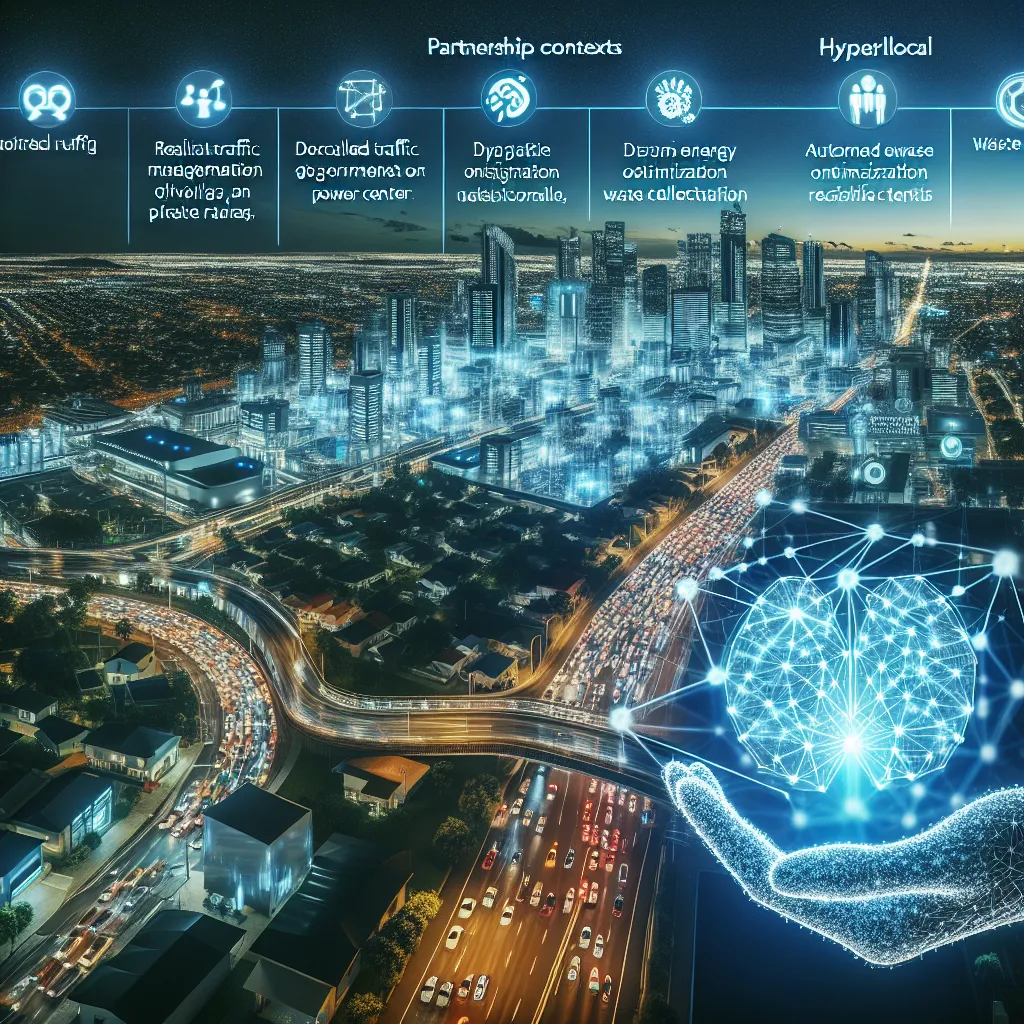
AI models tailored for hyperlocal use cases in smart cities, such as traffic management, energy optimization, or waste collection. Smart cities require decentralized AI systems to process data locally and minimize bandwidth usage. Partner with city governments or utility providers to deploy solutions tailored to their needs.
Description
No additional description provided.
The Pitch
In the increasingly digital world of urban development, the rise of smart cities represents a monumental shift in how urban spaces are managed and optimized. Traditional city infrastructure systems struggle to keep pace with the demands of modern urban populations, leading to inefficiencies in traffic management, energy usage, and waste collection.
Our initiative is designed to address these challenges through the deployment of AI models tailored specifically for hyperlocal use cases in smart cities. By embedding AI directly into city infrastructure, we can achieve real-time data processing and dramatically improve the responsiveness and efficiency of city services.
Our decentralized AI system is engineered to operate at the local level, minimizing bandwidth usage and mitigating latency, which is critical for applications requiring instant response, such as traffic light control and emergency services dispatch. This local processing not only accelerates decision-making but also enhances data privacy, as sensitive information does not need to traverse extensive networks.
To bring this innovative solution to cities, we are seeking partnerships with city governments and utility providers who are poised to adopt advanced technology solutions for improving their operational efficiency and service delivery to citizens. Our go-to-market strategy is focused on initially targeting cities that have already demonstrated a commitment to smart city technology, leveraging existing infrastructure and data systems for easier integration and quicker pilot testing.
Our business model builds on a partnership-driven approach, utilizing a B2G (business-to-government) model. We plan on offering our AI systems either via direct sales or through a subscription-based service, which includes continuous updates and maintenance. This model ensures that our partners always have access to the latest technology without requiring frequent, costly upgrades.
Key features of our product include:
1. **Adaptive Traffic Management:** Utilizing real-time and historical data to optimize traffic light sequences and reduce congestion.
2. **Energy Consumption Optimization:** AI algorithms that predict peak load times and adjust energy distribution, saving costs and reducing environmental impact.
3. **Efficient Waste Collection:** Dynamic scheduling and route optimization for waste collection that adapts to changes in urban density and waste production levels.
By implementing these AI-driven solutions, cities can not only enhance their operational efficiency but also achieve significant cost savings, improve the quality of life for their residents, and move towards sustainable urban development. Currently, we are in the process of engaging with several interested cities and are open to exploring further partnerships and collaborations to expand the reach and impact of this technology.